Barbados Residency
The Special Entry and Reside Permit on the Eastern Caribbean’s most developed island — qualifying property from US$300,000, no minimum stay, and a tax position that rewards planning it before you land.
About Barbados
In brief. Barbados offers residence, not citizenship, through the Special Entry and Reside Permit (SERP). The property route qualifies from US$300,000 of Barbadian real estate; the investor route from US$2,000,000 against a certified net worth above US$5,000,000. There is no codified minimum stay. Barbados taxes residents, but levies no capital gains, wealth or inheritance tax, and taxes a non-domiciled resident on foreign income only as it is remitted. Property completion typically runs two to four months. It suits families who intend to use the island — not families who need a travel document.
Barbados is the most developed island in the Eastern Caribbean, and it offers what the citizenship programs to the north cannot: somewhere a family can actually live. There is no citizenship by investment here and never has been — Prime Minister Mia Amor Mottley has stated publicly that Barbadian citizenship will never be sold.
The practice places Barbados in a different tier from the tax-neutral islands. Cayman, The Bahamas and Anguilla trade on a zero headline rate; Barbados trades on 39 double-taxation agreements in force, English common law, and direct long-haul service to the United Kingdom, the United States and Canada. Where the priority is quality of life and a liquid asset rather than mobility, that is usually the better trade — the case for Barbados over Dubai.
Who it suits
Families who intend to use the island rather than register an address there: parents who need schools and a hospital within reach, treaty-minded families with operating businesses, and North Americans basing part of the year here.
The counter-case is short. Anyone whose real requirement is a travel document should look at a Caribbean citizenship program instead. Anyone whose whole thesis is a zero headline rate should price Cayman, Bermuda and The Bahamas first. And Barbados is the most expensive island in the Eastern Caribbean; the carry on a west-coast villa is real and continuous. The practice says so before a search begins.
If you are American: the United States taxes its citizens on worldwide income wherever they live, so none of the above changes a federal filing. What does is covered on tax residency.
Residency
SERP runs in four categories. Two are capital routes.
- Property route — from US$300,000. Barbadian property at a minimum value of US$300,000, funded from outside the island. Renewable five-year terms, or indefinite where the applicant is 60 or over. No entitlement to work.
- Investor route — from US$2,000,000. Investment sourced from outside Barbados, against a certified statement of net worth above US$5,000,000. Carries an automatic entitlement to a work permit on application.
- Skills and family categories. One for skills judged critical to the island’s development, one for a parent or grandparent of a Barbadian citizen aged 60 or over. Neither is a capital route.
- The Welcome Stamp — the trial year. A twelve-month remote-work visa from US$2,000, with no Barbados income tax on the holder. Terms in the FAQ.
Age bands, the full cost stack and the sequencing of purchase and application are worked through on a strategy call rather than published — for the reason below.
SERP is policy, not statute
SERP has no dedicated enabling legislation. It is granted under section 13(3) of the Immigration Act, Cap. 190, which permits the Minister to allow a person to remain on such terms as he thinks fit — so the categories, thresholds, fees and age bands are administrative policy under a discretionary power, revisable without a bill passing. That is a reason to verify rather than avoid: the Immigration Bill 2026 and the Barbados Citizenship Bill 2026 would put the reside and reside-and-work regimes on a statutory footing, and as of May 2026 both sat with a Joint Select Committee taking public submissions. The practice confirms the current schedule with the Immigration Department, in writing, before a family fixes a budget.
Presence
There is no codified minimum physical presence to hold or renew the permit — the lightest touch of any residence route the practice covers, against 30 days a year for the Cayman Islands Residency Certificate and 90 days a year for five years under Bermuda’s Economic Investment Residential Certificate. A permit is immigration status, not tax residency: Barbados treats an individual as resident on presence of more than 182 days in a calendar year, and separately as ordinarily resident on the accommodation-and-notice test set out in the FAQ below. The permit lets a family stay away; it does not by itself make anyone tax-resident anywhere, and a certificate with no days and no home behind it is an audit flag rather than a plan — see tax residency.
How Barbados taxes a resident
Barbados is not a zero-tax island. It levies no capital gains tax, no wealth tax and no inheritance or estate tax. Personal income tax was cut for Income Year 2026 to 0% on the first BBD 25,000, 11.5% from BBD 25,001 to BBD 75,000 and 27.5% above BBD 75,000. The currency has been pegged to the US dollar at BBD 2 to USD 1 since 5 July 1975.
The draw is the remittance basis. A resident who is not domiciled in Barbados is taxed on Barbados-source income, and on foreign income only as it is remitted or a benefit is obtained on the island; a resident who is also domiciled is taxed on worldwide income. The distinction runs on domicile, not a clock: a domicile of origin is retained until a domicile of choice is acquired, which takes residence plus an intention to remain indefinitely. How income is ordered in year one decides whether the treatment is worth having; it is planned before arrival, not after.
One caveat governs all of the above. US citizens are taxed by the United States on worldwide income regardless of residence or a second citizenship; the rates here describe Barbados’ own system, not an American family’s global position. Barbados does hold a comprehensive US income tax treaty — one of only three Caribbean countries that does, with Jamaica and Trinidad & Tobago, and none of the five citizenship programs has one. A treaty allocates and relieves cross-border income; it does not switch off citizenship-based taxation.
Path to citizenship
No purchase in Barbados carries a passport. Naturalisation is separate and far longer: residence for an aggregate of at least five of the last seven years plus the twelve months immediately preceding the application, then police clearances, a medical and an oath of allegiance. A Caribbean citizenship program clears in four to six months and asks nothing of the calendar; families who need mobility pair a Barbados base with one.
Frequently asked questions
Does Barbados offer citizenship by investment?
No, and it never has. Prime Minister Mia Amor Mottley has stated publicly that Barbadian citizenship will never be sold. The island offers the Special Entry and Reside Permit — residence, not a passport. Naturalisation is separate, requiring residence for at least five of the last seven years plus the twelve months immediately preceding the application.
What is the minimum to qualify for Barbados residence?
The property route asks Barbadian property valued at a minimum of US$300,000, funded from outside the island. The investor route asks US$2,000,000 sourced from outside Barbados against a certified net worth above US$5,000,000. Because the permit is policy rather than statute, the current fee schedule is confirmed with the Immigration Department before a budget is fixed.
How many days a year must I spend in Barbados?
None are codified to hold or renew the permit. Tax residency is a separate test: presence of more than 182 days in a calendar year, or ordinary residence, where permanent accommodation is kept available and notice is given of an intention to reside for two consecutive income years.
How is a new resident taxed in Barbados?
No capital gains, wealth or inheritance tax. Income Year 2026 personal rates run at 0% on the first BBD 25,000, 11.5% to BBD 75,000 and 27.5% above. A resident not domiciled in Barbados is taxed on Barbados-source income and on foreign income only as remitted. That is Barbados’ own system: US citizens are taxed on worldwide income wherever they live.
Does Barbados have a tax treaty with the United States?
Yes — one of only three Caribbean countries with a comprehensive US income tax treaty, alongside Jamaica and Trinidad & Tobago, and none of the five Caribbean citizenship programs has one. A treaty allocates and relieves cross-border income; it does not switch off US taxation of a citizen’s worldwide income.
Why is so much Barbados property held through an offshore company?
Because transferring shares in a foreign company is not a transfer of Barbadian land, a share sale can avoid the property transfer tax and stamp duty a direct conveyance attracts. The buyer acquires a company with its history, filings and running cost, and owning a foreign company carries reporting consequences at home, particularly for Americans and Canadians.
Is the Welcome Stamp a sensible first step?
Often. It is a twelve-month remote-work visa at US$2,000 for an individual or US$3,000 for a family, requiring declared income of US$50,000 or more and long-term health insurance, with approvals typically within seven business days and no Barbados income tax on the holder. Cabinet approved renewal through 31 December 2026, so its status is checked before a school year is planned around it.
Real Estate
On Barbados the property does the qualifying work, so one asset has to satisfy three tests at once: the permit threshold, the family, and the eventual resale. The market is unusually open by regional standards — no restriction on foreign ownership, no alien landholding licence, English-style conveyancing, completion typically two to four months, and most transaction taxes falling on the seller rather than the buyer.
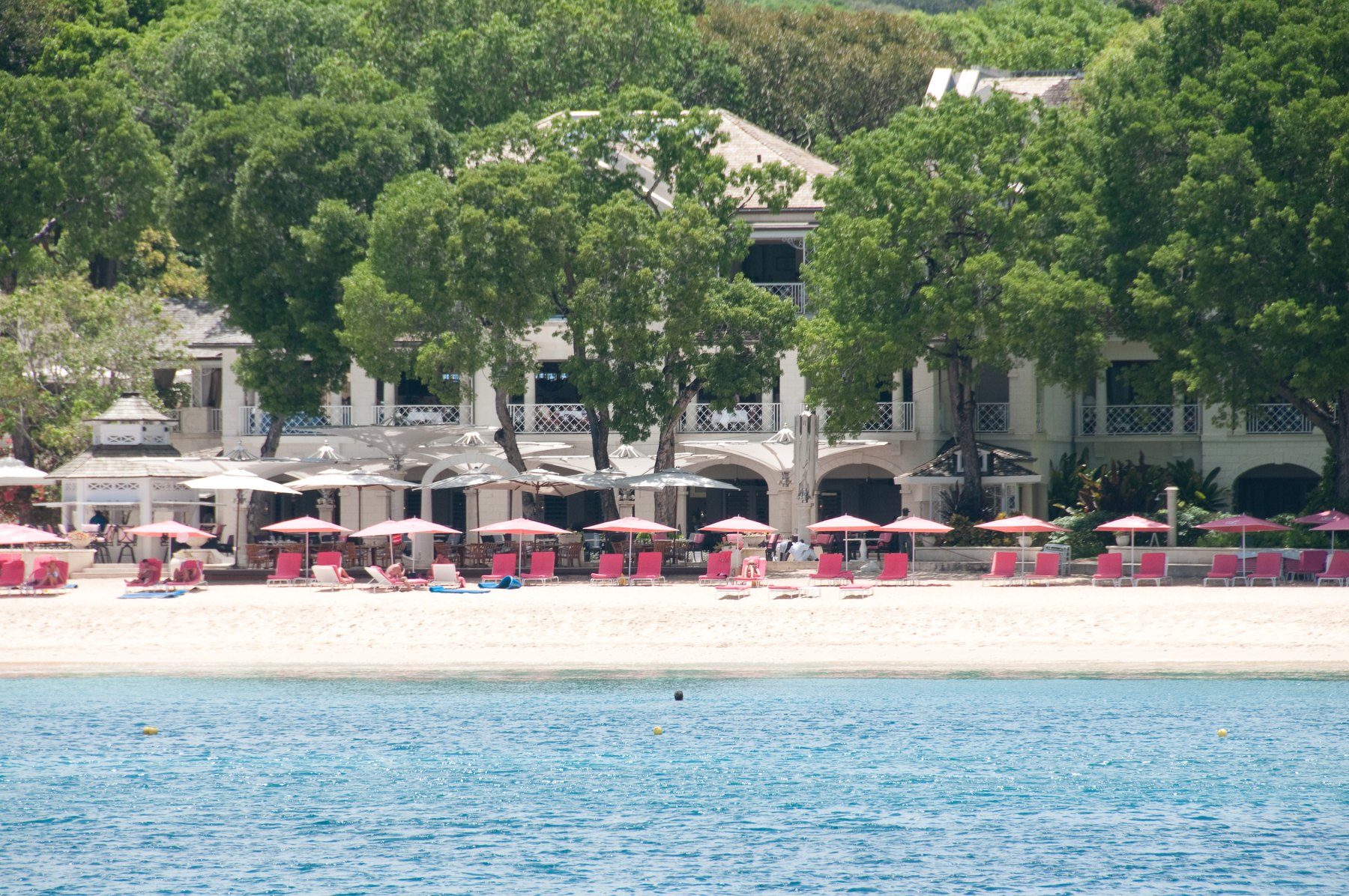
The prime market sits on one stretch of Caribbean-facing shore from Paynes Bay through Holetown to Speightstown, where Sandy Lane, Royal Westmoreland and Apes Hill between them account for most of it.
- Royal Westmoreland, two-bedroom apartment — US$650,000. The accessible way in, comfortably above the SERP property threshold.
- The Crane Private Residences, two-bedroom — US$899,000. Atlantic coast, and not a freehold: the interest is a right to use, held in trust by a licensed Isle of Man trustee to the year 3000. Respectable, and not a deed.
- Port St Charles lagoon townhouse — US$1,300,000. Berth-side living in a working marina community.
- Royal Westmoreland, six-bedroom fairway villa — US$5,249,995.
The annual carry
Land tax is the published part, charged on improved value in bands rising to 1.0% above BBD 850,000. Run the six-bedroom fairway villa above through those bands at its asking price and the arithmetic lands near BBD 99,000 — about US$49,000 a year — before a single service charge. The unpublished part is the estate service charge and, on the golf estates, club membership sold separately from the deed. The practice quotes no rate for either — both are set per estate and both move — and asks the vendor for current figures and three years of history in writing before contract. A service charge that has climbed steadily is a materially different asset from one that has held flat.
Holding structures, the customary cost split and exchange-control registration of inbound funds are set out in the Barbados real-estate guide; current availability sits on listings, with the west-coast estates handled by appointment.
Current inventory
7 listings in Barbados.
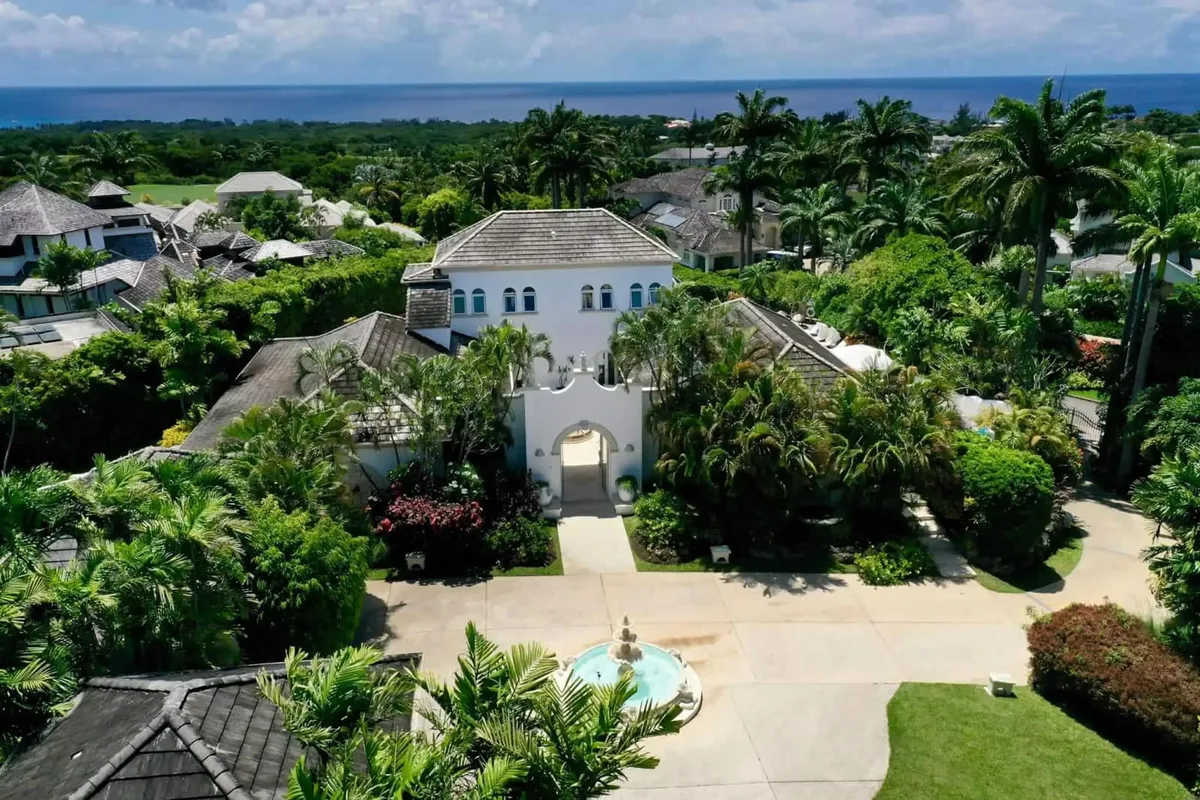
Royal Westmoreland Six-Bedroom Villa, Barbados
A six-bedroom villa set along the fairways of Royal Westmoreland with golf-course and Caribbean Sea views — pool, mature gardens and full resort…
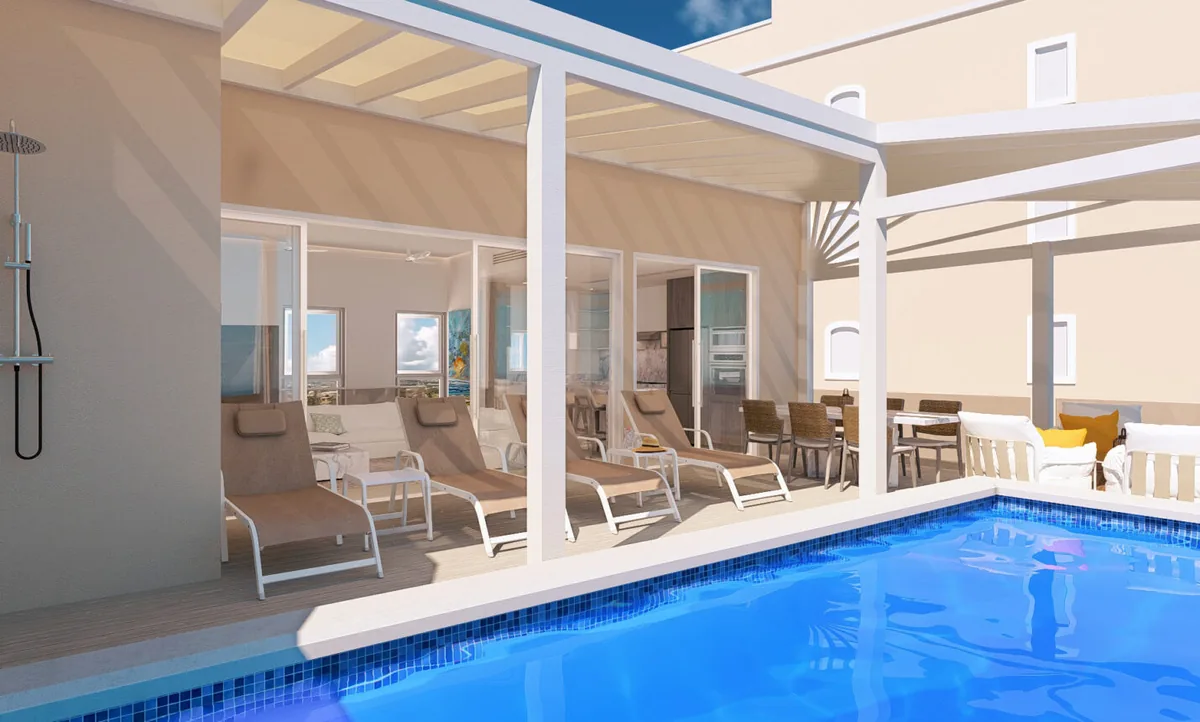
Outer Penthouse 5464, The Crane Private Residences, Barbados
One of only four penthouses in the final phase at The Crane — a two-storey, three-bedroom home with a 19-foot ocean-edge pool and 180-degree Atlantic…
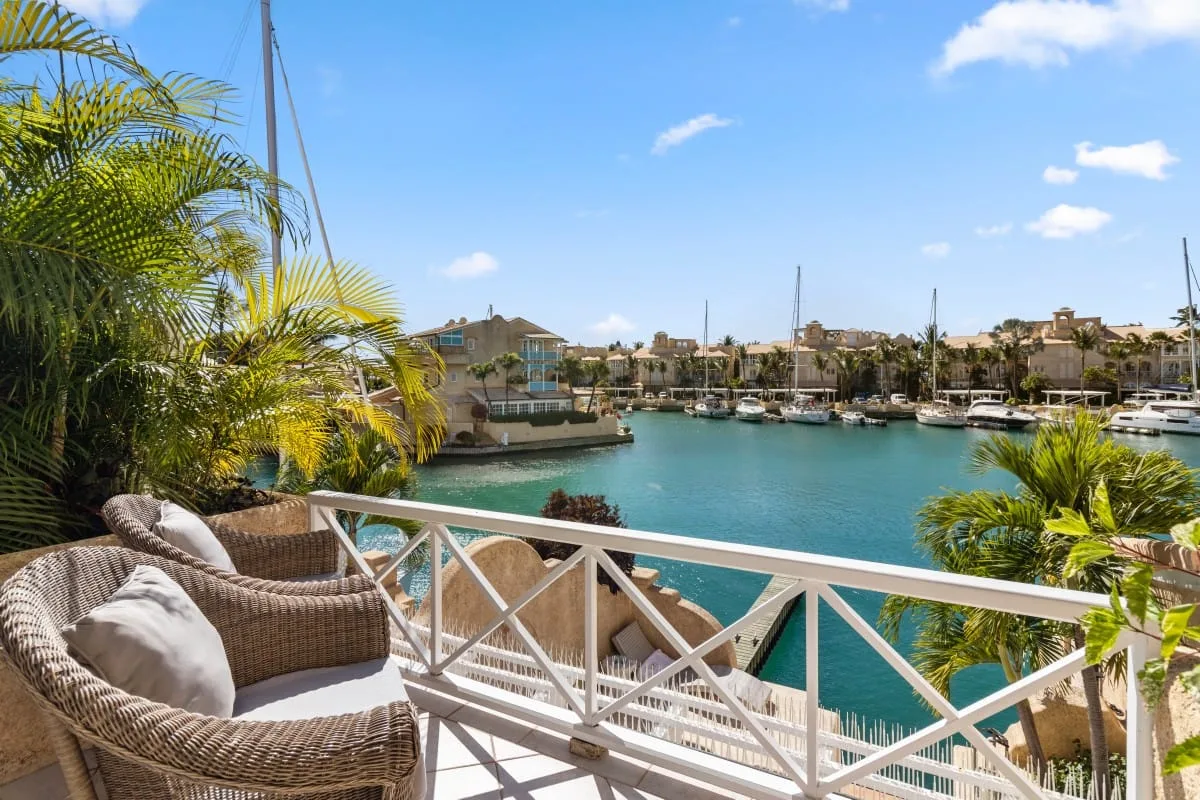
Port St. Charles Lagoon Townhouse, Barbados
A three-bedroom lagoon-front townhouse at Port St. Charles on the West Coast — berth-side living with your yacht moments from the terrace...
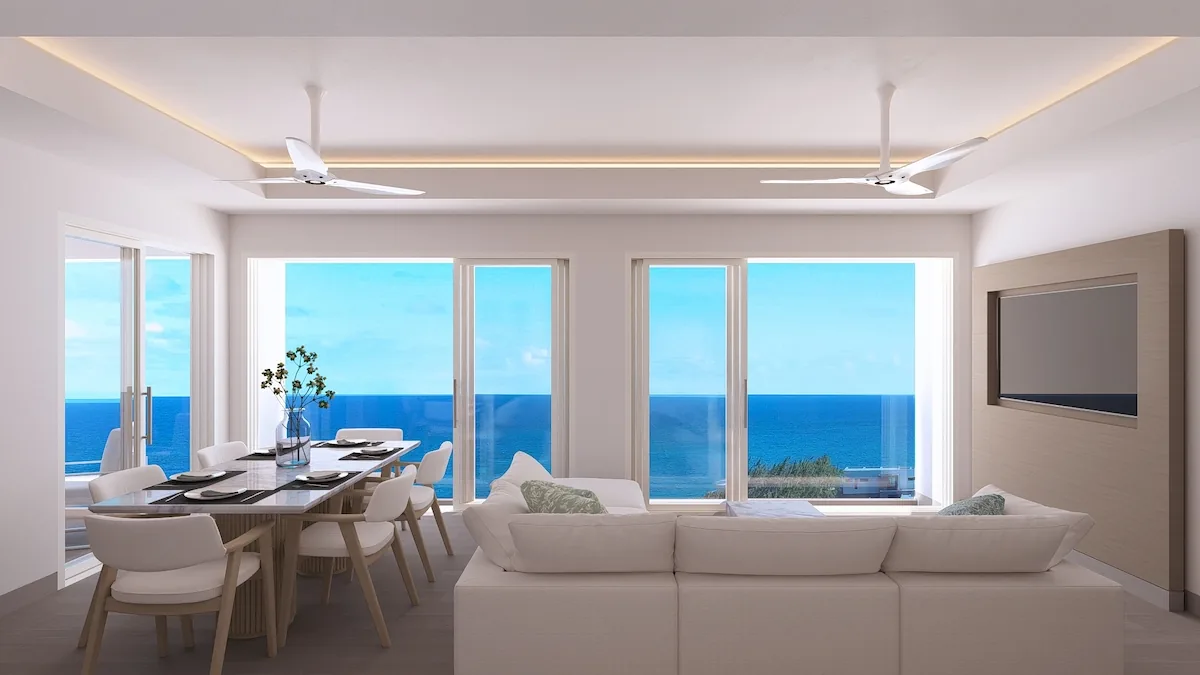
Crane Private Residences Phase 4 — Two-Bedroom, Barbados
A brand-new two-bedroom residence in Phase 4, the final phase of The Crane Private Residences on Barbados' Atlantic coast.
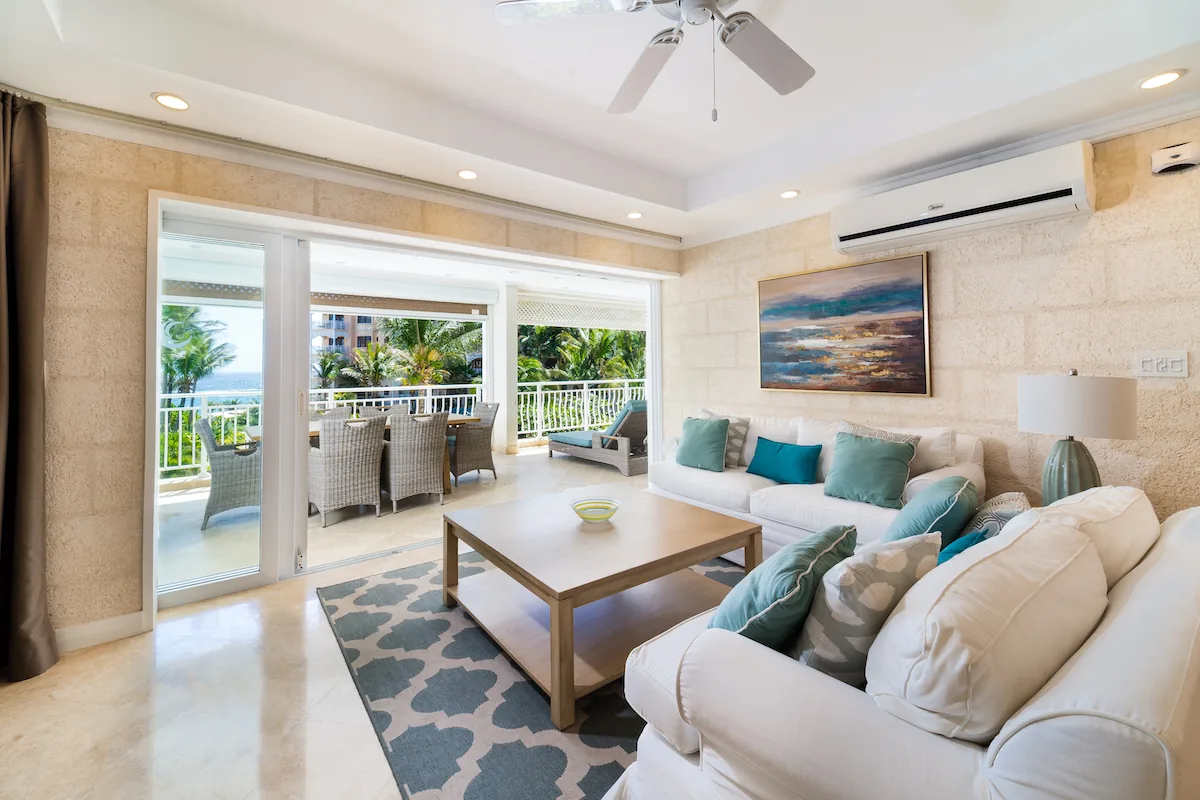
Crane Private Residence 5122, Barbados
A furnished, move-in-ready two-bedroom residence on the second floor of Building One at The Crane, with garden and resort views across the Atlantic…
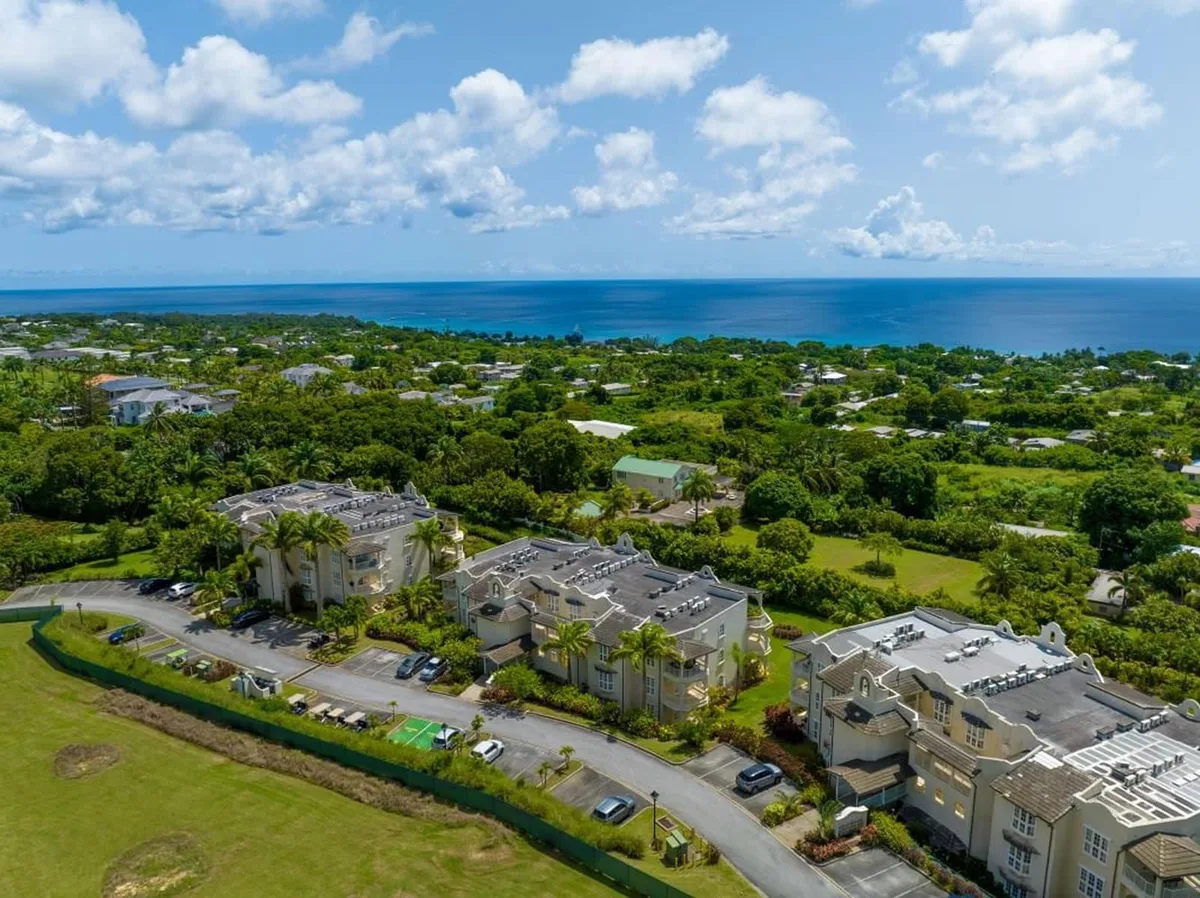
Royal Westmoreland Royal Apartment, Barbados
A ground-floor two-bedroom residence inside Royal Westmoreland's gated golf estate — resort amenities with the West Coast beaches minutes away...
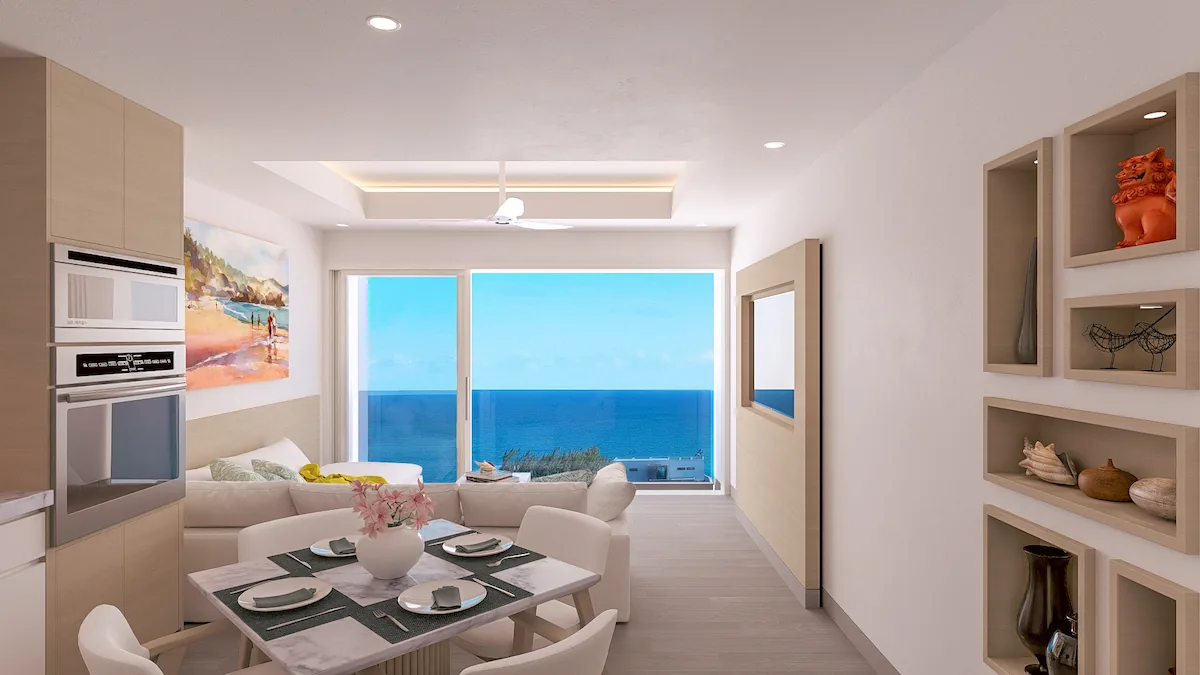
One-Bedroom Residence 5435, The Crane Private Residences, Barbados
A one-bedroom residence in the final phase at The Crane, with ocean views from a private balcony and direct lift access from the underground garage.
Describes Barbados’ own tax system. Americans are taxed on worldwide income wherever they live.
Explore Barbados with Dan.
Book a private call to test the permit, the purchase and the tax position against your family's goals.
Book a Private Call