Real Estate-Backed Citizenship
The route where the qualifying investment is an asset you keep — underwritten as an asset, not as a receipt with a passport stapled to it.
The contribution buys citizenship and nothing else, and for plenty of families that is the right trade — one payment, one less moving part, capital free to work elsewhere. The real-estate route is for people who want the asset on its own merits. It costs more at the outset, it locks capital up for years, and at the end you own a property in a market with characteristics you should understand before wiring anything.
So my test does not move: underwrite the purchase as something you would want to own if no passport were attached. If it only makes sense with the citizenship bolted on, it is not an asset — it is an entry fee with a service charge.
What you actually own — and it is not always the same thing
“Real estate” covers at least three instruments here, and the difference is the whole game. Some approved options are freehold or long-leasehold title in your name, the same ownership a cash buyer gets. Others are a share in a resort scheme, or a deeded fractional interest in a specific home — a real property right that resells into a much narrower market. Grenada’s cheaper entry point is explicitly of the second kind. I tell you which one you are looking at before we discuss price.
Put the question to any seller in writing: what exactly is being conveyed, and who owns the land underneath? On leased-land resorts the follow-up is what happens to your interest if the head-lease ends. If nobody can answer that clearly, that is your answer. Deeded fractions are set out on fractional ownership, the operator-agreement version on branded residences.
The five real-estate routes

St. Kitts & Nevis
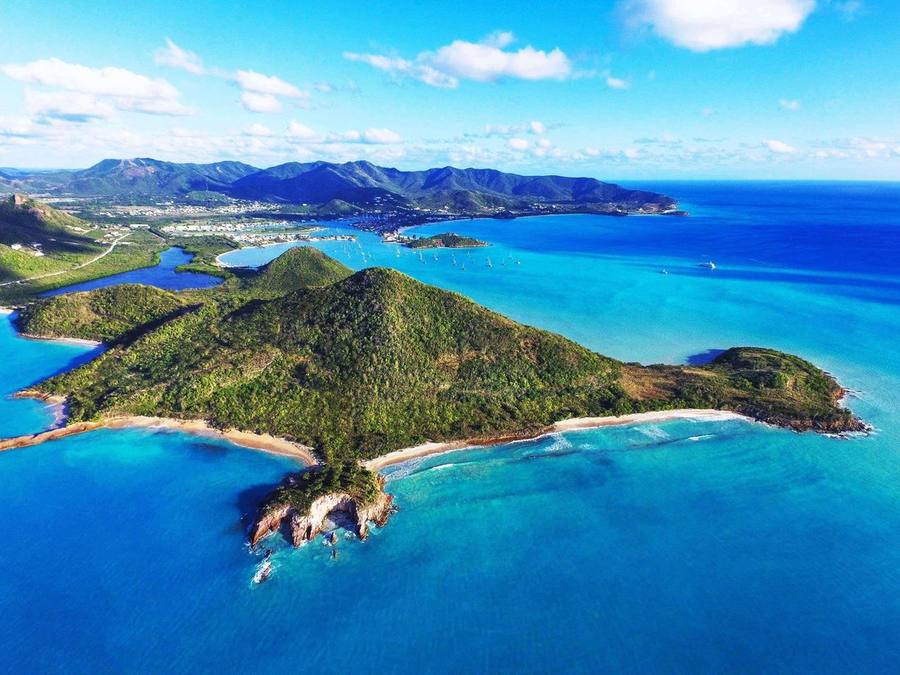
Antigua & Barbuda
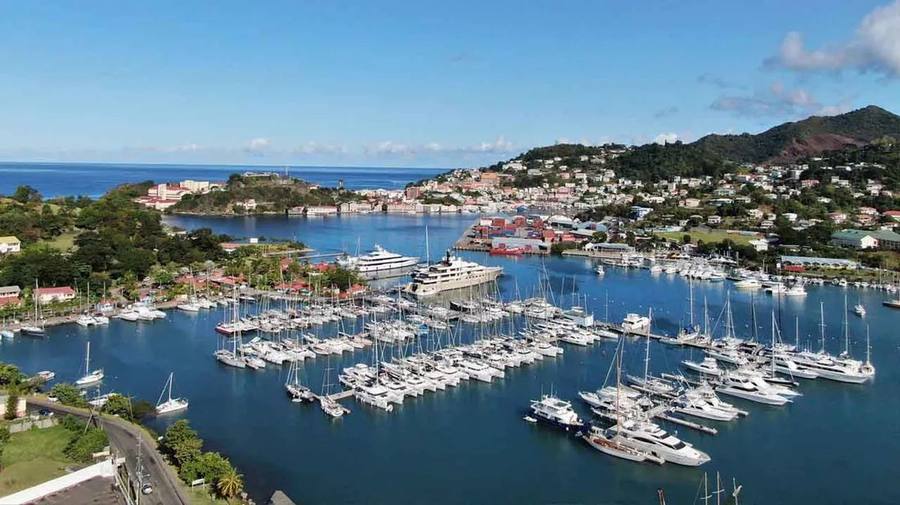
Grenada
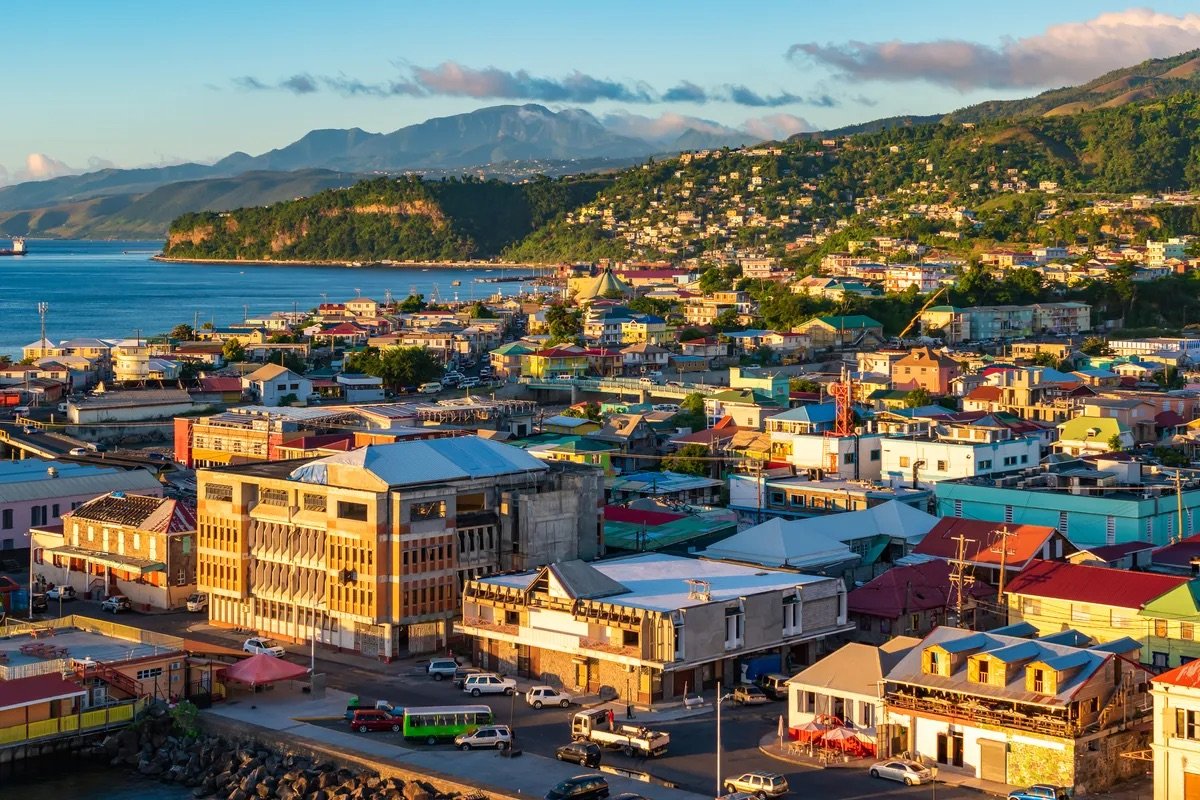
Dominica
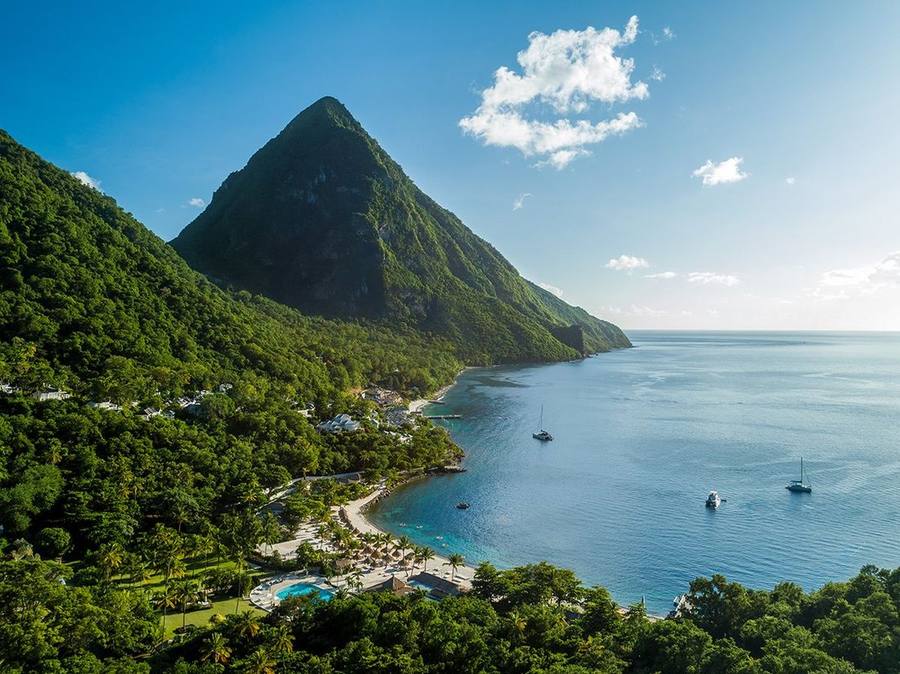
St. Lucia
Three of those need reading twice. Grenada’s $270,000 is not a single-buyer price: under S.R.O. 15 of 2024 it is a per-share minimum where two or more buyers jointly purchase a tourism-accommodation unit valued at US$540,000 or more, and a sole buyer needs $350,000. Either way a separate non-refundable $50,000 government contribution for a family of up to four sits on top, putting the realistic floor at $320,000 per share or $400,000 sole. Dominica’s $200,000 is the property alone — government fees there begin at $75,000 for a single applicant. And the holding clock starts in different places: seven years from purchase in St. Kitts & Nevis, three from the grant of citizenship in Dominica. Confirm which date governs your file, and see what “approved” actually means before assuming a listing qualifies.
Resale is the number to underwrite first
These are thin markets. Few comparable sales, almost entirely cash buyers because local mortgage lending to non-residents is limited and slow, and not one of the five jurisdictions publishes a house price index or a public transaction database. Grenada is the most transparent, and even there the best figure available is a regional brokerage tally — Terra Caribbean counted 366 transactions worth roughly EC$143.4 million in the first half of 2025. A long way from what you would want before parking $300,000-plus for the better part of a decade.
The structural point matters more than any number. A unit priced at the program minimum, resold into a pool made up mostly of applicants trying to clear that same minimum, has very little headroom to trade above it. That is my read from resale conversations and listing behaviour in my own practice, not a measured figure — there is no public dataset it could honestly come from. When an agent quotes an appreciation number for approved inventory, ask which transactions it is drawn from. Marketed yields typically run 2–5%, and “guaranteed buyback” offers — commonly half the value returned after five years — are developer promises, not government guarantees. Treat recovered capital as a bonus rather than a plan.
How a development gets onto my list
I walk them myself, at the hour of day the brochure photographer avoided. The ones I have walked away from are the more useful half of that list. On any project I bring you, my read includes the parts a listing sheet leaves out.
Five things get answered in writing before a deposit moves. Where the deposit sits — a regulated escrow account is a different instrument from the developer’s operating account, so name the agent and the release triggers. What triggers each stage payment — certified construction milestones behave very differently from calendar dates, which transfer delay risk to you. What happens if the brand leaves — operator agreements have terms, and this region has already seen flags change on delivered projects. The remedy for late delivery — a long-stop date with a defined exit beats a penalty clause you would have to litigate offshore. The developer’s record on previous projects — delivery history here is the most predictive fact available, and it is public if you know where to look.
Two more are specific to this route. Approval lists are not static, so eligibility is checked against the current list before any offer is written. And the HOA history is worth an hour: what the service charge has done over five years says more about how a community is run than the amenity list does. The full pre-construction sequence is in my off-plan due-diligence checklist, written after watching an 8,000-unit off-plan fraud unwind.
What it costs to own, every year
Buyers budget for the purchase and get surprised by the ownership. Condominium fees in this region commonly run US$400 to $900 a month, community dues US$1,000 to $4,500 a year and north of US$10,000 in golf and marina communities. Insurance is repricing: after Hurricane Melissa the region’s catastrophe facility made its largest payouts ever, premiums have climbed in the more exposed markets and some insurers have withdrawn from the highest-risk islands. Get a real quote on the actual property before you sign, because on some islands insurable versus uninsurable is asset versus liability. Electricity runs roughly US$0.25 to $0.40 per kilowatt-hour.
If a resort rental program is attached, treat the projections as projections. Full-service management typically takes 20 to 35% of gross revenue, with the observed range running 10 to 50% and remote locations at the top of it. Occupancy decides everything and is the number most often misreported, because platforms measure booked nights against available nights rather than against the calendar. Ask what the same unit type actually paid out last season, net of management and low season — my team will get you that figure, and I would rather you saw it before you bought than after: why Caribbean rental cashflow is harder than it looks.
Why families choose the asset route
- Capital held in property rather than paid into a development fund — with a real, if uncertain, chance of recovering some of it
- Freehold or long-leasehold title on the whole-ownership routes, the same ownership a cash buyer gets
- A resort-managed rental program on most approved developments — underwritten from last season’s payouts, not the brochure’s projection
- An asset that survives the citizenship: selling after the holding period never affects the passport
- A physical base in a region where one citizenship carries live-and-work rights across the OECS protocol states
For American buyers, on this route specifically
Owning the asset adds obligations rather than removing them. Rental income earned abroad is reportable to the IRS, the eventual sale is a reportable disposition, and the local side of the transaction carries licence fees and withholding rules that differ island by island. None of it changes the headline: US citizens remain taxed by the United States on worldwide income regardless of a second citizenship, and none of the five Caribbean programs has a US income tax treaty. Buy the property because you want the property. If the objective is genuinely tax, the honest answer is domestic — Puerto Rico’s Act 60 — and I will say so rather than sell you a passport that will not do it. I work alongside your own counsel on the structuring, before contracts are signed rather than after: international tax planning.
Frequently asked questions
Do I actually own the property, or just a right to use it?
It depends on the product, and the difference is the whole game. Some approved options are freehold or long-leasehold title in your name. Others are a share in a resort scheme or a deeded fractional interest — real property, but it resells into a much narrower market. Grenada’s $270,000 entry point — a per-share minimum on a qualifying joint purchase totalling US$540,000 or more under S.R.O. 15 of 2024, where a sole buyer needs US$350,000 — is explicitly a per-share figure on a qualifying joint purchase. I tell you which one you are looking at before we discuss price.
Can I rent the property out?
In most cases yes, and many approved developments are built around a managed rental program — with the caveat that brochure yields are projections. Marketed yields typically run 2–5%, management takes 20 to 35% of gross revenue, and occupancy is usually reported as booked nights against available nights rather than against the calendar. Ask what the same unit type actually paid out last season, net.
What happens to the passport if I sell the property?
Nothing. Citizenship, once granted, does not depend on continuing to hold the property. The holding period exists to prevent immediate flipping — seven years in St. Kitts & Nevis, five in Grenada and St. Lucia, three in Dominica, and a period fixed at application in Antigua & Barbuda. Check which date starts the clock, because it differs by program.
How liquid is the resale market?
Thin. Few comparable sales, almost entirely cash buyers because local lending to non-residents is limited, and no jurisdiction publishes a price index or transaction database. A unit priced at the program minimum resells mostly into a pool of applicants trying to clear that same minimum, which caps the headroom.
What if the developer does not complete?
That is what the escrow arrangement is for, and it is the clause to get named in writing before a deposit moves — who holds the funds and what triggers release. Prefer certified construction milestones to calendar dates, insist on a long-stop date with a defined exit, and check the developer’s completion record.
Is the real-estate route ever cheaper than the contribution?
Not on the sticker price. It changes if you were always going to buy a Caribbean property anyway, at which point the incremental cost of citizenship is the gap between what you would have paid regardless and the program minimum. Otherwise the contribution wins on cost and simplicity — the trade-off is worked through on donation versus real estate.
The projects listed here are assessed for the buyer, not marketed for a developer. US citizens remain taxed by the United States on worldwide income regardless of a second citizenship — none of the five Caribbean programs has a US income tax treaty.
See what’s actually available.
Book a private call to access the current development shortlist and off-market inventory in the private dataroom.
Book a Private Call