St. Lucia Citizenship by Investment
The newest of the five programs, with four routes in — fund contribution, approved real estate, government bonds and an enterprise project.
About St. Lucia
St. Lucia runs the youngest of the five Caribbean citizenship-by-investment programs — established in 2015 — and the only one with four routes in. The qualifying minimum is a US$240,000 National Economic Fund contribution; approved real estate starts at US$300,000 with a five-year hold. Files are currently running around 18 months against a 90-day statutory target, the slowest of the five. The passport carries visa-free or visa-on-arrival access to approximately 145 destinations (Henley Passport Index, 2026). It suits families treating a second citizenship as long-horizon insurance rather than a fix for a fixed date.
The island, in one read
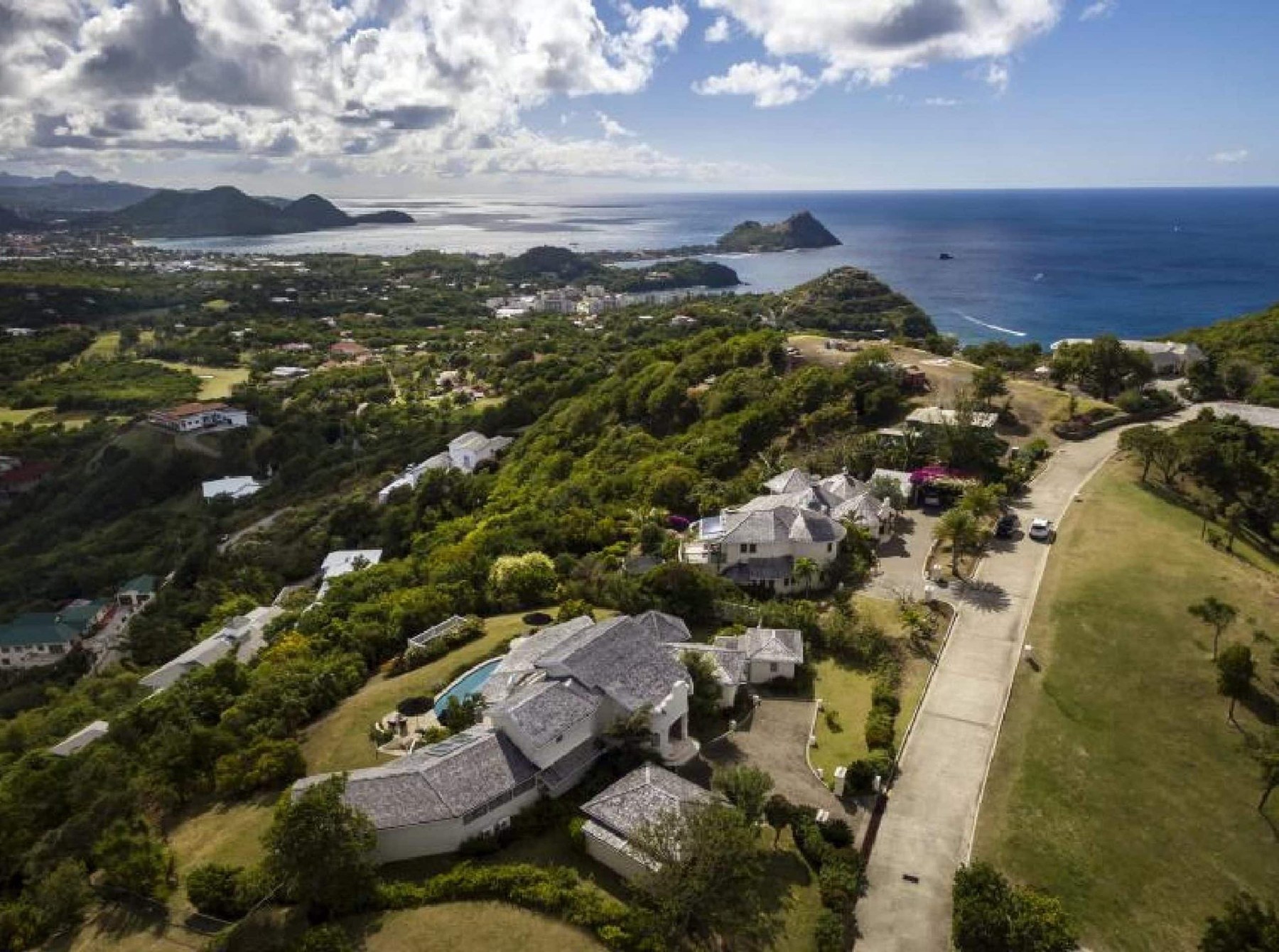
St. Lucia is the largest and most developed of the five citizenship islands, and decades as the Caribbean’s honeymoon capital gave it recognition no program could buy. It is two markets. In the southwest, the UNESCO-listed Pitons rise straight from the sea, and planning control inside the Pitons Management Area keeps trophy supply near zero. In the north, Rodney Bay carries the marina, the restaurants and most of the new construction. The full market read sits in the St. Lucia real estate guide.
Who it suits
It is the wrong program for anyone who needs a passport by a date.
- Families treating a second citizenship as long-horizon insurance, not a deadline
- Buyers who want an asset at the end of it — four routes in, including the region’s only quasi-refundable one
- Visa-free or visa-on-arrival access to approximately 145 destinations (Henley Passport Index, 2026)
- Indefinite live-and-work rights across the OECS protocol states, under the Revised Treaty of Basseterre
- No local tax on worldwide income, capital gains or inheritance — though US citizens remain taxed by the IRS on worldwide income regardless of a second citizenship, and none of the five programs has a US income tax treaty
- No pre-application residency requirement and no obligation to relocate
- Not named in the December 2025 US travel proclamation
Why Dan
Dan acquired his own second citizenship in 2022 and guided more than 100 families through these programs in 2025 alone. Dan Merriam & Associates advises from offices in Nevis, St. Kitts, Antigua, St. Lucia and Dominica, and works across the OECS on the free-movement stamp rather than a permit. Dan represents Rodney Bay Marina Condos directly and advises independently across the rest of the island.
Citizenship
All four routes lead to the same citizenship and the same passport. What differs is how much capital is given up permanently, how long the rest stays locked, and whether the family owns anything at the end.
The four routes in
National Economic Fund — from US$240,000. The donation route and the cheapest way in: one price covers a main applicant alone or with up to three dependants. The money is gone — no asset, no resale, no redemption — and what it buys is the cleanest and fastest-to-document file of the four.
Approved real estate — from US$300,000. A qualifying purchase in a government-approved development, with a five-year hold before resale — the only route that leaves an asset behind, and the only one where the decision is as much a property decision as a citizenship one.
National Action Bond — US$300,000, plus a fixed US$50,000 non-refundable administration fee. A five-year government bond, refundable in principle — the only quasi-refundable route among the five programs. Read “in principle” precisely: a five-year commitment of principal to a small sovereign, with the fee spent whatever happens to the bond.
Enterprise project — from US$250,000. Qualifying investment into an approved project, scaling to US$6 million. It exists for operators genuinely building something on the island; for everyone else, one of the first three routes is cleaner and faster.
Due-diligence, government processing and passport fees sit on top of every route, and the real-estate route adds an Alien Landholding Licence, legal and closing costs and, on resort product, service charges and a rental split. Those move with family size and with the unit, so the full cost stack and the dependant maths are what the strategy call is for. St. Lucia’s fund route is the second-dearest of the five, above Dominica’s US$200,000 and below only St. Kitts & Nevis’s US$250,000; the side-by-side sits on the program comparison.
Process and timeline — the honest range
The sequence is short: a strategy call; an authorized agent appointed and the file assembled with every dependant named at the outset; qualifying investment; submission, with the due-diligence interview for everyone aged 16 and over; approval and passports.
The statutory target is 90 days; that is not what files are running. Agent-reported averages put St. Lucia at roughly 18 months, and some files have gone past two years — volume rather than obstruction, as applications rose faster than the citizenship unit’s adjudication capacity. St. Lucia is the slowest of the five, and for a family that needs a passport by a date it is the wrong program. Where the citizenship is long-horizon and the island is what the family actually wants, the queue is a cost to plan around, not a disqualifier.
The risk read
St. Lucia was not named in the December 2025 US proclamation that placed partial travel restrictions on Antigua & Barbuda and Dominica — two of the five programs, not all five. The United Kingdom did act: a visa requirement for St. Lucian nationals took effect 5 March 2026, which changes the answer for any family whose case rests on UK access. A revised EU visa-suspension mechanism entered into force on 30 December 2025, and the Commission has asked all five governments to phase their programs out by 1 June 2028 — a demand rather than an action.
St. Lucia levies no capital gains or inheritance tax and does not tax the foreign income of non-residents. But the United States taxes its citizens on worldwide income wherever they live, none of the five programs has a US income tax treaty, and FATCA follows the person rather than the travel document. If tax is the real objective for an American, Puerto Rico’s Act 60 is the move that changes the arithmetic; the wider case sits on second citizenship for Americans.
Frequently asked questions
How much does St. Lucia citizenship by investment cost?
The qualifying minimum is a US$240,000 National Economic Fund contribution, covering a main applicant alone or with up to three dependants. Approved real estate starts at US$300,000 with a five-year hold; the National Action Bond is US$300,000 plus a fixed US$50,000 non-refundable administration fee; the enterprise route starts at US$250,000. Due-diligence, government processing and passport fees are charged on top of every route.
How long does a St. Lucia application actually take?
The statutory target is 90 days, and that is not what files are running. St. Lucia is the slowest of the five Caribbean programs, with agent-reported averages around 18 months and cases known to run past two years. If you need a passport by a defined date it is the wrong program, and Dan says so on the first call.
Which of the four St. Lucia routes is best?
It depends what you are solving for. The National Economic Fund is cheapest and cleanest to document. Approved real estate is the only route that leaves you an asset you can use and resell after the five-year hold. The National Action Bond is the region’s only quasi-refundable route, at a US$50,000 premium. The enterprise route suits operators putting capital into a business.
Do I have to live in St. Lucia?
There is no pre-application residency requirement and no obligation to relocate. A 30-day post-citizenship presence obligation — 30 days on-island within five years of approval — has been working through the regional ECCIRA framework, and the window for applications filed before 30 June 2026 to bypass it has closed.
Who can I include on a St. Lucia application?
A spouse and dependent children, and in many cases parents and siblings, subject to the program’s criteria. The US$240,000 fund price covers the main applicant alone or with up to three dependants; beyond that, family size moves both price and timeline. Everyone aged 16 and over sits a mandatory due-diligence interview.
Will a St. Lucia passport reduce my US taxes?
No. The United States taxes its citizens on worldwide income wherever they live, none of the five Caribbean citizenship countries has a US income tax treaty, and FATCA follows the person rather than the travel document. St. Lucia levies no capital gains or inheritance tax and does not tax the foreign income of non-residents — true of the jurisdiction, and no change to an American’s federal liability.
Where does St. Lucia stand with the US, UK and EU?
St. Lucia was not named in the December 2025 US proclamation that restricted travel from Antigua & Barbuda and Dominica. The United Kingdom introduced a visa requirement for St. Lucian nationals effective 5 March 2026. The EU brought a revised visa-suspension mechanism into force on 30 December 2025 and has asked all five governments to phase their programs out by 1 June 2028 — a demand, not an action, as of this writing.
Real Estate
St. Lucia’s approved list is short by design and has been getting shorter, which cuts both ways: less choice, and capital concentrated in developments with real balance sheets behind them. The qualifying floor is US$300,000 into an approved development, with a five-year hold before resale.
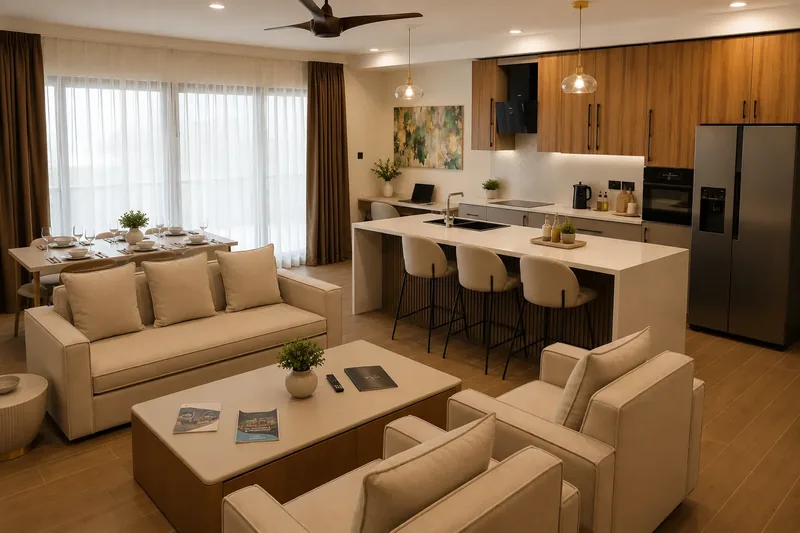
Rodney Bay Marina Condos — Rodney Bay. The citizenship-eligible branded residences on the island’s north coast, and the development Dan represents directly. A one-bedroom hotel residence of 106 square meters is offered on a leasehold basis at US$540,000. Off-plan, so delivery and deposit risk are real and priced as such.
Sugar Beach — Val des Pitons. Viceroy-managed residences in the valley directly between the two peaks, inside the UNESCO-listed Pitons Management Area where planning control keeps new supply near zero. It trades largely as a resale market with real comparables rather than off-plan risk: a completed three-bedroom residence of 238 square meters is offered freehold at US$6,000,000. Dan advises here independently.
Golf Residences — Point Hardy, Cap Estate. Clifftop residences on a championship course at the island’s northern tip, publicly reported from around US$6 million. The golf is the value engine, so a non-golfer pays for an amenity they may not use. Nearby, the freehold two- and three-bedroom homes at The Landings, around the island’s only private marina, are the operating-resort alternative to off-plan — publicly reported from roughly US$575,000, which Dan confirms before anyone relies on it.
Buying it properly
Whether a specific resale qualifies for the citizenship program depends on whether it sits inside an approved structure; established resale homes are not automatically eligible the way a designated new project is. Most branded-resort inventory here is freehold and some hotel-residence programs are leasehold, which changes both the resale story and the citizenship treatment — the first thing the practice checks on any unit. Rental income is underwritten from the program’s actual numbers rather than the brochure’s, and the Alien Landholding Licence is built into the timeline so it runs in parallel rather than holding up completion. Dan represents Rodney Bay Marina Condos and advises independently on everything else; both facts are on the table before the advice is weighed.
Pricelists, floorplans and underwriting are shared privately. The full market — both coasts, the price bands and how a foreigner actually buys — is in the St. Lucia real estate guide, and current inventory sits in the listings marketplace.
Current inventory
One CBI-approved listing in St. Lucia.
St. Lucia does not tax the foreign income of non-residents — but US citizens are taxed by the IRS on worldwide income regardless of a second citizenship. Visa-free count per the Henley Passport Index, 2026.
Is St. Lucia right for your family?
Book a private call and Dan will map the four routes — and, where the property route fits, the right development — to your goals, your family size and your timeline.
Book a Private Call