Why invest in Grenada
- US E-2 treaty advantage for owners
- Marina & resort residences
- CBI-eligible developments
- Authentic, less-developed luxury
The Spice Isle's quiet rise.
Grenada is the market Dan describes as rising without announcing itself. The Spice Isle — still green with nutmeg and cocoa, still uncrowded beyond the capital — long traded at a discount to the region's established names, and that gap has been closing as the citizenship program's US E-2 treaty pulls in a buyer the other islands rarely see: the entrepreneur who wants a passport that leads somewhere. What reaches Dan's desk is positioning rather than speculation — families pairing an authentic base with the region's most strategically useful passport, on an island that still feels like the Caribbean did before the crowds.
Who is buying now falls into two camps that rarely overlap. The larger one is the globally mobile founder or investor for whom Grenada is a means to an end — the only Caribbean passport with a treaty route into the United States — and the property is chosen to satisfy the program cleanly and let well between visits. The second is the lifestyle buyer who wants the island itself: a quieter, greener base with real community, a working town rather than a resort bubble, and a south coast that still empties out at night. Dan's job on the first call is to work out which one you are, because the right address, the right ownership structure and the right budget all follow from that.
Where to buy: the southwest corner
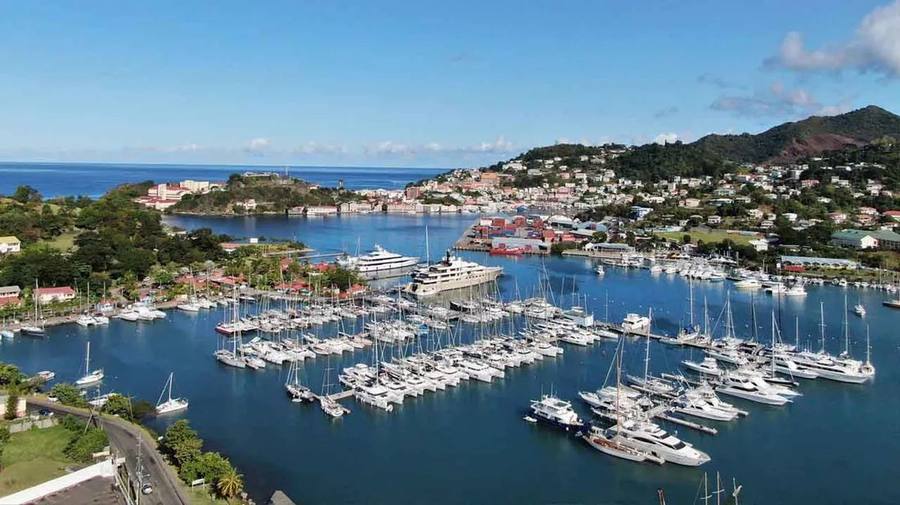
Nearly everything an international buyer will shortlist sits on the island's southwest corner. St. George's, stacked around its harbor, is among the prettiest capitals in the region — fishing boats along the Carenage on one side of the hill, superyachts at Port Louis Marina on the other, and hillside homes above the water that rarely change hands. Just south, the long sweep of Grand Anse carries the established resort strip, the schools and supermarkets, and the rental market that lets first; from there the map runs past the True Blue peninsula, close to the airport, around to La Sagesse on the quieter south-east coast. The current Grenada listings hold both ends of that ladder, from the island's most accessible CBI entry points to freehold beachfront.
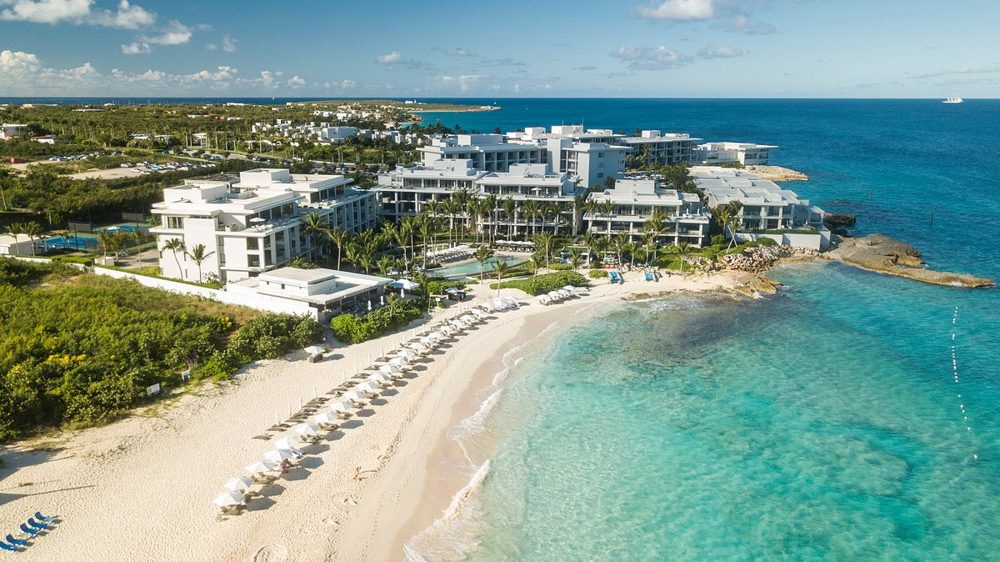
Grand Anse is the established money, and the top of the island's market sits here: the freehold trophy residences at Silversands on Grand Anse reset local expectations for what a finished, branded product could be worth. Around the marina and the headlands to the east, boutique schemes such as the Point at Petite Calivigny answer a different brief — smaller, design-led, and pitched at buyers who want the water without the resort. Reading these addresses against one another, rather than in isolation, is most of what a first island visit is for.
La Sagesse and the international flags
The clearest signal of the island's re-rating is on the south-east coast at La Sagesse, where the arrival of international operators has done quietly what no campaign could. A five-star international resort brand has been open and operating there since 2024, with a second internationally branded hotel alongside it. Two working luxury resorts on one stretch of previously overlooked coast changes what every address near them is worth, and it is the reason Dan watches La Sagesse more closely than any other part of the market.
The way in here comes in two forms, and the difference matters. The resorts’ own residential offer is structured as a citizenship-by-investment share — a passport instrument first, with a resort relationship attached, rather than a deed to a home you control. Beside the resorts sits a freehold alternative: the beachfront collection at La Sagesse, where a two-bedroom apartment of 144 square meters, priced at $742,500 with direct private beach access, is owned outright and structured to produce income while it qualifies for citizenship. Dan spends real time on this distinction, because a buyer who pictures a villa to pass to their children and a buyer who wants the most efficient route to the passport are shopping for opposite things at the same beach.
The university effect
True Blue Bay holds this market's most distinctive demand driver: St. George's University, the international medical school whose students, faculty and visiting families keep the surrounding neighborhoods let year-round. That demand runs independent of the tourist season — rare anywhere in the Caribbean — and it underpins the income case for the bay's flagship project, the Hilton-branded residences on True Blue Bay. The Hilton Condo Residences resort community attaches CBI eligibility to the hotel's Class B shares from US$280,000, with the freehold residences sold separately at market value and completion scheduled for 2027.
Within the same project, the Hilton Condo Residences are the compact entry point: a 70-key, ocean-view scheme by the Grenadian firm Goldblat, where a 28-square-meter one-bedroom hotel unit is offered at $280,000 on a share-ownership basis, income-producing and under construction toward the 2027 delivery. Furnished lets around True Blue and neighboring Lance aux Epines follow the academic calendar, not the airlift, so Dan reads an income unit here against term dates and faculty leases rather than hotel occupancy — a steadier base than most Caribbean rental cases can claim.
What to buy, and the price bands
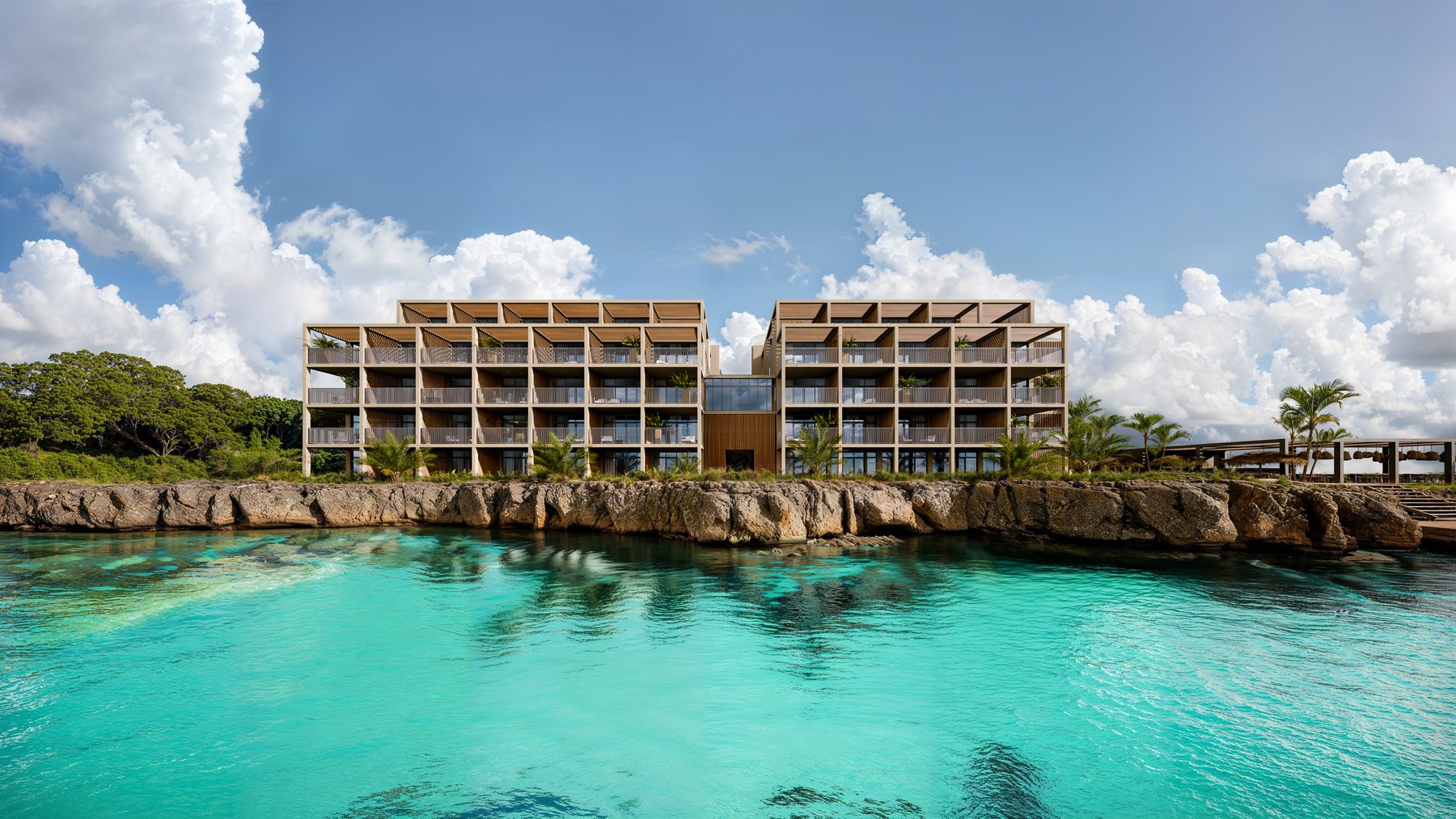
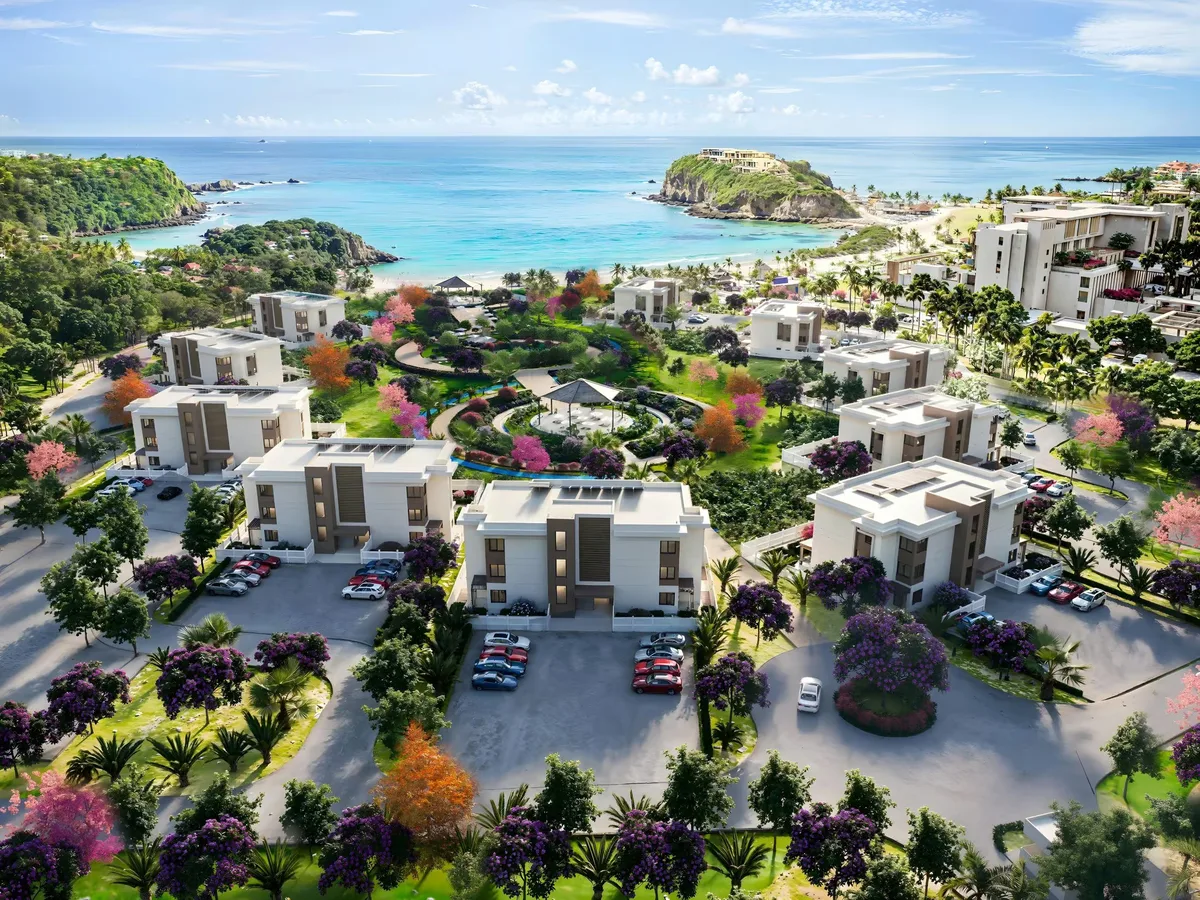
The ladder is short but real. At the accessible end, the South Coast Beachfront Condos — 96 residences, one- and two-bedroom apartments on a sheltered south-coast bay, every unit with a sea view — open at $360,000 and are among the more accessible CBI-eligible entry points on the island. A rung up sit the share-structured hotel units there from $280,000, then freehold beachfront on the south coast at $742,500, with finished villa inventory at Silversands and the marina schemes climbing well into the millions. Dan maps the right band to a budget on the first call, then narrows to the two or three developments worth an in-person look; the wider set he represents sits in the Caribbean developments he represents and, with pricelists and floorplans, in the private dataroom.
Citizenship, the E-2 advantage and tax
Most of what Dan transacts in Grenada happens at the intersection with the Grenada citizenship program: a qualifying purchase from $350,000 in an approved development carries a family to a passport in roughly 4–6 months, with visa-free access to 147 countries and no tax on worldwide income, capital gains or inheritance. The feature that sets Grenada apart is the one every entrepreneur asks about — it is the only Caribbean program whose citizens can pursue the US E-2 investor visa, a treaty route to live in the United States and operate a business there. For applicants from countries with limited direct US access, that combination is often decisive, a point Dan expands on in his note on the Caribbean route to US access. Where a family only wants the passport, the government-contribution route can be cleaner than real estate, and Dan says so; the trade-off is set out plainly against the alternatives when you compare all five Caribbean programs and in his read on what a second citizenship actually does for Americans.
How a foreigner buys here
Foreign buyers own freehold in Grenada, and the mechanics are familiar: a Grenadian attorney, title checked, funds moved through the lawyer's account, with government and professional fees layered on top of the headline price — figures Dan sizes for each deal rather than quoting as a rule. Two structures sit side by side on this island and behave differently. Freehold title — at the condos, at La Sagesse and at the standalone residences — is a deed you hold, use and resell. Share ownership, at the hotel and resort projects, buys a designated interest in an approved scheme with a required holding period, after which it can be resold without disturbing the citizenship it secured — but into a thinner, more specialized market. Financing exists but is limited for non-residents, so most purchases here are cash or staged deposits against construction, which is why the payment schedule on a pre-completion unit matters as much as the price. Dan runs the property and the citizenship file as one coordinated process through his Sotheby's International Realty affiliation.
Dan's angle and the trade-offs
This is the island Dan points US-focused entrepreneurs to first, and the one he tells lifestyle buyers to walk before they commit: greener, quieter and less polished than Antigua or Nevis, and buyers either fall for that or they don't. The work runs in a set order — a strategy call to settle route and budget, the private dataroom for pricelists, floorplans and underwriting, then an island visit timed so the whole shortlist can be walked in a day or two. He will not place pre-completion stock without naming the risk: a 2027 delivery is a developer's schedule, not a promise, and the payment structure should reflect it. Buyers weighing Grenada against its Windward neighbors usually look next at the St. Lucia real estate market, with its Rodney Bay marina residences, and the frontier value in the Dominica real estate market — three CBI islands that reward very different appetites.
Grenada real estate, answered.
Is Grenada eligible for citizenship or residency by investment?
Yes — Grenada runs a Citizenship by Investment program with a real-estate route from $350,000 for a sole purchase (or $270,000 per share on a qualifying two-buyer co-purchase) and approval in roughly 4–6 months. It is the only Caribbean program whose citizens can pursue the US E-2 investor visa — see the full Grenada program page for the current process.
What does real estate in Grenada typically cost?
Entry sits lower than in the region's established markets: south-coast beachfront condos start from $360,000, income-producing hotel shares there from $280,000, a two-bedroom freehold apartment on the south coast at $742,500, and finished villas run well into the millions. Dan maps the right band to your budget on the first call.
What is Grenada's US E-2 visa advantage?
Grenada is the only Caribbean CBI nation with an E-2 investor-visa treaty with the United States. Citizenship comes first — typically 4–6 months — and then opens the route to apply for the E-2, live in the US and operate a business there. For entrepreneur clients this is usually the deciding factor between Grenada and its neighbors.
Where do international buyers focus in Grenada?
Almost entirely on the island's southwest corner: St. George's and its marina, the Grand Anse resort strip, the True Blue peninsula near the airport, and La Sagesse on the quieter south-east coast, where two international resort brands now operate. Dan matches the area to whether you are buying for citizenship, income or lifestyle.
What is the difference between share ownership and freehold in Grenada?
Freehold — at the beachfront condos, at La Sagesse and at standalone residences — is a deed you hold, use and resell. A share, at the hotel and resort projects, is a designated interest in an approved scheme held for a set period, after which it can be resold without disturbing the citizenship, but into a thinner market. Dan settles which structure fits before shortlisting anything.
How does St. George's University affect the rental market?
The international medical school on True Blue Bay anchors rental demand from students, faculty and visiting families that runs year-round, independent of the tourist season. Income units around True Blue and Lance aux Epines benefit most — it is a central part of the income case for the Hilton Condo Residences.
Do I have to live in Grenada to keep the citizenship or the property?
No — there is no physical-residency requirement to obtain or keep Grenada citizenship, and no obligation to occupy the property. Most owners visit seasonally, let the unit the rest of the year, and manage it remotely through on-island managers.

Thinking about Grenada?
Dan lives and works in the region. Book a call for an honest, first-hand read on the market.
Book a Private Call