St. Kitts & Nevis Citizenship by Investment
The world's first citizenship-by-investment program — four routes, the region's most respected passport, and an honest read on what each one costs.
About St. Kitts & Nevis
St. Kitts & Nevis is a two-island federation in the Eastern Caribbean and the home of the world’s first citizenship-by-investment program, running continuously since 1984. Citizenship starts at US$250,000 under the Sustainable Island State Contribution, or US$325,000 in approved real estate held seven years. The Citizenship by Investment Unit’s stated window is 120 to 180 days from acknowledgment of a complete file; agent-reported files average around five months, running to eight on difficult ones. The passport carries visa-free or visa-on-arrival access to approximately 155 destinations (Henley Passport Index, 2026), and the program suits families who want the region’s most scrutinised passport and will pay the region’s highest entry price for it.
Two islands, two propositions
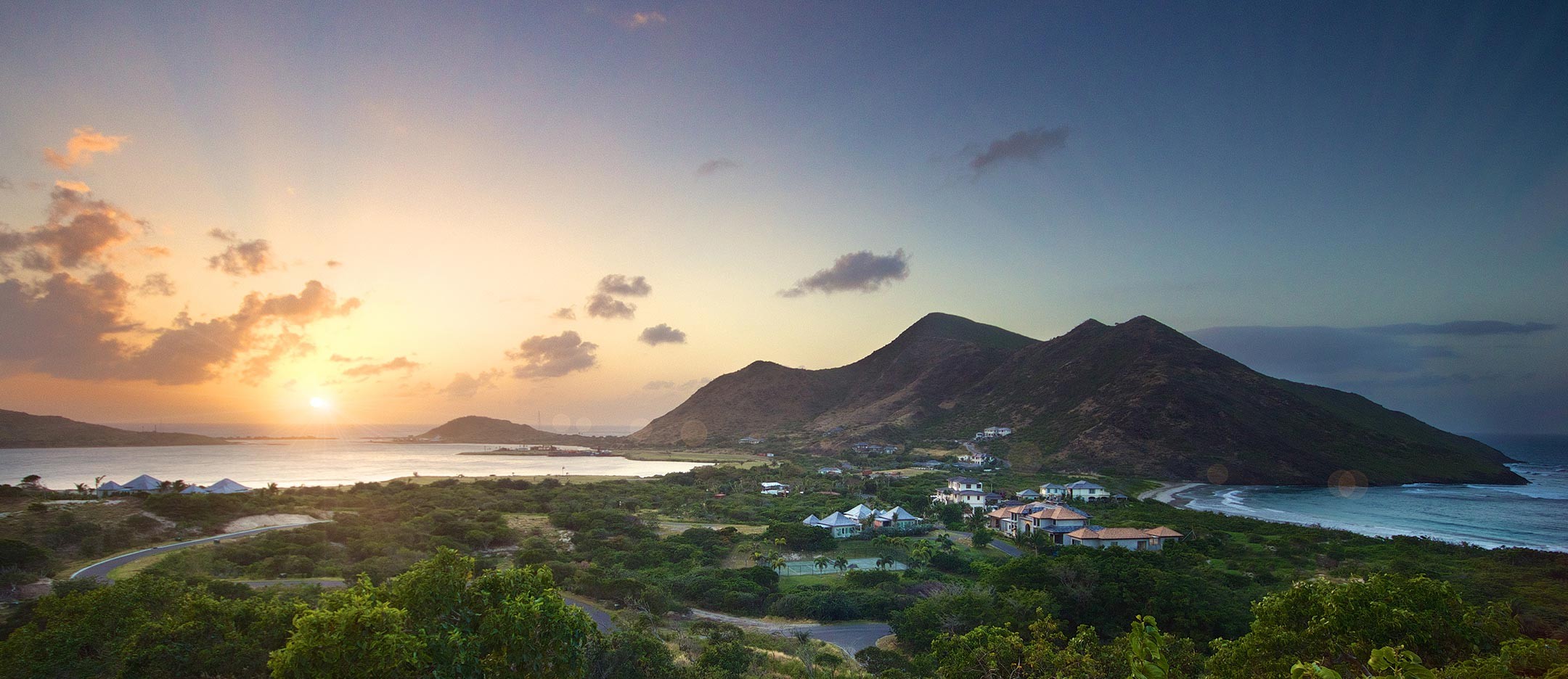
St. Kitts is the institutional half — Basseterre and its international airport, the condo quarter at Frigate Bay, and the estate country of the Southeast Peninsula around Christophe Harbour. Nevis is the quiet half: thirty-six square miles, one volcanic peak, 13,182 people at the 2021–22 census, no cruise pier by policy rather than accident. Four Seasons anchors its west coast at Pinney’s Beach.
The practice keeps offices at Four Seasons Nevis and Marriott St. Kitts, Frigate Bay, in affiliation with St. Kitts & Nevis Sotheby’s International Realty. Dan acquired his own second citizenship in 2022, and the practice has guided more than 100 families through citizenship and residency in the past 18 months. Three changes most published guides miss: the Sustainable Growth Fund was retired in July 2023 and replaced by the Sustainable Island State Contribution; the Citizenship by Investment Unit became a statutory corporation on 1 October 2024 rather than a government department; and on 25 October 2024 the real-estate thresholds came down rather than up — the only price cut in the region since the 2024 reforms.
Who it suits
This is the credential most wealth advisors reach for first, and it carries the highest contribution floor of the five Caribbean programs. It fits a family whose file has to survive a compliance officer’s reading five years from now: private-bank onboarding, a second base meant to pass to the next generation. It fits badly if price is the deciding factor, and on the property routes it fits only a buyer who genuinely wants the asset — the seven-year hold punishes anyone treating the purchase as a receipt. The reasoning is set out in why American clients keep choosing St. Kitts & Nevis; the side-by-side comparison of all five sets the programs against each other.
What the passport opens — and what it does not
Approximately 155 destinations visa-free or visa-on-arrival (Henley Passport Index, 2026), including the Schengen area, the United Kingdom, Singapore and Hong Kong. Treat that as perishable rather than permanent: in June 2026 Ireland withdrew visa-free entry for St. Kitts & Nevis nationals over citizenship-program concerns, requiring a visa even for airport transit. The access that does not move is regional — under the Revised Treaty of Basseterre, citizens of the seven OECS protocol states receive an indefinite-stay stamp on arrival in any of the others, with the right to live and work.
St. Kitts & Nevis levies no personal income tax on worldwide income, no capital gains tax and no inheritance or gift tax — but that describes the jurisdiction, not an American’s position. The United States taxes its citizens on worldwide income no matter where they live or what second nationality they hold, and none of the five Caribbean citizenship countries has a US income tax treaty. The distinction is set out in why second citizenship for Americans is insurance rather than a tax play.
Citizenship
Most published guides describe two routes; the Citizenship by Investment Unit currently offers four, and the difference decides what is owned at the end and how long the capital is locked.
The four routes
- Sustainable Island State Contribution — from US$250,000. A non-refundable contribution covering a main applicant or a family of up to four. Simplest file, fastest to close, no post-approval government fees — and no asset at the end.
- Public Benefit Option — from US$250,000. The same money directed into a named approved project rather than the general contribution account. Approved projects change, so the current list is confirmed at the outset.
- Approved Developer’s Real Estate — from US$325,000. A qualifying purchase in a government-approved development, reduced from $400,000 on 25 October 2024. Resale is barred until a seven-year hold has run — the longest lock-up of any Caribbean program.
- Private Home Sale — from US$600,000. A single-family dwelling on its own title rather than a share in a development, reduced from $800,000 in the same revision. Eligibility is confirmed property by property, under that same seven-year hold.
Those are qualifying minimums, not the total wired. Government fees sit on top of the property routes only, while due-diligence and biometric lines apply on every route, dependants are priced by age rather than headcount, and legal and agent fees are set by the firm handling your file rather than by the Unit. The full cost stack and the dependant maths are what the strategy call is for; Dan puts a single all-in figure in writing before anything is signed. The mechanics across all five programs sit on the costs, timelines and due-diligence page.
Process and timeline
Five stages: a strategy call that settles the route; appointment of an authorised agent and assembly of the due-diligence file — identity, source of funds, source of wealth, and prior visa refusals for every family member; the qualifying investment; filing, with a mandatory interview for every applicant aged 16 and over; then approval, biometric enrolment and passports.
Against the Unit’s stated window of 120 to 180 days, agent-reported data puts the real average around 5.1 months — the fastest of the five Caribbean programs — stretching to eight months on difficult files. Incomplete source-of-funds documentation is the commonest cause of delay, then undisclosed visa refusals and dependants left off the file. There is no residency requirement today, and the interview can be taken virtually.
The honest read
Three risks worth pricing in. If liquidity matters, the seven-year hold on the property routes is a genuine cost, not a footnote. The European Commission’s December 2025 report treated a citizenship-by-investment program as by itself grounds for suspending visa-free Schengen access, and in June 2026 it wrote to all five Caribbean governments demanding a phase-out by 1 June 2028. None has lost EU access, but do not underwrite the mobility map as fixed for a decade. And the rules keep moving: a regional regulator, ECCIRA, was created by treaty in September 2025, and St. Kitts & Nevis was the first of the five to pass its enabling legislation, in October 2025.
This is the most expensive of the five and the most institutionally settled, and those are the same fact. If price is deciding, buy elsewhere. If the passport has to survive a compliance review twenty years from now, this is the one that has already survived forty. The longer view is in the objective audit of every Caribbean program.
Frequently asked questions
How much does St. Kitts & Nevis citizenship cost?
The qualifying minimums are US$250,000 on either contribution route, US$325,000 in approved real estate and US$600,000 for a private home. Government fees sit on top of the property routes only, while due-diligence and biometric lines apply on every route; the contribution route carries no post-approval government fees. Legal and agent fees are set by your law firm; Dan puts a single all-in figure in writing before anything is signed.
What are the four routes to St. Kitts & Nevis citizenship?
The Sustainable Island State Contribution at US$250,000, the Public Benefit Option at US$250,000 into an approved project, Approved Developer’s Real Estate from US$325,000 with a seven-year hold, and a Private Home Sale from US$600,000. Most published guides describe only two, which is out of date.
How long does the process take?
The Citizenship by Investment Unit’s stated window is 120 to 180 days from acknowledgment of a complete application. Agent-reported data puts the actual average around 5.1 months, the fastest of the five Caribbean programs, with difficult files running to eight months.
Do I have to live in St. Kitts or Nevis?
No. There is no physical-residency requirement to obtain or keep this citizenship today, and the mandatory interview can be conducted virtually. A 30-day regional residency standard has been working through the new ECCIRA framework, so the current position is confirmed before filing.
Who can I include as a dependant?
A spouse; children under 18; children aged 18 to 25 in full-time education and fully supported by the main applicant; disabled children at any age; and parents aged 55 and over living with and fully supported by the main applicant. The broader pre-2023 rule no longer applies, and cost per dependant is set by age rather than headcount.
Does St. Kitts & Nevis citizenship reduce my US taxes?
No. The federation levies no personal income tax, capital gains tax or inheritance tax, but that describes the jurisdiction rather than an American’s position. The United States taxes its citizens on worldwide income regardless of where they live or what second passport they hold, and none of the five Caribbean citizenship countries has a US income tax treaty.
How long must I hold the real estate before selling?
Seven years from purchase — the longest holding period of any Caribbean program, against three to five years elsewhere in the region. That lock-up is the trade-off against the lower entry price that arrived when the threshold dropped to US$325,000 in October 2024.
Has St. Kitts & Nevis been named in the recent US travel measures?
No. It was not named in either round of the recent US travel measures, unlike two of the five Caribbean programs. Separately, the European Commission has demanded a phase-out of all five Caribbean programs by 1 June 2028; none has lost EU access.
Real Estate
The property routes run only through projects approved by the federation’s Citizenship by Investment Unit, and that list is not static: approvals are granted, and occasionally paused, as policy moves. The full market, neighbourhood by neighbourhood, is in the St. Kitts market guide and the Nevis market guide.
Where qualifying capital goes
- The Four Seasons Nevis ecosystem. Three tiers of qualifying inventory: whole-ownership homes at the Villas at Pinney’s Beach; one-tenth fractional shares at $475,000, where each share independently qualifies a family; and Nevis Peak Residences from roughly $1.4 million for an entry unit.
- Christophe Harbour, St. Kitts. Estates and deeded berths on the Southeast Peninsula, with select units qualifying. Its superyacht marina was acquired by Safe Harbor Marinas in 2025, putting an infrastructure balance sheet behind the peninsula for the first time.
- Marriott Residences St. Kitts, Frigate Bay. Branded whole-ownership condominiums from $525,000, in the island’s most liquid stock and the natural first stop for an applicant who wants a recognised flag on the building.
- Kittitian Hill and Belle Mont. Cottages and estate lots in the green northwest — estate living rather than branded resort management.
Buying it properly
The practice represents and shows this inventory through the St. Kitts & Nevis Sotheby’s International Realty affiliation, from an office at Four Seasons on Pinney’s Beach. Not every unit on the market qualifies for the program; eligibility is checked against the approved list before an offer is made, and the seven-year hold is priced in on day one rather than discovered at resale. Current inventory across both islands — including condos at the Royal St. Kitts Golf Resort in Frigate Bay and private villas at Sandy Bank Bay — sits in current listings. The two are compared in Christophe Harbour versus Four Seasons Nevis.
Current inventory
12 of 35 CBI-approved listings in Saint Kitts & Nevis.
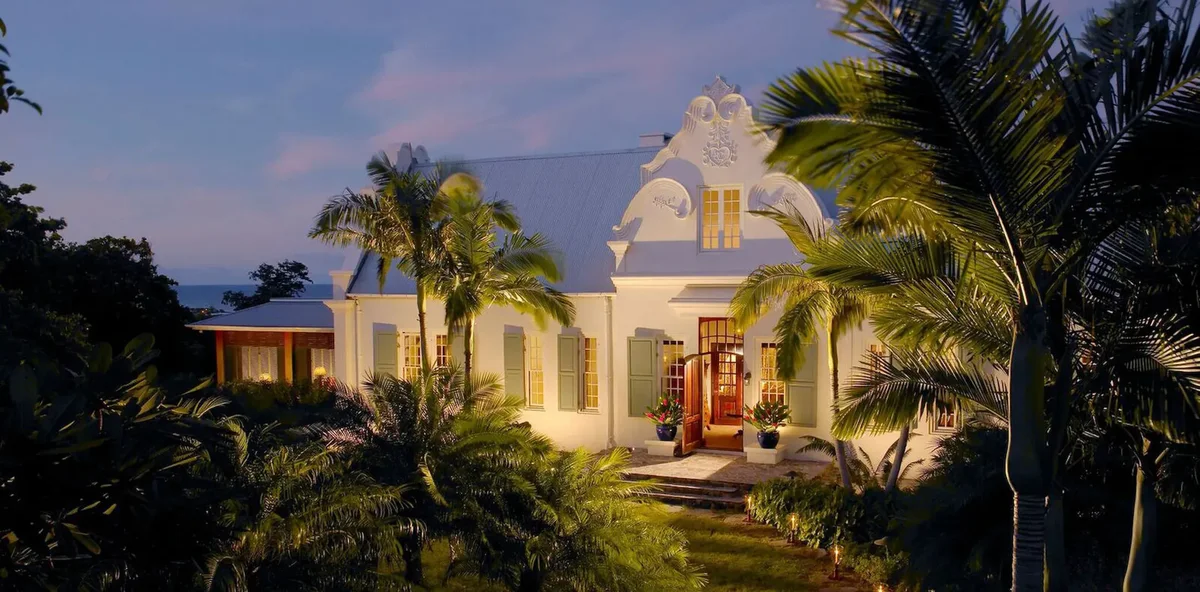
Ouje Mango Rif House, Four Seasons Nevis
A four-bedroom Cape Dutch-style villa on 3.75 private acres within Four Seasons Resort Estates, Nevis.
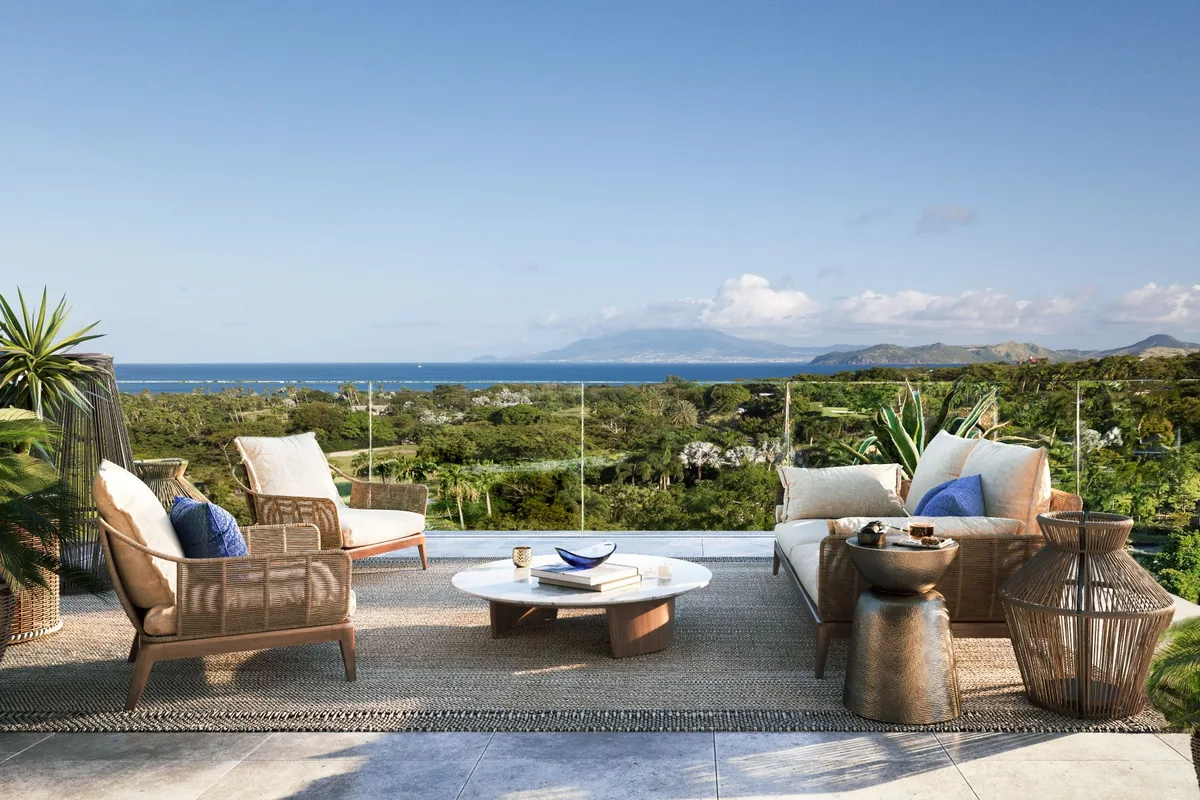
Nevis Peak Residences 2 PH-1, Four Seasons Nevis
A three-bedroom penthouse at The Nevis Peak Residences, overlooking Nevis Peak and the Robert Trent Jones II golf course.
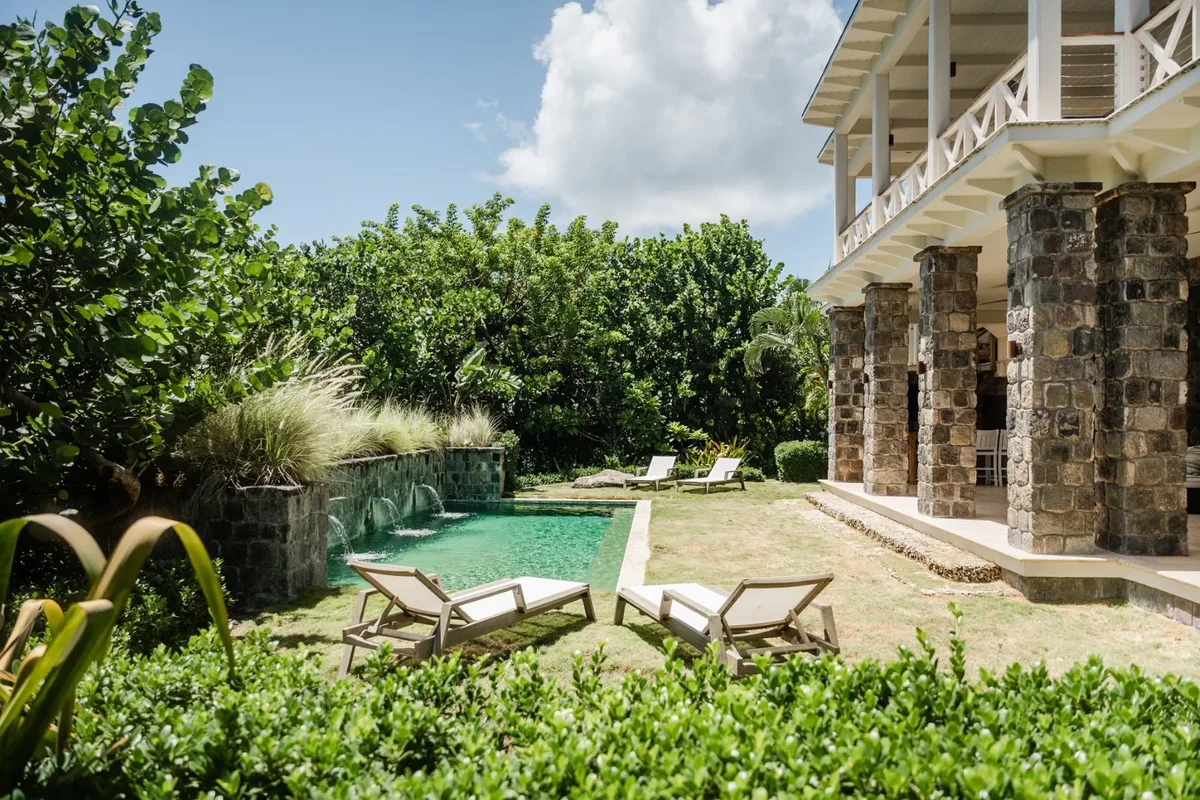
Christophe Harbour Luxury Villa with Marina Views
A completed four-bedroom, four-and-a-half-bath freehold villa of roughly 650 square metres on the Southeast Peninsula of Saint Kitts, overlooking Christophe Harbour's superyacht marina.
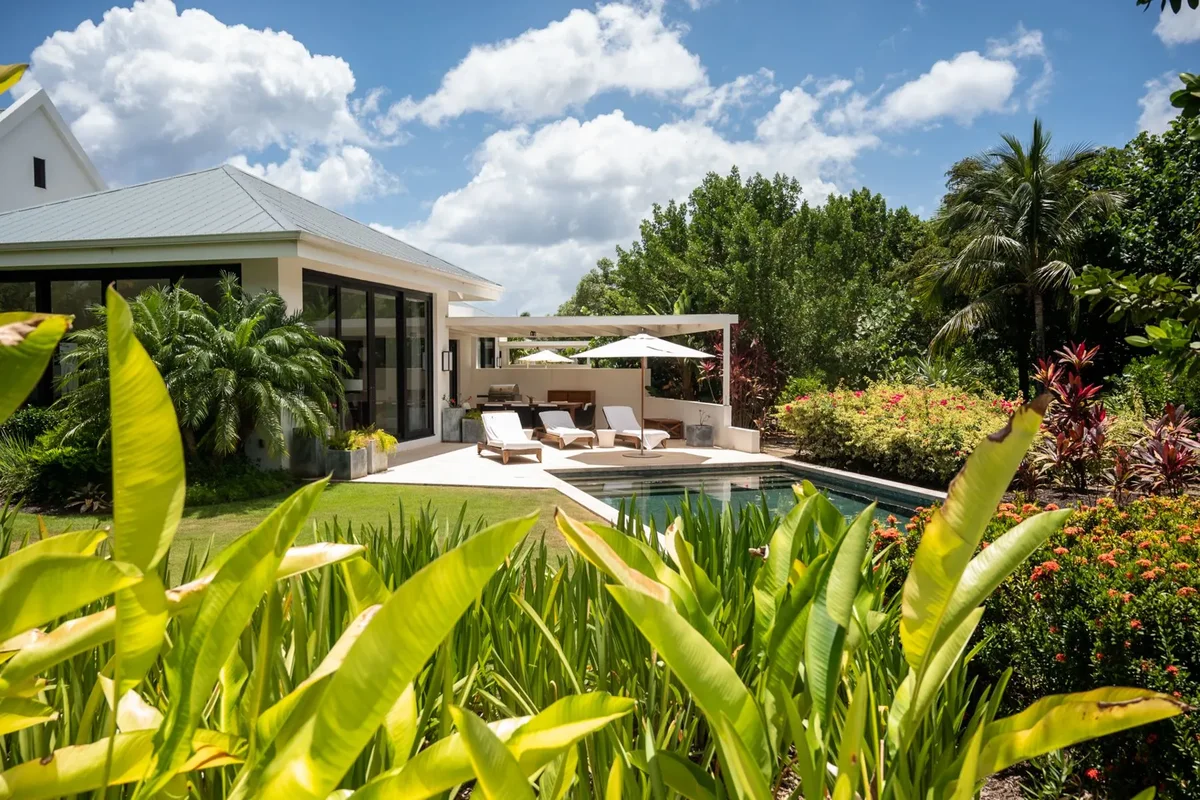
Five-Star Beachfront Villas at Pinney's Beach, Nevis
Four-bedroom beachfront villas of 365 sq.
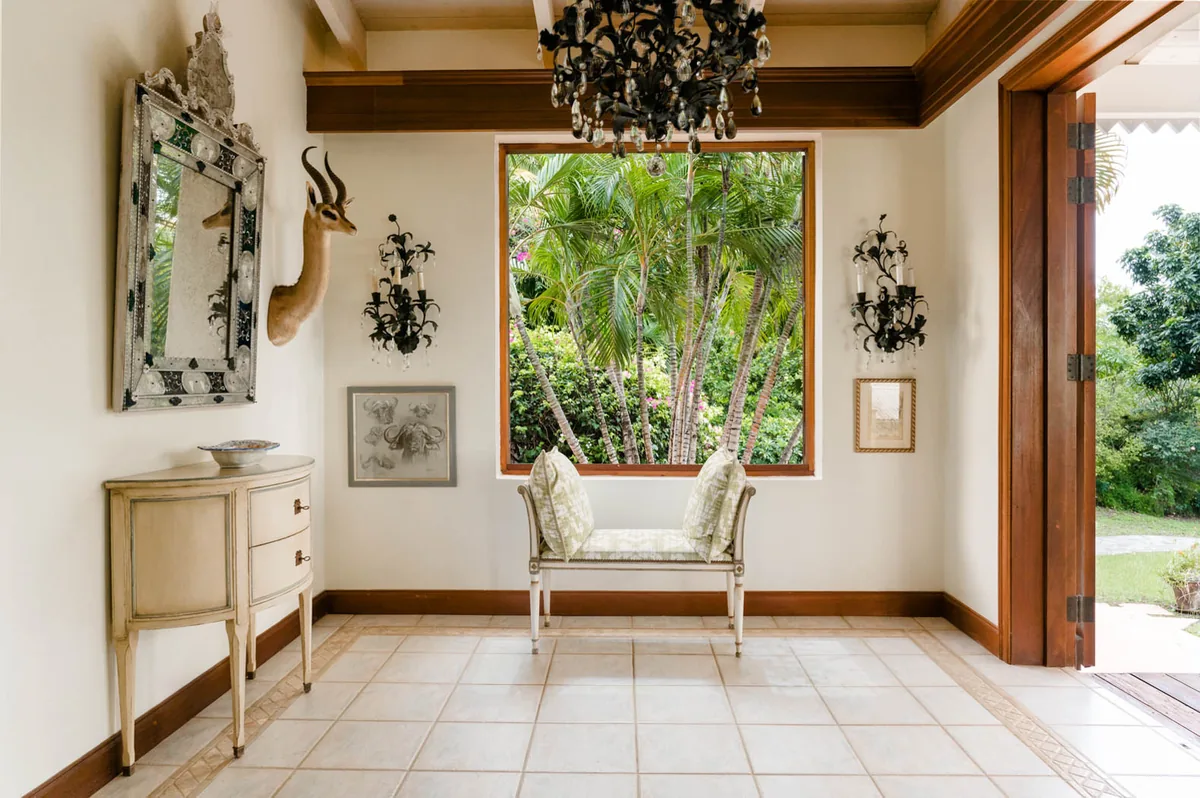
Villa 1708, Belmont Estate, Four Seasons Nevis
A four-bedroom villa on an oversized 2.28-acre lot in Belmont Estate at Four Seasons Nevis, with an outdoor kitchen and views to the Caribbean Sea…
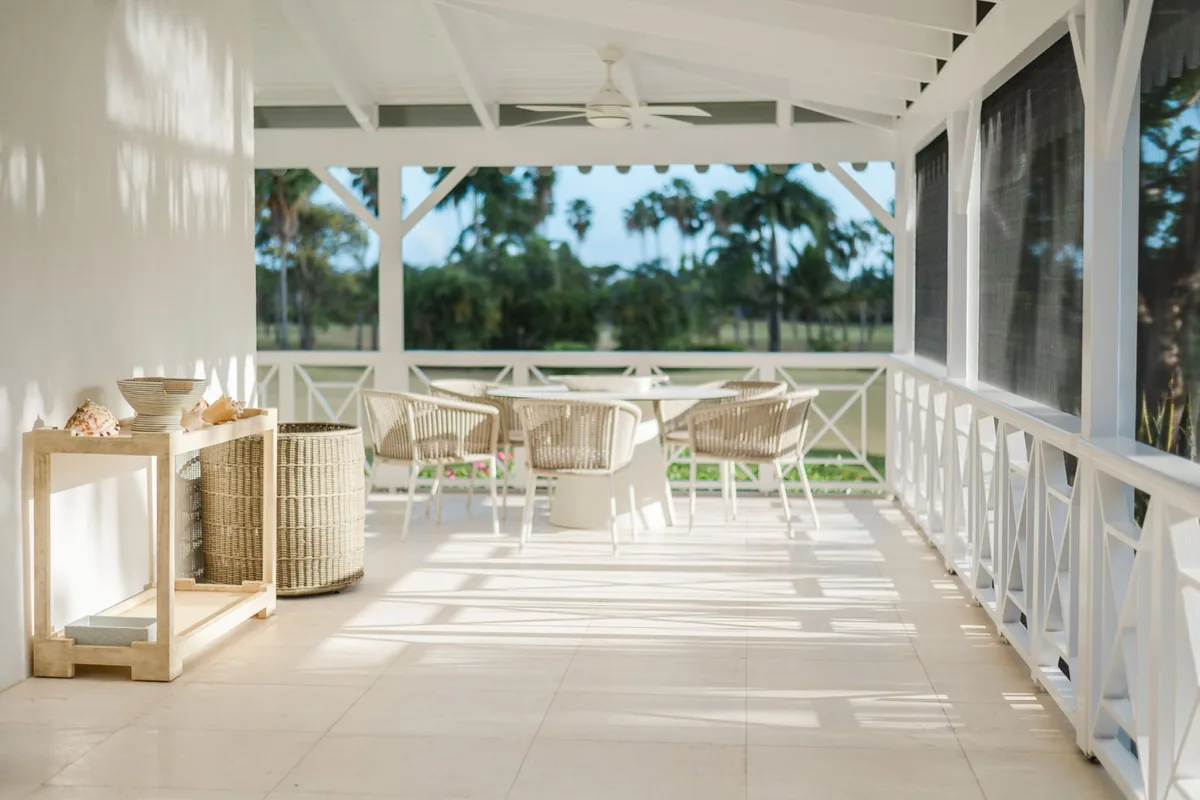
Palm Grove Villa 1416, Four Seasons Nevis
A three-bedroom, 3,245 sq ft villa in Palm Grove at Four Seasons Resort Estates, Nevis — freehold, and CBI-qualifying.
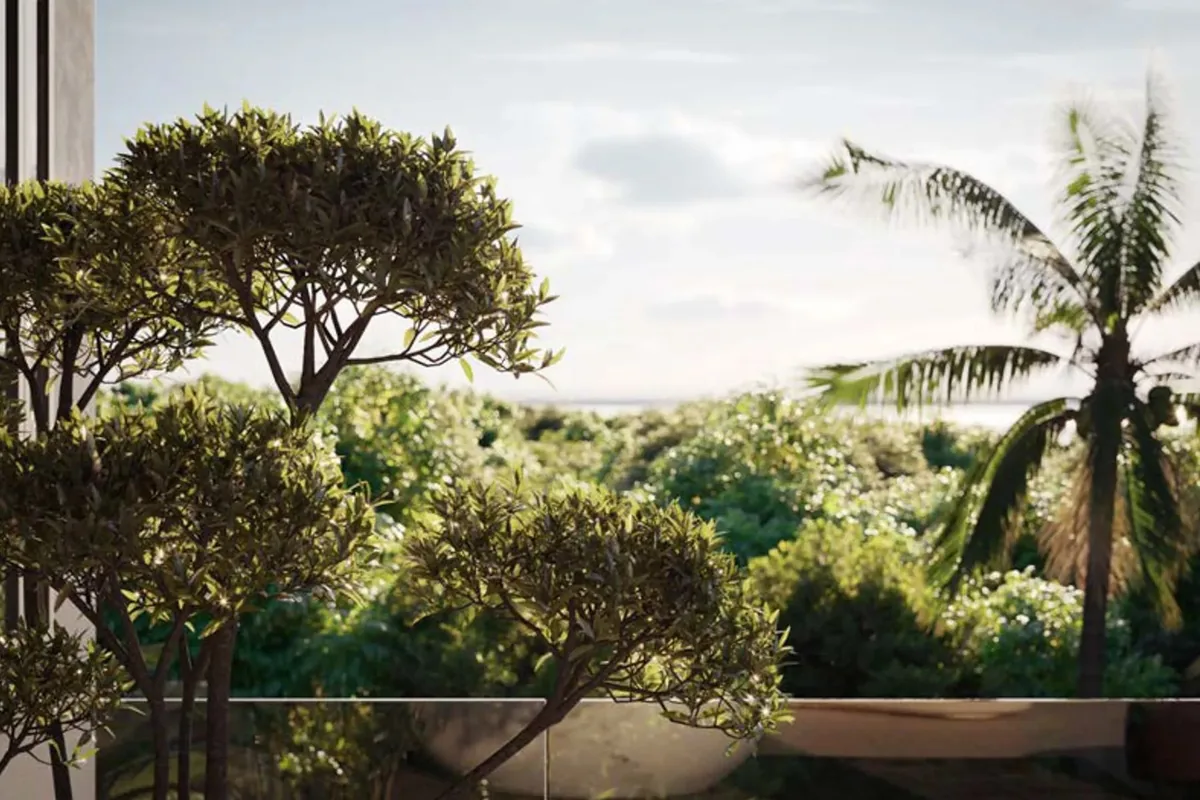
Nevis Peak Residences 2-203, Four Seasons Nevis
A two-bedroom residence at The Nevis Peak Residences within Four Seasons Resort Nevis — fully furnished, with full resort privileges.
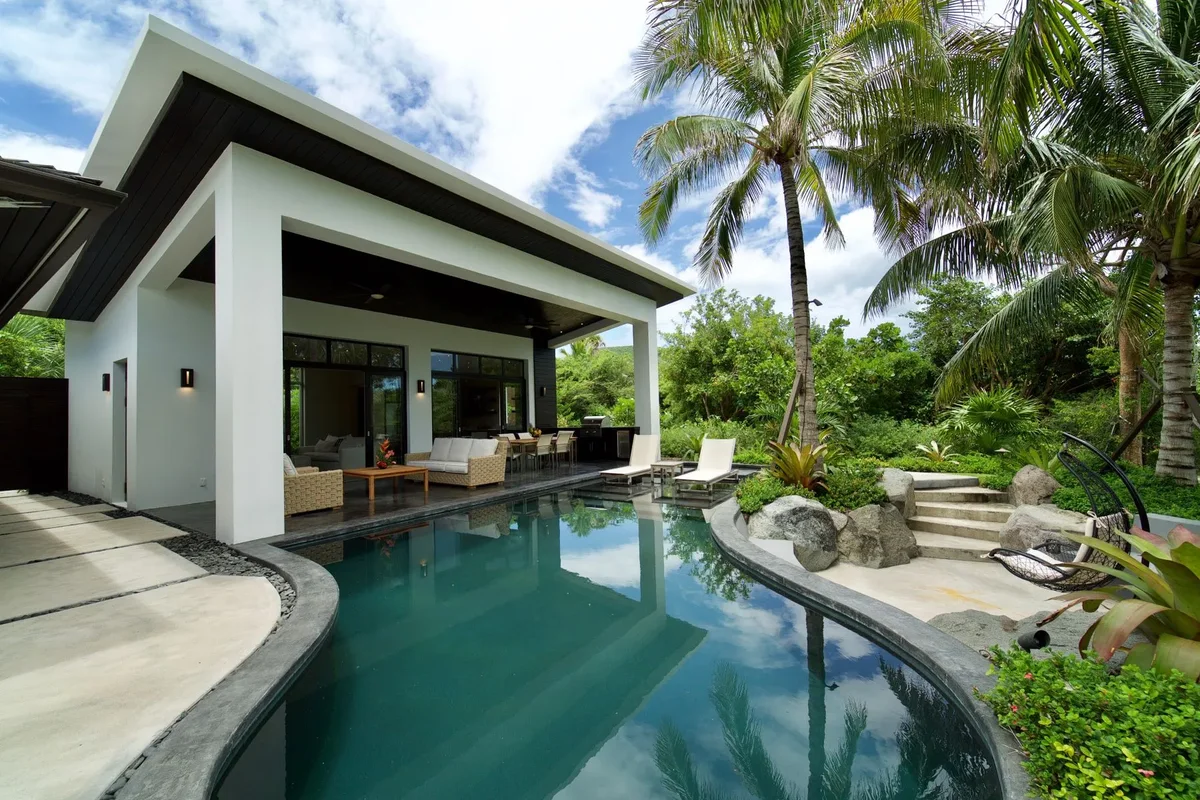
Christophe Harbour Villas with Tropical Gardens, Saint Kitts
Completed four-bedroom villas within the Sanctuary Lane enclave at Sandy Bank Bay, Christophe Harbour.
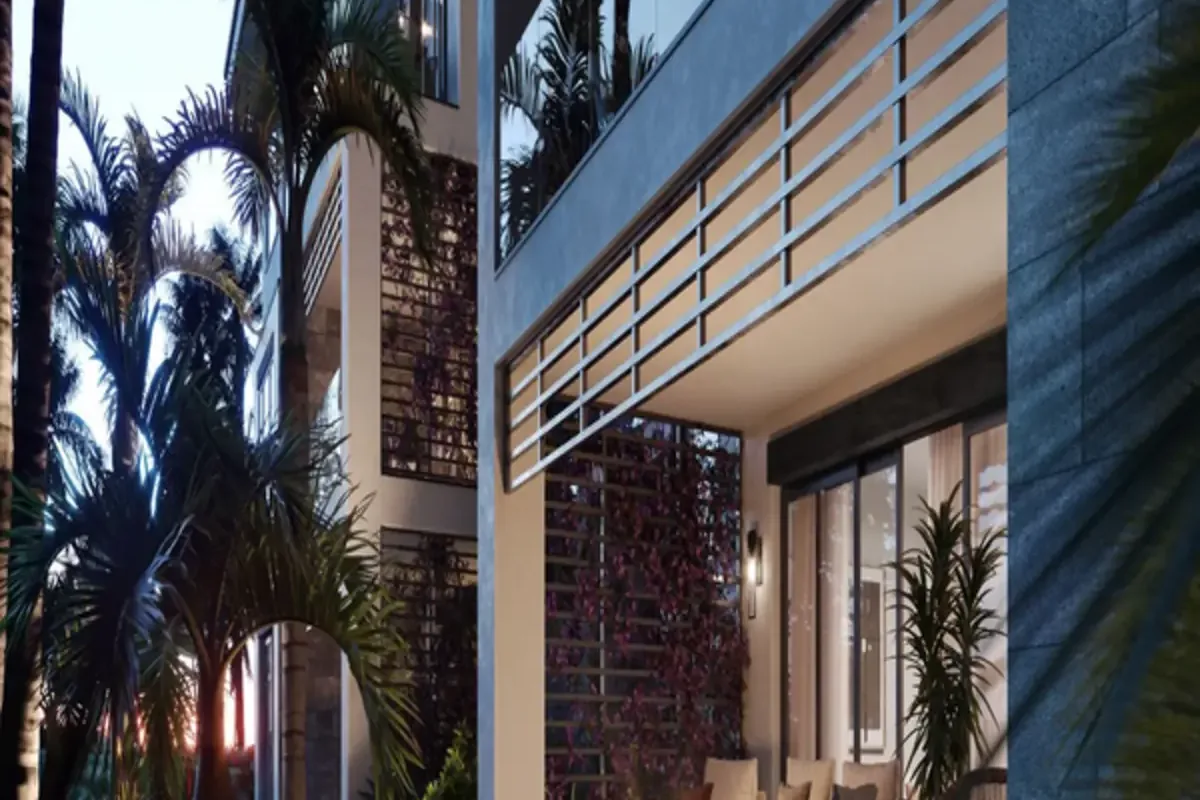
Nevis Peak Residences 1-102, Four Seasons Nevis
A two-storey, three-bedroom residence at The Nevis Peak Residences — fully furnished, with spa-style bathrooms and elevated primary suite.
Palm Grove Villa 1437, Four Seasons Nevis
A freestanding two-bedroom villa within Four Seasons Resort Estates, Nevis — 2,090 sq ft of open-plan living opening onto a fully screened veranda…
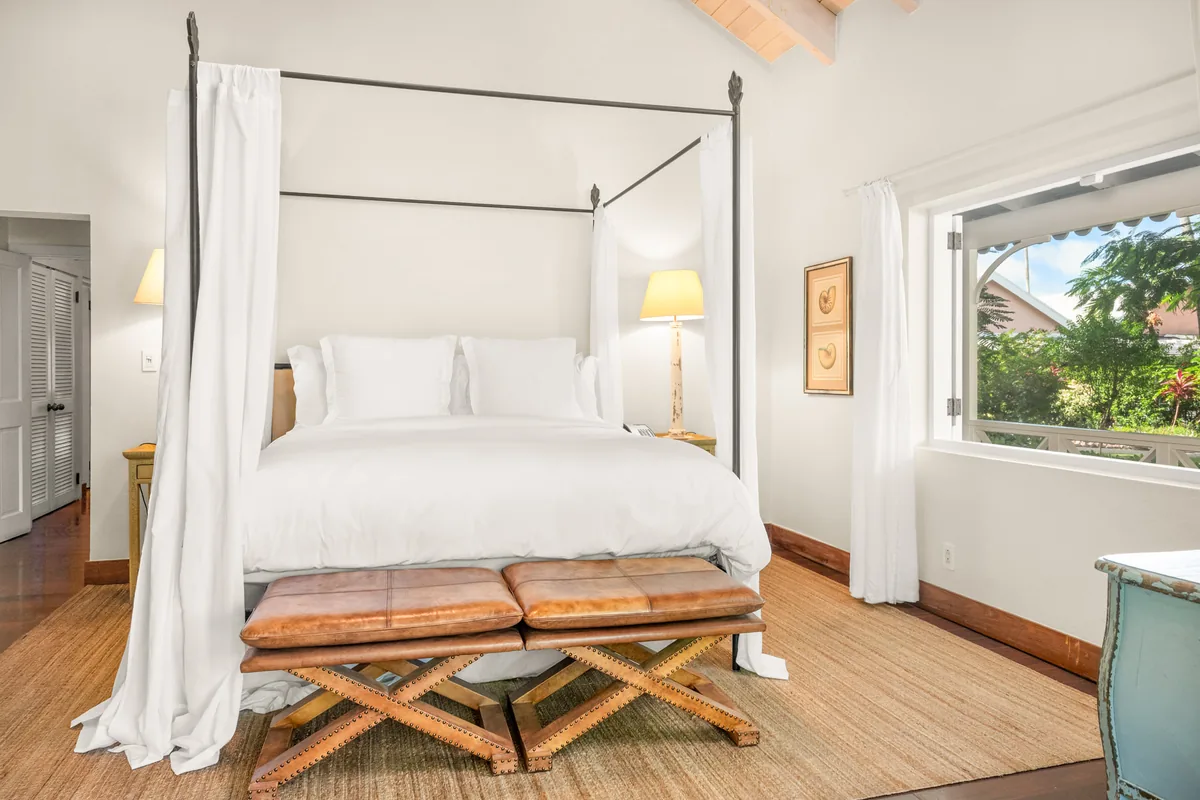
Palm Grove Villa 1418, Four Seasons Nevis
A two-bedroom freehold villa in Palm Grove at Four Seasons Resort Estates, Nevis — one of the more accessible entry points inside the resort.
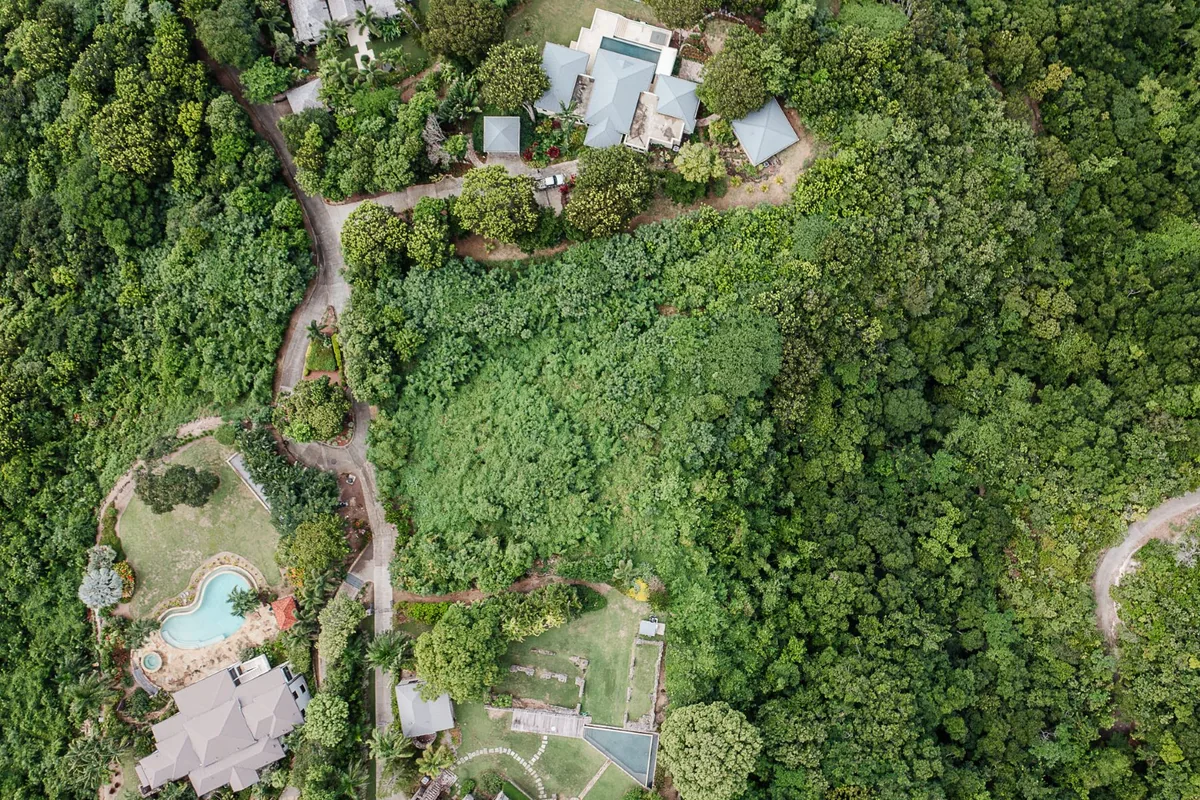
Lot 1720, Four Seasons Resort Estates, Nevis
A 44,326 sq ft building lot inside Four Seasons Resort Estates, Nevis — land, not a finished home, with the resort's amenity package attached.
Visa-free count per the Henley Passport Index, 2026. St. Kitts & Nevis levies no tax on worldwide income — but US citizens remain taxed by the IRS on worldwide income regardless of a second passport.
Is St. Kitts & Nevis right for your family?
Book a private call and Dan will map the program — and the right route — to your goals.
Book a Private Call