Secret Bay
A six-star, all-villa eco-luxury community on Dominica's cliffs — Relais & Châteaux, low-density, CBI-eligible.
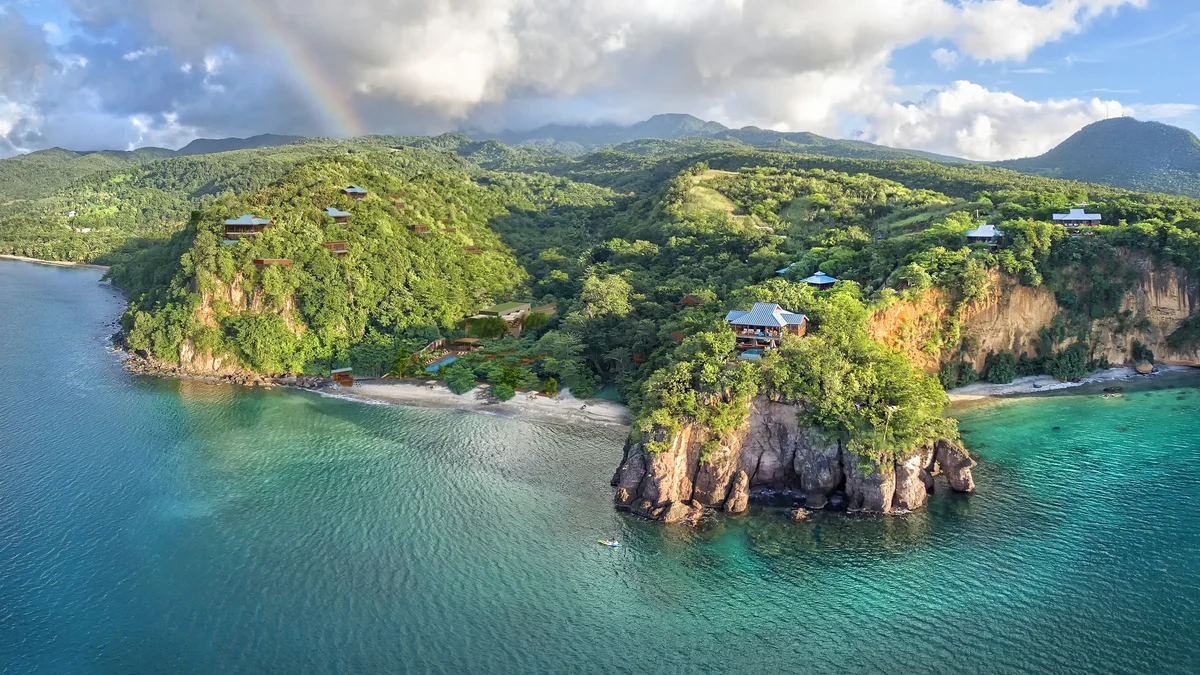
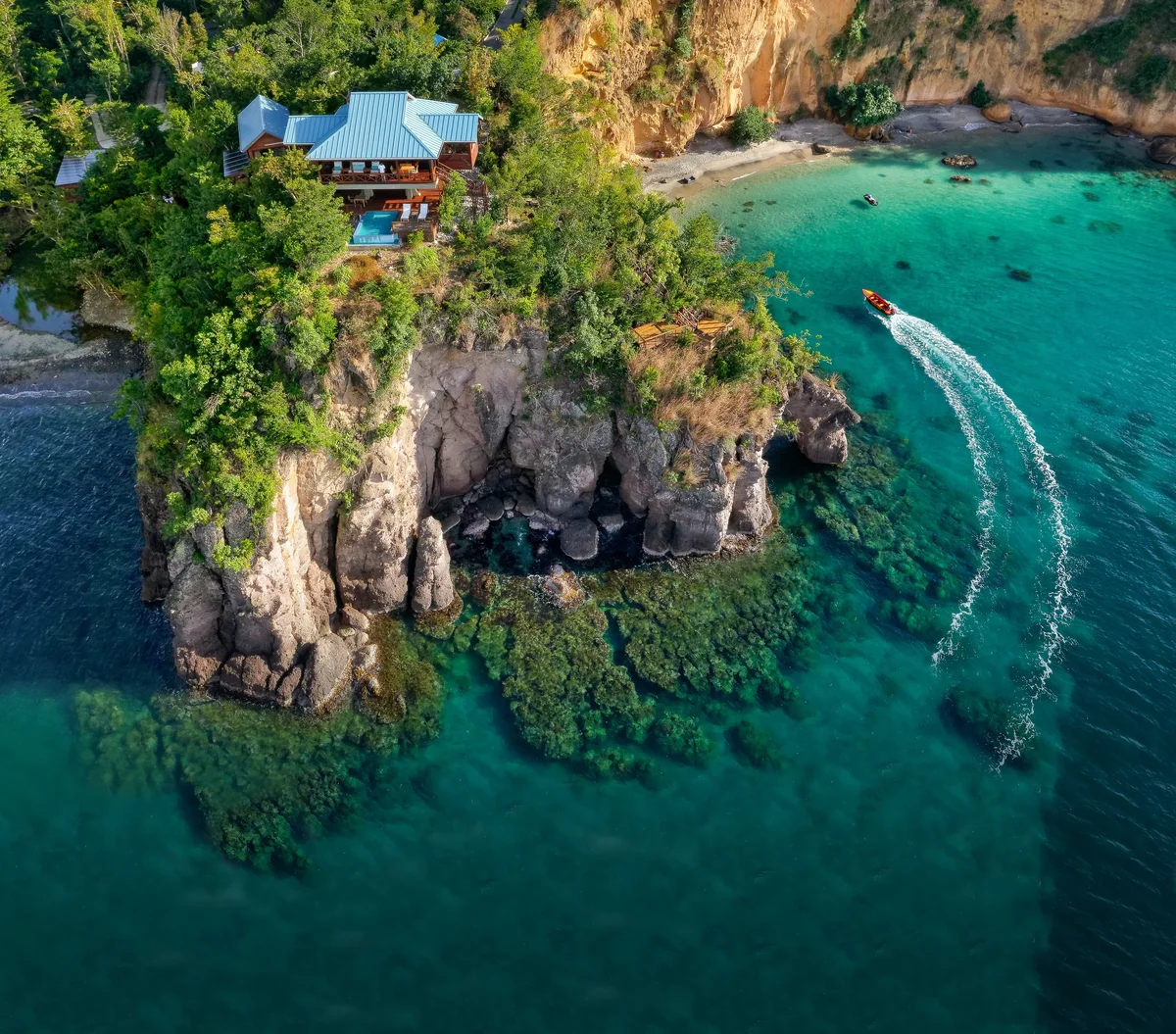
Secret Bay sits on a cliff above Tibay Beach near Portsmouth, on Dominica's north-west coast, and it is best understood as an argument rather than a resort. Dominica is the Nature Island — rainforest, 365 rivers, boiling lakes, no mass tourism, and until recently no airport capable of taking a jet. Almost every other Caribbean island sold its coastline. Dominica largely did not, and Secret Bay was built to suit that island rather than to import a template from somewhere else.
The result is deliberately, almost stubbornly, low-density. A handful of villas, each set into the forest with enough distance that you can genuinely go a day without seeing another guest. No sprawling lobby, no beach lined with loungers, no scene. It is Relais & Châteaux and Michelin-recognized, and it has spent years near the top of the region's critical rankings — but the thing that actually distinguishes it is restraint. Scale would break it, and the operators appear to understand that.
Sustainability here is operating philosophy rather than marketing language: villas built into the topography instead of levelling it, local materials and labour, and a genuine relationship with Portsmouth as a working town rather than a service dormitory. For owners, that consistency matters. Eco-positioning that turns out to be a brochure exercise ages badly; this one has been maintained long enough to be credible.
The honest context, which any serious buyer should have front of mind: Hurricane Maria hit Dominica directly in 2017 and did catastrophic island-wide damage. Dominica rebuilt, and has since pursued a national resilience program, but this is a genuinely exposed island and any owner should look hard at construction standards, insurance cost and rebuild history before committing. Secret Bay's own recovery is part of its record, and worth asking about specifically.
The wider trade-off is Dominica itself. Access is via a short hop from a neighbouring island or the improved airport, and the island offers rainforest and rivers rather than long white beaches and shopping. Buyers who want a Caribbean of beach clubs and restaurants will be happier elsewhere, and I would say so plainly. Buyers who want somewhere that still feels like it belongs to itself tend to fall hard for it. The ownership tiers, pricing and CBI mechanics are on the development page.
Secret Bay is a 27-villa clifftop community above Tibay Beach, about ten minutes from Portsmouth on Dominica's north-west coast, where rainforest runs to the edge of the headland. It is a Relais & Châteaux property, Green Globe certified, designed by the Venezuelan architect Fruto Vivas, and the resort says less than 7% of its land is marked for development. That last number is the most important fact about the place. It explains the appeal, and it explains why the inventory is small and unlikely to grow much.
The thing buyers get wrong is treating "Secret Bay" as one asset. It isn't. Three quite different things share the address: a citizenship-qualifying share from around US$208,000, a fractional interest measured in weeks from US$216,000, and whole villas shown on the developer's own citizenship page at US$1.49 million to US$4.05 million, alongside two multi-villa estates priced at US$4.5 million each. All three are marketed as routes to a Dominican passport. Only one of them is a house, and even that one you cannot use whenever you like. I spend most of a first call pulling those apart, because the buyer who purchases a share expecting a holiday home and the buyer who purchases a villa expecting free run of it are both about to be disappointed, for opposite reasons.
The setting is the product, and it costs you something
Dominica is the Nature Island: rainforest, rivers, volcanic interior, almost no mass tourism and, so far, no airport that takes long-haul aircraft. Secret Bay was built to suit that island rather than to import a template. The villas are freestanding and set into the topography rather than levelled onto it. The resort's own description of the estate — two beaches, one of them reachable only by kayak, a funicular down from the welcome house, a treehouse spa overlooking Tibay Beach, a wellness pavilion suspended over the Cario River — is a fair account of what is actually there.
Access is the trade-off, and I would rather you hear it from me than discover it on arrival. Douglas-Charles Airport is about an hour away by road and takes regional aircraft, not transatlantic ones. Almost every guest connects through a neighbouring island. That may change: the Prime Minister's office reported on 16 December 2025 that the new international airport remained on schedule for completion in 2027, with runway construction to formation level at 2,616 linear metres, or 91.8% complete. If it opens on time, the access story improves materially. If it slips, the island stays exactly as hard to reach as it is now, and you should buy on the assumption that it might.
The wider point is temperamental rather than financial. If your idea of the Caribbean is a long white beach, a beach club and somewhere to shop, you will be happier in Barbados or St Barths, and I will tell you so before you get on a plane. Buyers who want somewhere that still belongs to itself tend to fall hard for Dominica. There is no middle ground here, and pretending otherwise sells people the wrong island.
What you actually own at Secret Bay
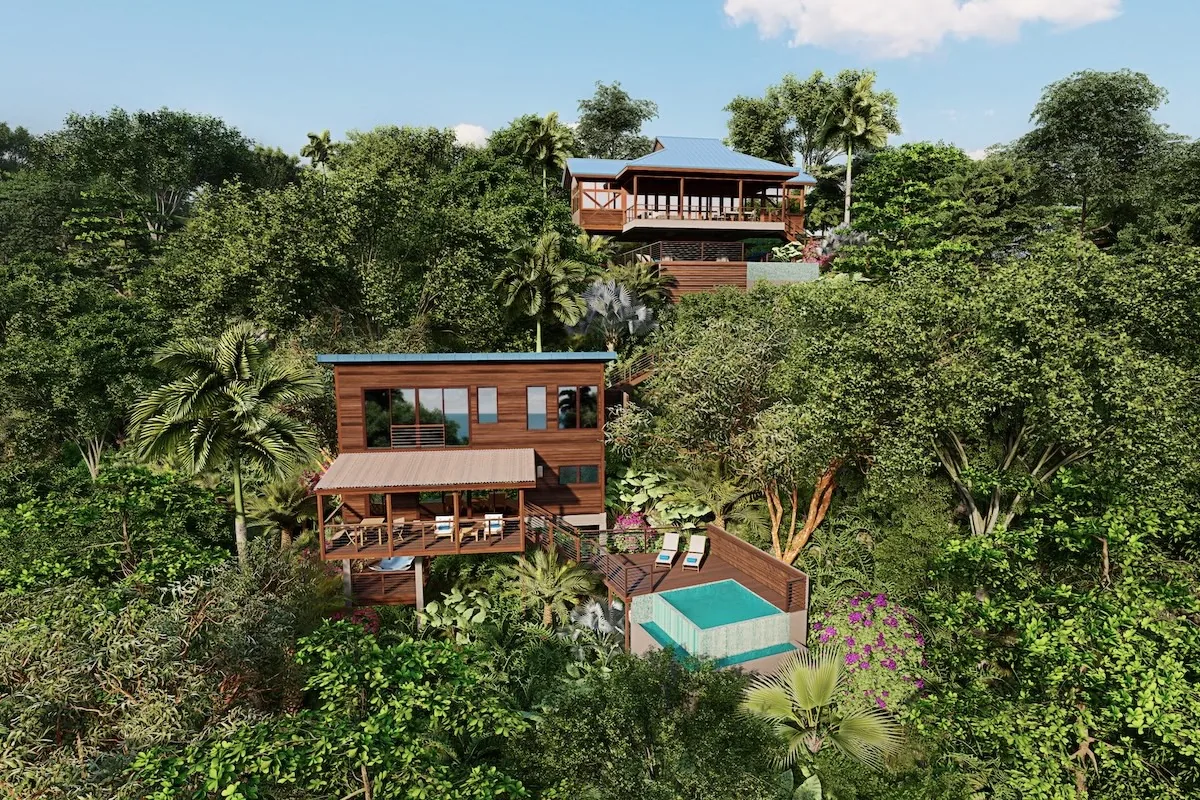
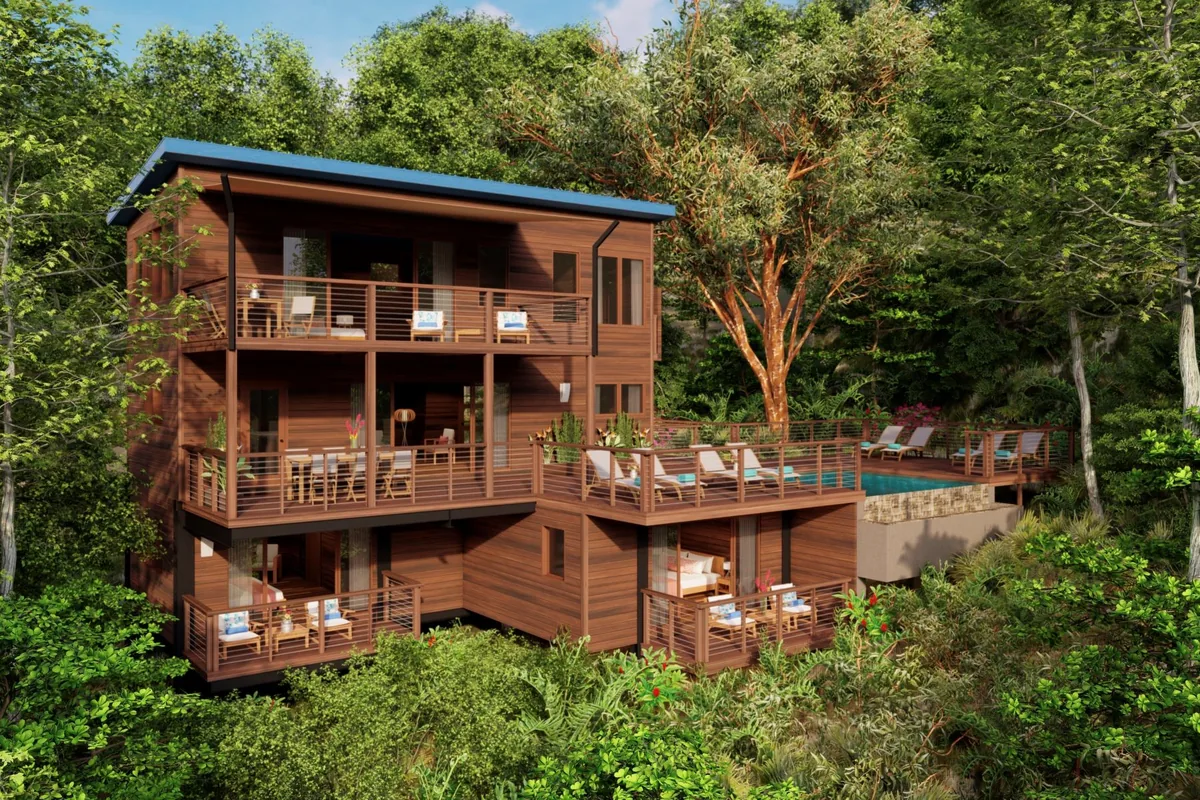
The Residences at Secret Bay has been a government-approved project under Dominica's Citizenship by Investment Program since April 2019, when the CBI Unit announced it as 42 eco-luxury villas and villa estates across 33 acres, projected to create at least 120 jobs. Progress against that plan is documented: the resort reports 27 villas built as of the third quarter of 2025, up from six in 2019, with staff growing from 33 to 134 over the same period. Nine Waterfront Mapou villas were reported as starting construction before the end of 2025, with completion anticipated in autumn 2027. Those are off-plan. Anything you are shown of them is a rendering, not a photograph.
There are three ways in, and they are genuinely different assets:
- The citizenship share — from around US$208,000 on the developer's current pricing. This is a minority interest in a villa-owning company, not a villa. What it entitles you to in owner nights, and on what terms, is not published anywhere I could find. Ask for it in writing before you take anyone's word for it.
- Fractional — from US$216,000 for two weeks up to US$1,000,000 for ten weeks. This is described as a real ownership share in the LLCs that grant freehold title, within the Clifftop Zabuco and Ti-Fèy multi-villa estates, each priced at US$4.5 million. The entry tier's two weeks are split: one week in a Zabuco villa, one in a Ti-Fèy villa.
- Whole villas — published pricing has moved, so treat any number you read as a starting point. The developer's citizenship page currently shows US$1.49 million to US$4.05 million per villa; an earlier release advertised new waterfront villas from US$1.39 million. Get a current written quote rather than relying on a figure in a press release. Separately, the developer reports a US$7.1 million sale of a four-villa clifftop estate of 9,786 square feet on more than an acre, which it describes as the most expensive vacation-home estate in the country to date, bought by someone outside the citizenship market entirely.
In two of those three cases you are buying an interest in a company, not a deed with your name on it. Ask for the LLC operating agreement and the rental management agreement early. The brochure will not tell you what the operating agreement tells you.
The carrying costs and fees nobody puts on the first page
If you are buying for the passport, the property price is not the cost. Dominica's Citizenship by Investment Unit publishes the rest, and it is substantial: a minimum US$200,000 in approved real estate, plus government fees of US$75,000 for a single applicant or US$100,000 for a main applicant with up to three dependants, then US$25,000 for each additional dependant under 18 and US$40,000 for each additional dependant aged 18 or over. On top of that sit due diligence of US$7,500 for the main applicant and US$4,000 per dependant aged 16 or over, a US$1,000 processing fee per application, US$1,000 per mandatory interview, and US$500 per certificate of naturalisation. A family of four is adding well over US$100,000 to the ticket price before anyone talks about furniture.
Two points of structure worth knowing. Foreign buyers in Dominica normally need an Alien Landholding Licence costing around 10% of the purchase price, and published guidance says that requirement is waived for investors buying an approved property through the citizenship program. If you are a cash buyer who does not want a passport, that distinction is worth six figures on a US$1.5 million villa, and I would want it confirmed in writing by Dominican counsel before you sign anything. Separately, Dominica levies no annual national property tax; a municipal property tax applies in Roseau and Canefield, which is not where Secret Bay sits.
Then there is the phrase that causes the most trouble: no annual fees. The fractional program is marketed that way, and the developer's own announcement carries the qualifier in a footnote: coverage of annual fees, as well as return-on-investment payments, is contingent upon market conditions and LLC or villa performance, with no guarantee of specific returns. Read that carefully. It does not say the costs do not exist. It says the villa's earnings are expected to absorb them first. In a weak year, that assumption is precisely where your money goes. Before you commit, get the actual expense line: insurance and who arranges it, management fee, replacement reserve, and where each sits relative to your distribution.
One caveat I repeat to every American who asks, because it is the single most expensive misunderstanding in this industry: US citizens are taxed on worldwide income regardless of where they live or what other passports they hold. Dominican citizenship changes nothing about your US filing and reporting obligations. Renouncing US citizenship is the only exit, and it carries its own exit-tax consequences and should never be undertaken casually.
Rental and usage: who controls the calendar
The mechanics are straightforward once stated plainly. The resort reserves several weeks in each villa for rental. After expenses, the resulting rental income is shared with owners on a per-villa basis, with payments made quarterly. Your owner usage is defined in weeks, not in open access. This is a hotel that you have a stake in, not a second home with a concierge attached.
The phrase to underline is per-villa basis. You are exposed to the performance of your specific villa, not to an averaged pool across the estate. Two owners at the same address can have quite different years. When you are comparing a smaller waterfront villa against a larger clifftop one, you are not just comparing price per square foot; you are comparing two different rental businesses with different nightly rates and different occupancy patterns.
On the record itself, the developer reports more than US$5.4 million in cumulative ROI distributions since late 2019, average annual ROI in the 3% to 4% range with select periods exceeding that when adjusted for operating days, and an investor base that grew from 147 in early 2022 to 223 by mid-2025. Those numbers are the developer's own, published in sponsored features rather than audited accounts, and they should be treated accordingly. They are, at least, unusually specific for this sector, and six years of distributions is more of a record than most Caribbean citizenship real estate can show. My honest read: 3% to 4% on a hotel-linked asset is a reasonable outcome for what it is, and it is not a yield you should underwrite your purchase against. The developer's own footnote says as much.
Before signing, ask three questions I could not answer from public sources: are your weeks fixed, floating or rotating; how are Christmas and February allocated among owners; and what is the actual owner-versus-operator split of net rental income. If the answers are not in the management agreement in writing, they are not answers.
The alternative I would make you consider, and the risks I would raise unprompted
Start with the cheapest alternative, which is not real estate at all. Dominica's Economic Diversification Fund begins at US$200,000 for a single applicant, or US$250,000 for a main applicant with up to three dependants, and the CBI Unit states plainly that the US$75,000 and US$100,000 government fees do not apply to fund applicants — they are relevant only to those investing in real estate. That matters more than most people realise. A single applicant taking the property route commits US$200,000 to an asset plus US$75,000 in government fees; the same applicant taking the fund route commits US$200,000 in total, plus due diligence and processing. The fund buys no asset and has no exit, but it has no carrying costs, no rental variability, no resale problem and no operator dependency, and it is materially cheaper. Real estate only makes sense here if you actually want to own something in Dominica. Plenty of my clients do; plenty of others realise, halfway through the conversation, that they don't.
The obvious property alternative on the island is the branded route: Cabrits Resort & Spa Kempinski opened in October 2019 as the first internationally branded hotel on Dominica, with 151 rooms, duplexes, suites and beach cabanas, and its citizenship shares were already sold out at opening. That is a larger-format, beachfront, internationally flagged bet. Secret Bay is a small independent operator. You are choosing between brand and scale on one side, and scarcity plus operator dependency on the other. Neither is the safe option; they simply fail differently.
The risks I would put on the table before you saw a single villa:
- The European Commission's June 2026 letters. On 25 June 2026 the Commission asked Dominica, along with Antigua and Barbuda, Grenada, St Kitts and Nevis and St. Lucia, to phase out their citizenship-by-investment programs by 1 June 2028, with reinforced vetting expected by September 2026. Nothing has been suspended, and that date is not an automatic cut-off. But Dominica's passport reaches 145 destinations on the 2026 Henley Passport Index, and much of that value is Schengen. If visa-free European access is your reason for buying, you must price the possibility that it changes.
- Exit is narrow, and it narrows further. The CBI Unit sets the holding period at three years from the date citizenship is granted, or five years if your onward buyer is themselves a citizenship applicant. The natural resale pool for a share is other citizenship applicants — the very pool the EU letters put a question mark over. A developer offering to help facilitate resale is offering a service, not a market.
- Hurricane exposure is real and documented. Hurricane Maria struck Dominica in September 2017; damages and losses were assessed at 226% of the country's 2016 GDP, with more than 85% of houses damaged and more than a quarter completely destroyed. Secret Bay rebuilt and has gone from six villas in 2019 to 27, which is part of its record and worth asking about specifically. Ask about construction specification, insured values, deductibles and business-interruption cover.
- Single-operator concentration. The value of a share here is the value of this management team running this resort. Twenty-seven villas is thin. One bad season, one storm or one change of operator moves the entire thing, and there is no second brand standing by to take the keys.
Frequently asked questions
What does it cost to buy at Secret Bay?
There are three entry points. A citizenship-qualifying share starts at around US$208,000 on the developer's current pricing. Fractional ownership runs from US$216,000 for two weeks up to US$1,000,000 for ten weeks, described as a real ownership share in the LLCs granting freehold title within the two multi-villa estates, each priced at US$4.5 million. Whole villas are shown on the developer's citizenship page at US$1.49 million to US$4.05 million per villa; an earlier release advertised new waterfront villas from US$1.39 million, so published pricing clearly moves and you should get a current written quote. For scale at the top end, the developer reports a US$7.1 million sale of a four-villa clifftop estate of 9,786 square feet on more than an acre. If you are going the citizenship route, government fees sit on top of all of these.
Does Secret Bay qualify for Dominica citizenship by investment?
Yes. The Residences at Secret Bay has been a government-approved project since April 2019. The rules are set by the CBI Unit, not by the developer: a minimum US$200,000 investment in approved real estate, plus government fees of US$75,000 for a single applicant or US$100,000 for a main applicant with up to three dependants, US$25,000 per additional dependant under 18 and US$40,000 per additional dependant aged 18 or over. Due diligence is US$7,500 for the main applicant and US$4,000 per dependant aged 16 or over, with a US$1,000 processing fee per application, US$1,000 per mandatory interview and US$500 per certificate of naturalisation.
Can I use the villa whenever I want?
No, and this is the most common misunderstanding I correct. Owner usage is measured in weeks, not open access. Fractional tiers run from two weeks to ten weeks a year, and the entry tier's two weeks are split one week in a Zabuco villa and one week in a Ti-Fèy villa. For the lower-priced citizenship shares, I could not find any published owner-usage entitlement at all, which is itself a reason to get it in writing rather than take it verbally. In every case the resort reserves weeks in each villa for paying guests, which is what generates your distribution. Ask specifically whether your weeks are fixed, floating or rotating, and how peak holiday weeks are allocated between owners.
Are there annual fees at Secret Bay?
The fractional program is marketed as having no annual fees, but the developer's own announcement carries a footnote: coverage of annual fees, as well as return-on-investment payments, is contingent upon market conditions and LLC or villa performance, with no guarantee of specific returns. In plain terms, the costs exist and the villa's rental earnings are expected to absorb them before anything reaches you. In a strong year that is invisible; in a weak one it is exactly where your money goes. Get the full expense schedule — insurance, management fee, replacement reserve — and see where each sits relative to your distribution before you commit. I could not find any published annual fee schedule for whole-villa owners, so ask for that separately.
Can I rent it out, and what does it realistically earn?
The resort operates the rental program; you do not let it independently. It reserves several weeks in each villa, and after expenses the rental income is shared with owners on a per-villa basis, paid quarterly. The developer reports more than US$5.4 million in cumulative distributions since late 2019, average annual ROI in the 3% to 4% range, and an investor base of 223 by mid-2025, up from 147 in early 2022. Those figures are the developer's own, published in sponsored features rather than audited accounts, and they come with an explicit disclaimer that no specific return is guaranteed. My advice is to treat 3% to 4% as an observed history rather than a forecast, and never to buy on the assumption that the income services debt.
What happens to my investment if the EU forces Dominica to close its citizenship program?
On 25 June 2026 the European Commission asked Dominica and four other Caribbean states to phase out their citizenship programs by 1 June 2028, and expects reinforced vetting by September 2026. Nothing has been suspended and that date is not an automatic cancellation. Two things are genuinely exposed. First, the travel value of the passport: Dominica reaches 145 destinations on the 2026 Henley Passport Index, and much of that is the Schengen Area. Second, and more directly relevant to a property owner, the resale market — the natural buyer for a citizenship-qualifying share is another citizenship applicant, and that pool shrinks if the program winds down. If you would still want to own the villa with no passport attached, the risk is manageable. If you would not, think hard.
I am American. Will a Dominica passport reduce my tax bill?
No. US citizens are taxed on their worldwide income regardless of where they live or how many other passports they hold, and acquiring Dominican citizenship changes nothing about your US filing and reporting obligations. Renouncing US citizenship is the only exit, and it triggers its own exit-tax regime and permanent consequences that need proper advice before anyone goes near it. Separately, Dominica itself levies no annual national property tax; a municipal property tax applies in Roseau and Canefield, not on the north-west coast where Secret Bay sits. Anyone who pitches you a Caribbean passport as an American tax solution is either misinformed or selling you something.
Dan advises buyers independently across this community — on which product, ownership structure and price actually fit your goals.
Book a Private Call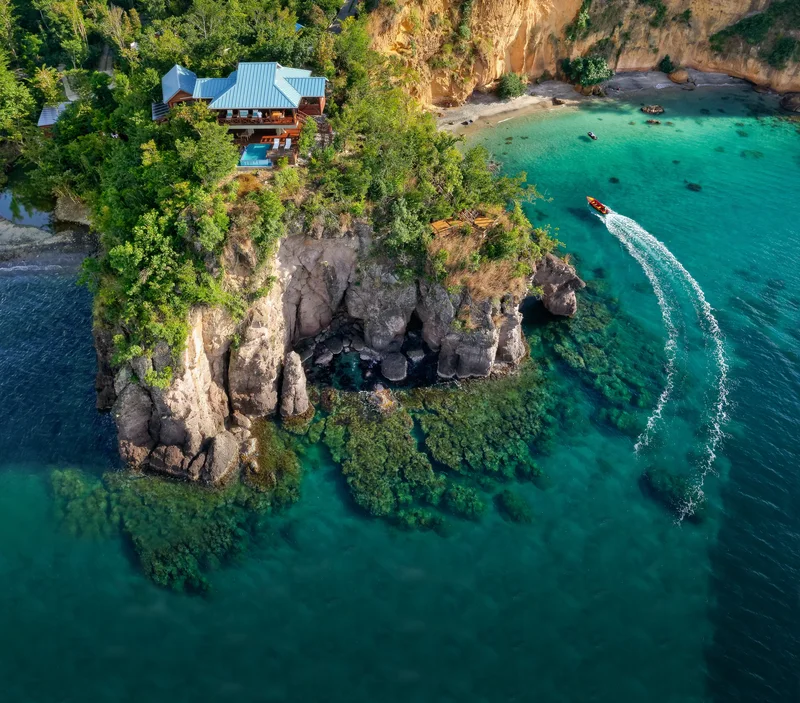
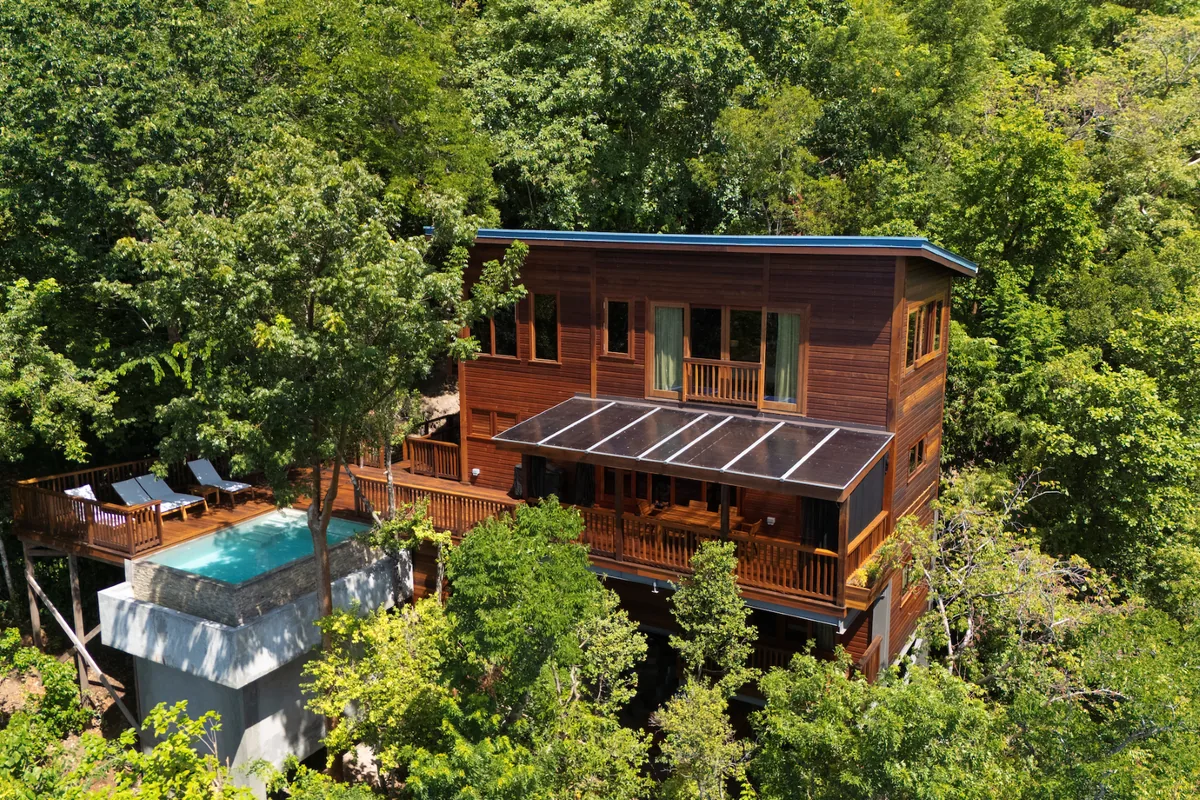
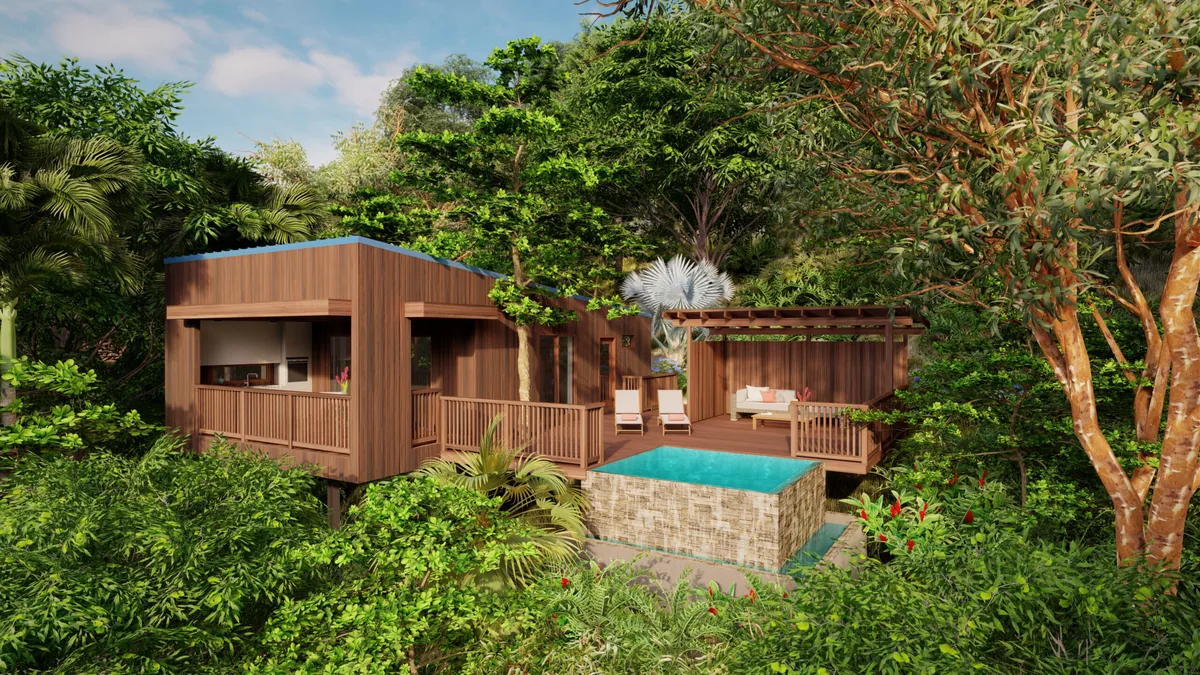
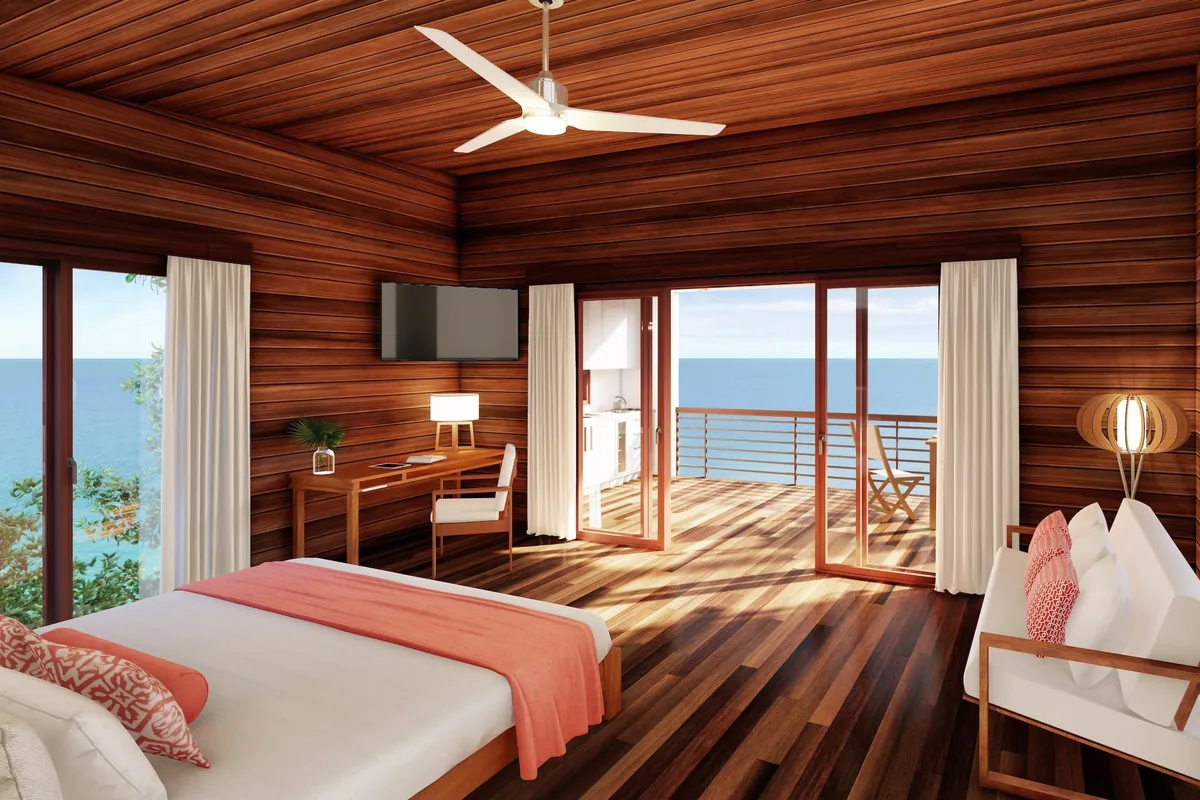
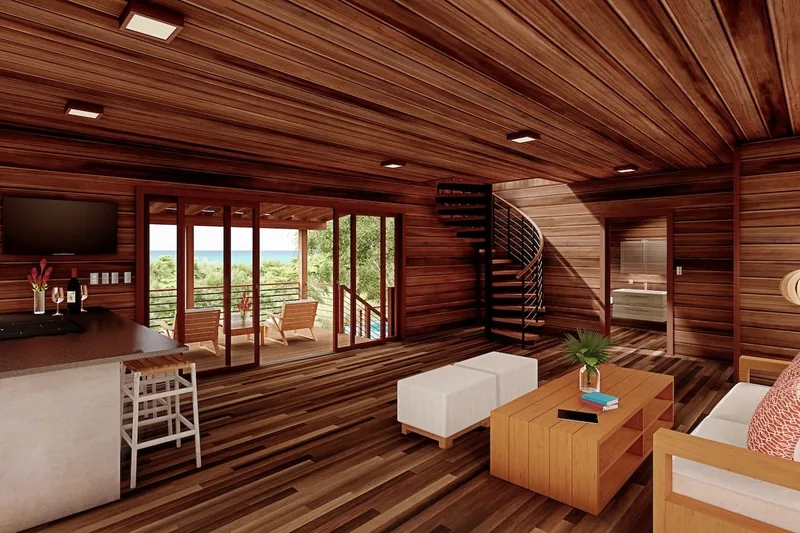
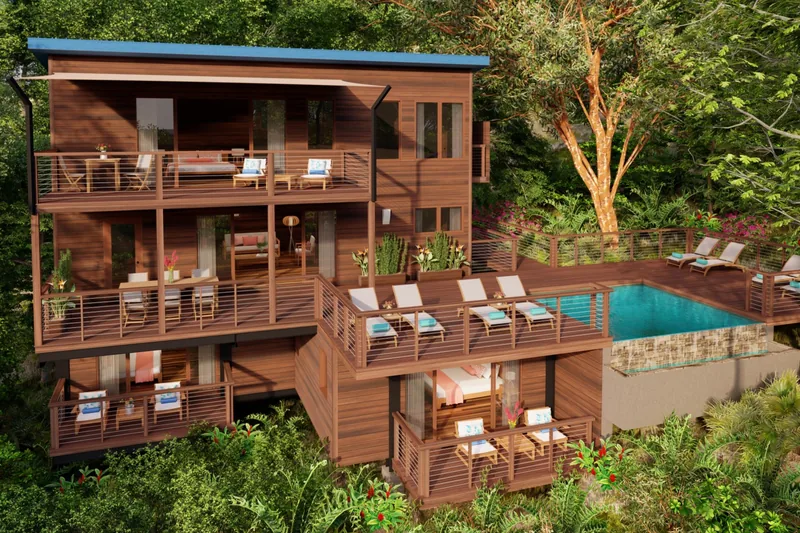
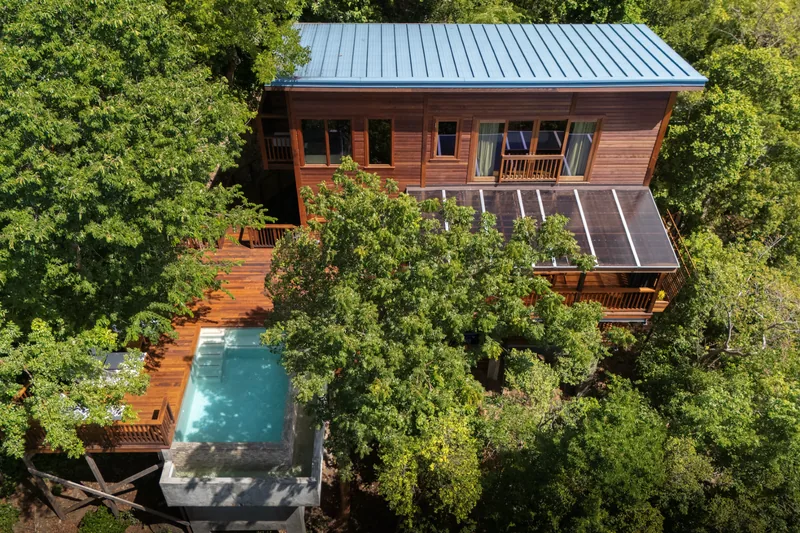
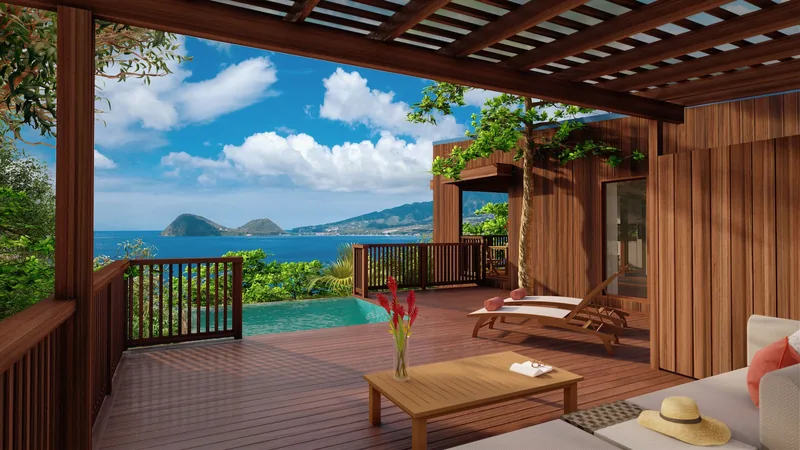
6 listings at Secret Bay.
Waterfront Residences at Secret Bay, Dominica
Secret Bay's Waterfront Residences are one-bedroom clifftop villas of 85 sq.m above the Caribbean Sea near Portsmouth, offered freehold from…
Residences at Secret Bay
A completed one-bedroom, one-bath hotel residence of 128 square metres at Secret Bay, the clifftop resort near Tibay on Dominica's northwest coast.
Residences at Secret Bay — Cliffside Kampesh II, Dominica
A three-bedroom cliffside villa at the Residences at Secret Bay, above Tibay Beach near Portsmouth, Dominica.
Residences at Secret Bay — Cliffside Ti-Fey II, Dominica
A two-bedroom cliffside villa at the Residences at Secret Bay, on Dominica's north-west coast.
Residences at Secret Bay — Mapou Waterfront Villa IV, Dominica
A one-bedroom waterfront villa at the Residences at Secret Bay, Dominica — the accessible entry into a Relais & Châteaux community.
Residences at Secret Bay — Mapou Fractional Ownership, Dominica
Fractional ownership of a Mapou waterfront villa at the Residences at Secret Bay, Dominica — 4 weeks of use a year.
Explore Secret Bay with Dan.
Book a private call to see current availability, ownership structure and pricing.
Book a Private CallDan Merriam & Associates acts for the buyer. Our advice is independent, not contingent on any sale, and we hold no brokerage or developer mandate.