Grenada Citizenship by Investment
The only Caribbean program with a US E-2 investor-visa treaty — and an honest account of what that treaty does and does not do.
About Grenada
Grenada’s citizenship-by-investment program, established in 2013, starts at US$235,000 as a non-refundable contribution to the National Transformation Fund, or from US$350,000 in approved real estate for a sole buyer. Grenada publishes four to six months from a complete file; agent-reported averages run nearer seven. A Grenadian passport carries visa-free or visa-on-arrival access to approximately 147 destinations (Henley Passport Index, 2026). It suits the entrepreneur whose eventual destination is the United States — Grenada is the only Caribbean CBI country with a US E-2 investor-visa treaty, though a 2022 US rule requires a period of domicile before it can be used — and the family that wants the region’s least politically exposed program.
The island
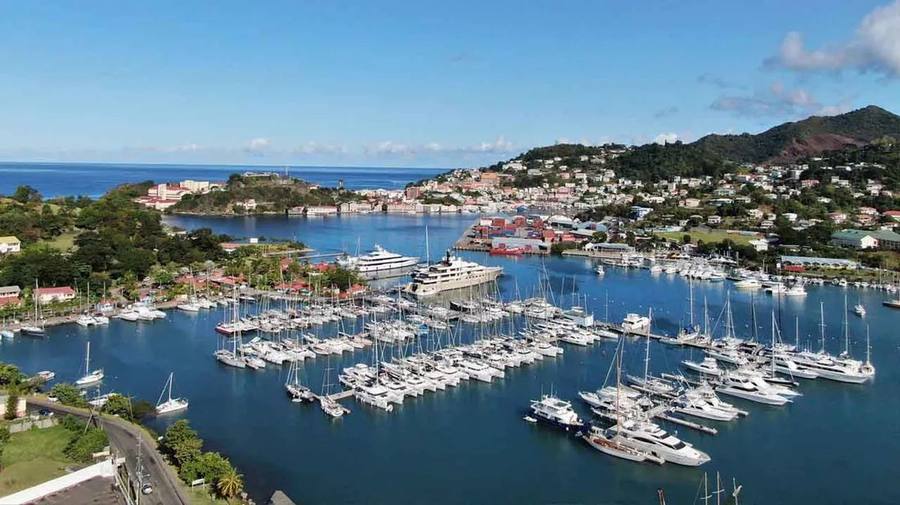
Almost everything an international buyer shortlists sits on Grenada’s southwest corner: St. George’s around its harbour, with the Carenage and Port Louis Marina; Grand Anse below it, with the resort strip, the schools and the supermarkets; the True Blue peninsula beside the airport, where St. George’s University underpins year-round rental demand; and La Sagesse on the quieter south-east coast, where two international resort brands now operate. Grenada is greener, quieter and less polished than Antigua or Nevis, and buyers either take to that or they do not.

Who Grenada suits, and who it does not
Grenada is the strategic choice among the five Caribbean programs, and the one the practice recommends first to US-focused entrepreneurs. It is also the cleanest on record: the only Caribbean CBI state never targeted by a US, UK or Canadian restriction, left off the June 2025 State Department memo that named the other four and absent from the December 2025 US proclamation that placed partial entry restrictions on Antigua & Barbuda and Dominica. It is the only one of the five publishing detailed quarterly program statistics — roughly US$412 million of revenue and more than 5,400 new citizens in 2024, then just 191 applications in the first half of 2025 as vetting tightened.
A single applicant gets poor value from Grenada: the fund figure does not shrink for one person. For a couple with two children, or an entrepreneur whose destination is eventually the United States, nothing else in the region compares.
Mobility in 2026
Approximately 147 destinations visa-free or visa-on-arrival (Henley Passport Index, 2026), plus visa-free access to China held since 2015 — for anyone working across Asia, often more useful day to day than the headline count. Two clarifications belong on every file. A Caribbean passport confers no visa-free entry to the United States: none of the five programs joins the US Visa Waiver Program, and holders still need a standard B-1/B-2 visitor visa. And Grenada retains UK visa-free access, which Dominica lost in July 2023 and St. Lucia lost in March 2026 — a distinction that should shape the decision for any family with British ties. Treat every count as perishable.
Dan holds his own second citizenship — Antigua & Barbuda, contribution route, granted 2022 — has guided more than 100 families through Caribbean citizenship and residency, and works from offices across the Eastern Caribbean. For how Grenada sits against its neighbours, see the side-by-side comparison of all five programs.
Citizenship
National Transformation Fund
Approved Real Estate
Those are government thresholds, not estimates. The fund figure does not fall for a single applicant, the opposite of how most buyers assume these programs are priced. And the real-estate route is not a US$270,000 route: with the non-refundable US$50,000 contribution on top, the realistic floor is US$320,000, roughly US$85,000 above the fund for a five-year hold and an asset that resells into a thin market. The rest of the stack — due diligence charged per adult applicant, government processing per file, legal and agent costs, and the maths on a fifth dependant — is what the strategy call is for.
Process and timeline
Five stages, in order: a strategy call to settle route and family composition; appointment of an authorised agent and assembly of the due-diligence file; the qualifying investment; submission, government background checks and an online interview for every applicant aged 17 and over; then approval and passports.
Grenada publishes four to six months from a complete application and is one of the few programs where files broadly run to it — agent-reported averages sit near seven months, against roughly fourteen for Antigua and eighteen for St. Lucia. What moves the date is the completeness of the file, not the program. No visit is required before or after citizenship under current rules, though a 30-day aggregate presence standard has been working through all five programs under the regional regulator, ECCIRA, headquartered in Grenada; rollout has slipped past its original mid-2026 target, so the live position is confirmed on each file.
The E-2 treaty, precisely
Grenada is the only Caribbean citizenship-by-investment country with a US E-2 Treaty Investor Visa, in force since 1989. It matters most to nationals of countries with no E-2 treaty of their own, where a Grenadian passport becomes the workaround; it is worth nothing to someone who already holds US citizenship.
The AMIGOS Act provision in the FY2023 National Defense Authorization Act, signed in December 2022, requires anyone who acquired treaty-country citizenship through investment to demonstrate a continuous period of domicile — at least three years — before qualifying for an E-1 or E-2 visa. Domicile is a legal-ties concept rather than a day-count, the statute does not define it, and as of early 2026 immigration attorneys reported no confirmed denial under it. So neither “instant E-2” nor “three straight years of residence” is accurate. A Grenadian passport acquired this year does not support an E-2 filing next year, and quoting the advantage without the domicile caveat is the clearest signal of a sale rather than advice.
The honest read
Program risk here is the lowest of the five, and it is not zero. The EU rebuilt its visa-suspension mechanism in late December 2025 so that operating a citizenship-by-investment program is itself grounds for suspension, and in a letter dated 25 June 2026 the European Commission asked all five governments to phase their programs out by 1 June 2028. No Caribbean program has actually lost EU access — that is a demand, not an action — but it is a live standoff. Buy the passport for what it does now, and build in the possibility that the map moves before your document does.
Grenada levies no capital gains or inheritance tax and does not tax the foreign income of non-residents. That is a statement about the jurisdiction, not about an American: the United States taxes its citizens on worldwide income wherever they live, none of the five programs sits under a US income tax treaty, and FATCA follows the person rather than the travel document. A second citizenship is insurance and optionality, not a tax play — the argument in full is on the second citizenship for Americans page.
Frequently asked
What does Grenada citizenship cost?
US$235,000 to the National Transformation Fund, covering the main applicant and up to three dependants, or approved real estate from US$350,000 for a sole buyer — US$270,000 per share where two buyers make a qualifying joint purchase totalling US$540,000 or more. A separate non-refundable government contribution of US$50,000 for a family of up to four sits on top of the property figure. Due-diligence, government, legal and agent fees sit above all of these and are confirmed per file.
How long does it take?
Grenada publishes four to six months from a complete application and is one of the few programs where files broadly run to it; agent-reported averages sit near seven months, against roughly fourteen for Antigua and eighteen for St. Lucia. Completeness of the file moves the date more than the program does.
Does Grenada’s E-2 treaty give me a US business visa?
Not on its own, and not quickly. The AMIGOS Act provision in the FY2023 National Defense Authorization Act requires anyone who acquired treaty-country citizenship through investment to demonstrate a continuous period of domicile — at least three years — before qualifying for an E-1 or E-2. Domicile is a legal-ties concept rather than a day-count, and as of early 2026 no confirmed denial under the provision had been reported. Walk it through with a US immigration attorney before building a business plan around it.
Does a Grenada passport reduce my US taxes?
No. The United States taxes its citizens on worldwide income wherever they live, none of the five Caribbean CBI countries has a US income tax treaty, and FATCA follows the person rather than the travel document. Grenada itself levies no capital gains or inheritance tax and does not tax the foreign income of non-residents — true of the jurisdiction, not of an American’s global position.
Do I have to live in Grenada?
No. Neither a visit before citizenship nor a visit after it is required under current rules. A 30-day aggregate presence standard has been moving through all five programs under the regional regulator, ECCIRA, and rollout has slipped past its original mid-2026 target, so Dan confirms the current position on each file.
Can I include my family?
Yes. The US$235,000 contribution covers the main applicant and up to three dependants, and the US$50,000 contribution on the real-estate route likewise covers a family of up to four. Spouse and dependent children are included, and in many cases parents and siblings, subject to the program’s criteria. Beyond four, dependants are priced separately, and Dan confirms the current schedule for your family composition.
How long must I hold the property?
Five years before resale — the middle of the regional range, shorter than the seven years St. Kitts & Nevis requires and longer than Dominica’s three. A share can be resold after that period without disturbing the citizenship it secured, though into a thinner market than freehold title.
Is Grenada under any US or EU restriction?
No US, UK or Canadian restriction has ever targeted Grenada, and it retains both UK visa-free and Schengen access. The wider pressure is real: the EU rebuilt its visa-suspension mechanism in late December 2025 so that running a citizenship-by-investment program is itself grounds for suspension, and in a letter dated 25 June 2026 the European Commission asked all five governments to phase their programs out by 1 June 2028. No Caribbean program has actually lost EU access — that is a demand, not an action.
Real Estate
The real-estate route runs only through government-approved projects, and that list is not static. The practice represents these developments first-hand through its St. Kitts & Nevis Sotheby’s International Realty affiliation, and confirms each unit’s standing against the current list before an offer is made.
Hilton Condo Residences
Beachfront Condos
Grenada Beachfront Condos
Two structures sit side by side on this island and behave differently once owned. Freehold title is a deed to hold, use and resell into the open market. A share is a designated interest in an approved scheme: it satisfies the program cleanly and can be resold after the five-year hold without disturbing the citizenship it secured, but into a thinner, more specialised market. A buyer picturing a home to pass to their children and a buyer wanting the most efficient route to a passport are shopping for opposite things.
Pre-completion stock is not placed without naming the risk: a 2027 delivery is a developer’s schedule, not a promise, and the payment structure should reflect it. Price bands, the addresses worth walking and how a foreigner takes title are mapped in the Grenada real-estate market guide, with current inventory in the live listings. Pricelists, floorplans and underwriting sit in the private dataroom, released on a call.
Current inventory
8 CBI-approved listings in Grenada.

Penthouse, Hilton Condo Residences, Grenada
The penthouse at a new Hilton-branded condo development on Grenada's south coast — a 2.5-bedroom, three-bathroom condo, from US$2,200,000.

Two-Bedroom Residence, Hilton Condo Residences, Grenada
A two-bedroom residence in a new Hilton-branded condo development on Grenada's south coast, from US$1,795,000.
One-Bedroom Residence, Hilton Condo Residences, Grenada
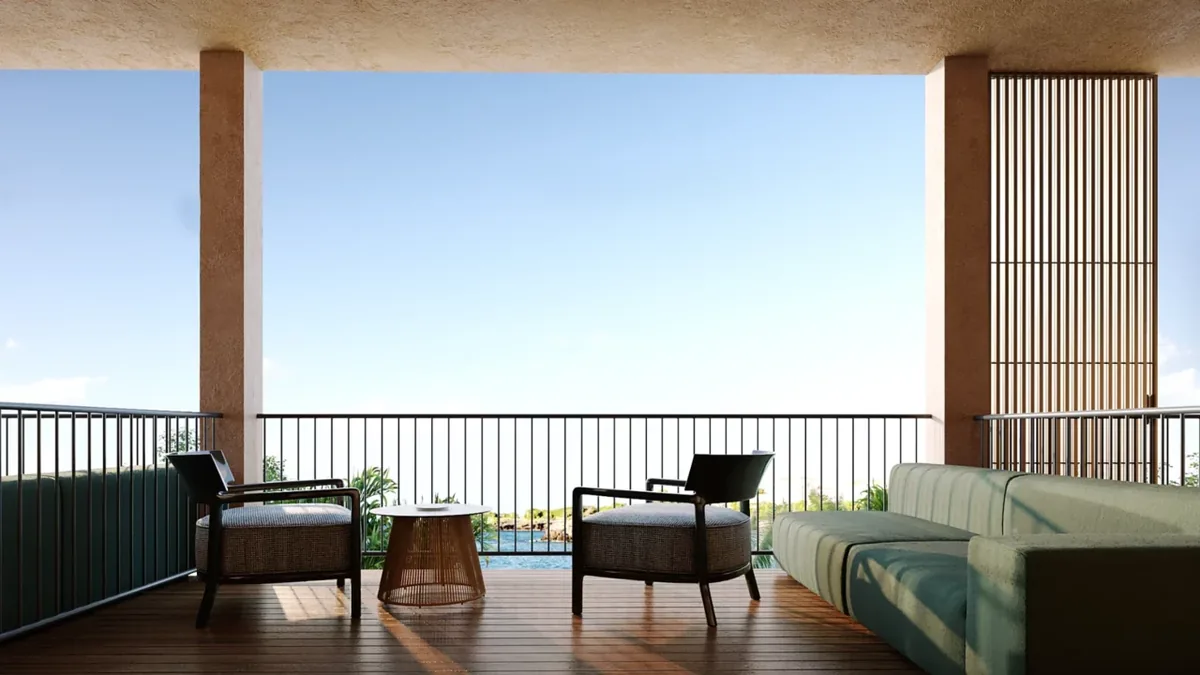
A one-bedroom residence in a new Hilton-branded condo development on Grenada's south coast, from US$1,100,000.
Two-Bedroom Residence, South Coast Beachfront Condos, Grenada
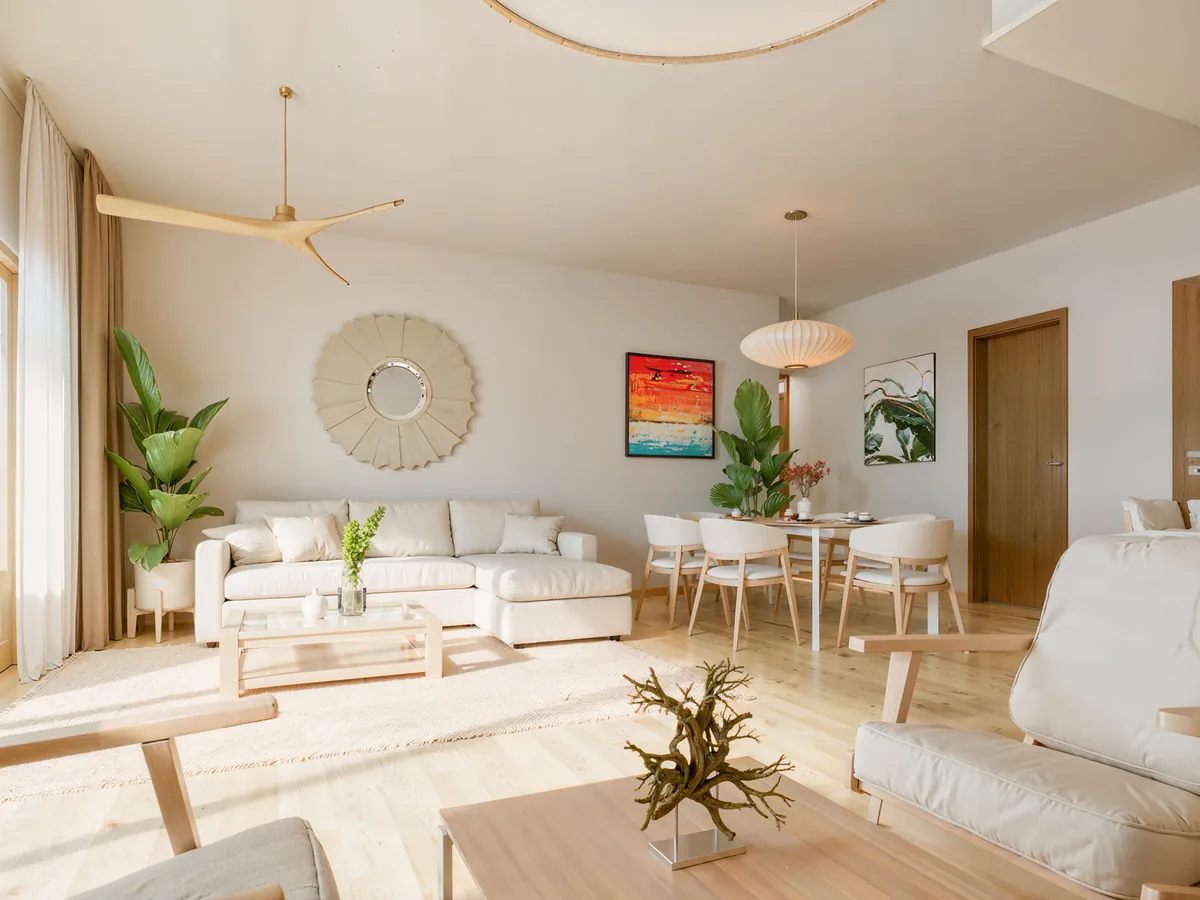
A two-bedroom beachfront residence on Grenada's south coast, US$770,000.

Two-Bedroom Residence (144 m²), South Coast Beachfront Condos, Grenada
A two-bedroom, one-bath freehold apartment of 144 square metres under construction at the bay on Grenada's south coast, with direct private beach access.

Studio Residence, Hilton Condo Residences, Grenada
A studio residence in a new Hilton-branded condo development on Grenada's south coast, from US$575,000.

Studio Residence, South Coast Beachfront Condos, Grenada
A 398 sq ft studio residence on Grenada's south coast, US$360,000 — the most accessible entry into the collection.
Hotel Share, Hilton Condo Residences, Grenada
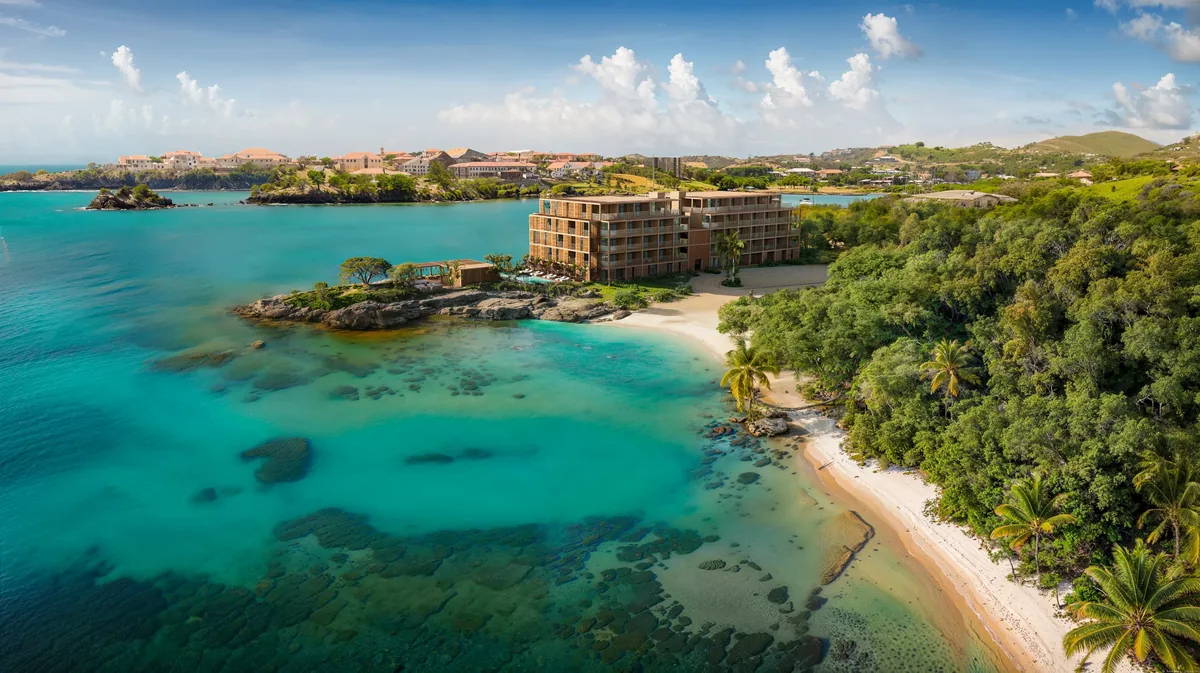
A one-bedroom, one-bath hotel unit of 28 square metres at Hilton Condo Residences on Grenada's True Blue Bay, near St.
Grenada does not tax the foreign income of non-residents — but the United States taxes its citizens on worldwide income wherever they live, and a second passport changes nothing about a US citizen's federal filing or liability. Visa-free count per the Henley Passport Index, 2026.
Is Grenada right for your family?
Book a private call and Dan will map the program — and the right development — to your goals.
Book a Private Call