Antigua & Barbuda Real Estate
365 beaches, branded developments, and an active market for citizenship-linked property.
Why invest in Antigua & Barbuda
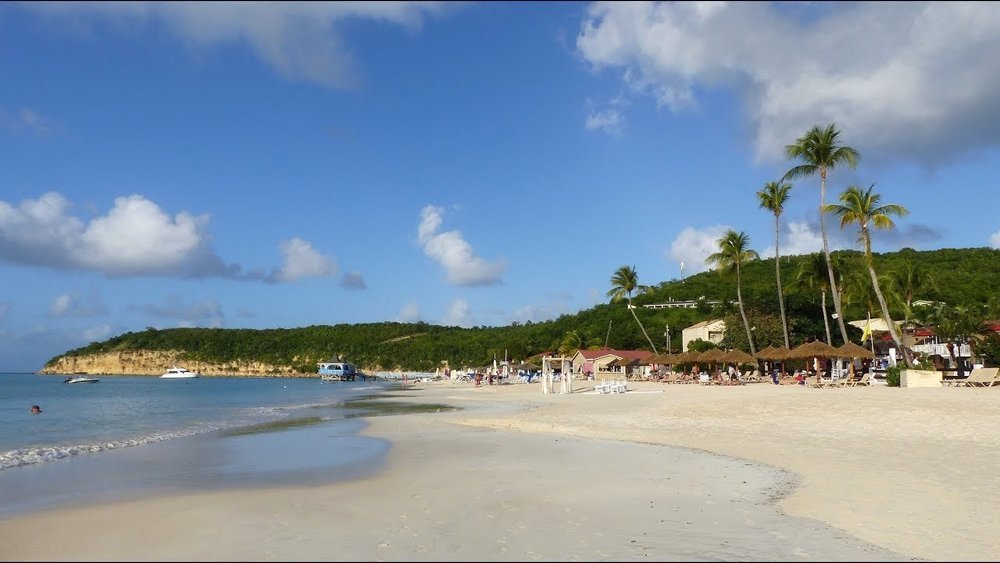
Antigua is the best-connected of the citizenship-program islands. Direct flights from the US East Coast, Canada and London land within a day of most buyers’ home cities, and the island's 365 beaches sit behind a second-home market with genuine depth rather than a single resort strip. The buyer mix is recognizable: North American families flying down for part-year living, British owners with long ties to the island, and citizenship-by-investment applicants who want the qualifying purchase to be a home they will actually use. US buyers increasingly arrive with both goals at once, and Antigua is one of the few islands that answers them cleanly.
Dan advises across the island through the Sotheby's International Realty affiliation, and his own second citizenship is Antiguan — so the read here is an owner's as much as a broker's. The current costs, timeline and 30-day presence rule sit on the Antigua & Barbuda citizenship program page; this guide is about the property.
- Strong North American & European flight links
- Marina and beachfront communities
- CBI-eligible developments across price bands
- Established second-home market with real resale depth
Two buyers, one island.
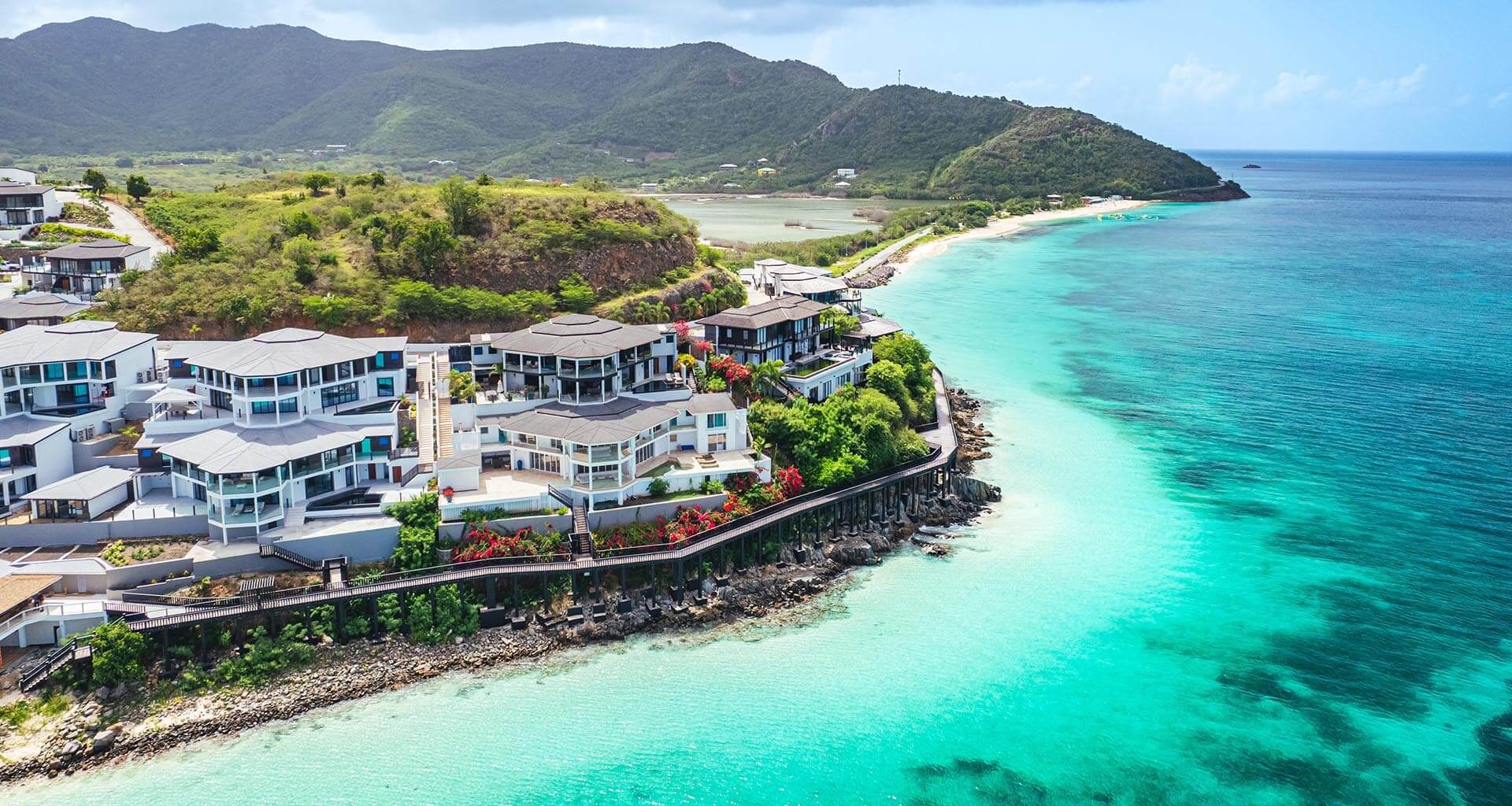
Most demand today comes from two overlapping groups. The first is the lifestyle buyer — part-year North American and British owners who have holidayed on Antigua for years and finally want an address rather than a hotel. The second is the citizenship applicant, often American, treating an approved purchase as both a family passport and a home. What has changed is the product between them: branded resort capital is arriving, and with it the management, amenities and rental programs that let a villa be owned from a distance. The new beachfront residences at Jolly Harbour, the completed Hodges Bay resort community and the freehold homes at Coco Beach are the visible markers of a wider pipeline. For context on how these compare with branded projects elsewhere in the region, Dan's ranking of six Caribbean branded residences is a useful frame.
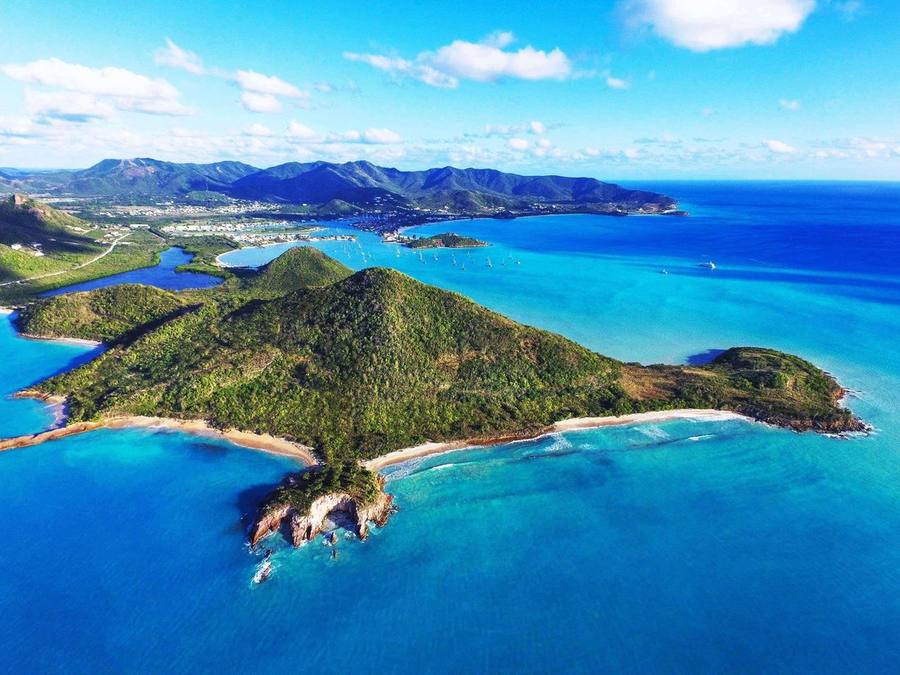
Jolly Harbour, English Harbour and the coasts between.
One island, several distinct markets — and the right answer is usually obvious within a day of walking them.
Jolly Harbour & the west coast
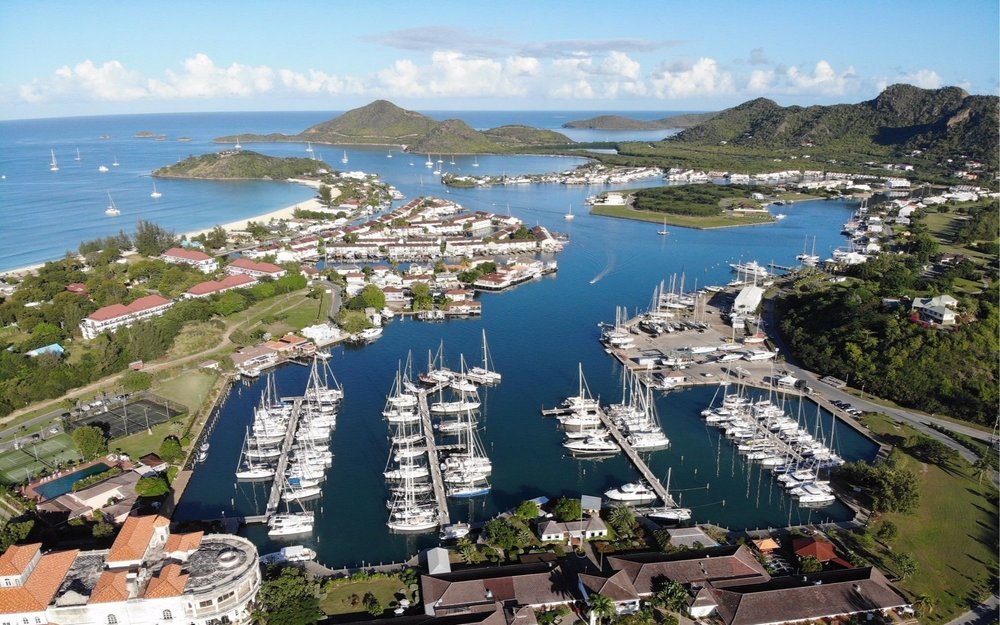
Most first purchases land here. Jolly Harbour is a working marina community — waterfront villas with docks, golf, provisioning and restaurants inside one gate — on the calm, Caribbean side of the island. It is Antigua's most liquid market for resale and rentals, running from entry marina residences up to the completed six-bedroom Reeds Point villa with an infinity pool. Immediately south at Jolly Beach, the Jolly Harbour Beachfront Residences — branded residences with a beach club attached — are set to reposition the whole stretch, part of the same collection of branded beachfront residences in Antigua Dan represents. For the neighborhood in depth, read his Jolly Harbour buyer's guide, the note on how Nikki Beach will change the harbor, and the whole-ownership-versus-rental-pool question he examines at Tamarind Hills.
English Harbour & the south
The south is the island's sailing quarter, built around UNESCO-listed Nelson's Dockyard and the superyacht berths of Falmouth Harbour. Hillside villas above the two harbors trade on views, breeze and a short drive to the Dockyard's restaurants; the season peaks around Antigua Sailing Week. Buyers here tend to be lifestyle-led — sailors and repeat visitors who already know which hillside they want. Further west, the patient-money play at Pearns Point and the resort inventory Dan surveys in his guide to Antigua's best hotels round out the south and south-west picture.
The north coast
The north is Antigua's established resort shoulder, minutes from the airport. On the white sand of Jabberwock Beach, the Hodges Bay Resort & Spa is a completed five-star community where an income-producing hotel unit meets the citizenship threshold exactly — a straightforward entry for a buyer who wants something already built and operating. Gated hillside homes nearby, such as these modern ocean-view homes with Antiguan citizenship, add freehold title and west-facing Caribbean Sea views a short drive from the north-coast beaches.
The east and south-west coasts
The Atlantic side is greener, quieter and better value — fully furnished Long Bay beach villas put you on white sand within a gated community without the west-coast premium. On the calm south-west shore between Darkwood and Ffryes, the freehold condominiums, townhouses and villas at Coco Beach are among the more accessible CBI-eligible buys on the island. Beyond the listed stock, Dan curates a private selection of luxury developments in Antigua shared through the dataroom.
Product types and price bands.
Antigua covers an unusually wide range for a program island, and every figure below is drawn from stock Dan currently represents rather than a market average.
- At the citizenship threshold (from $300,000): a leasehold, income-producing hotel unit at Hodges Bay qualifies at exactly $300,000; freehold suites in gated communities near Jolly Harbour sit just above it.
- Furnished villas and homes ($400,000–$1M): two-bedroom Long Bay villas from $400,000; completed ocean-view homes around $990,000.
- Branded beachfront (from $1.2M): the Jolly Harbour Beachfront Residences and the wider branded beachfront collection, with a beach club and rental management attached.
- Freehold resort residences (roughly $450,000–$2.75M): studios through five-bedroom villas at Coco Beach, all sold with title to a specific home.
- Trophy villas ($7M and up): the waterfront Reeds Point villa at $7,850,000 sets the top of the Jolly Harbour market.
The full developments hub and current Antigua listings hold the live inventory; verified pricelists and off-market positions are shared through the private dataroom.
Developments & opportunities.
The best-value passport for a large family.
Antigua & Barbuda's distinguishing feature is family arithmetic. The National Development Fund contribution is a single price that covers a family of up to four — from $230,000 — and a University of the West Indies fund option exists for larger families, which is why Dan so often routes big multi-generational files here rather than to islands that price every dependant separately. For a family of five, six or more, the single-price structure is usually the cheapest credible route to a Caribbean passport on the market.
The real-estate route runs alongside it: from $300,000 into an approved development gives you an asset you can hold, use and resell after the holding period, against a contribution that is simpler but is not an asset. Dan's rule for clients weighing the two is consistent — buy property you would want anyway, and let the passport be the bonus. He has written up both sides of that decision in donation versus real estate, two case studies, and his own file is unusually candid: his second citizenship is Antiguan, and he explains why he chose the donation over property for his own application. Whichever route fits, process, costs and the presence rule live on the Antigua & Barbuda program page.
How foreigners buy, and what to check.
Foreign buyers own freely in Antigua. Most residences are sold freehold with title to a specific home; some resort stock — the Hodges Bay hotel unit, for example — is leasehold and income-producing, which behaves differently and should be underwritten as such. Purchases outside an approved CBI development ordinarily require a Non-Citizen Land Holding License, whereas buying inside a government-approved project for citizenship follows the program's own approval track instead. Budget for the customary closing costs — stamp duty, legal fees and, where applicable, the license — on top of the headline price; Dan sizes these for a specific property on the first call rather than quoting a blanket figure.
Financing is possible but not the default: most Caribbean purchases close in cash or with lending arranged offshore, and Dan sets expectations early in his note on whether a foreigner can get a mortgage on a Caribbean villa. On anything sold off-plan, the diligence is where deals are won or lost — developer track record, escrow, delivery dates and CBI approval status all matter, and he works through the same off-plan due-diligence checklist before any client wires a deposit.
Barbuda: the legacy play across the channel.
Barbuda is the same country and the same passport, but a different market entirely — sixty-two square miles of pink sand and lagoon, largely empty by design. There is no entry-level tier: the island's two anchors are Barbuda Ocean Club, a Discovery Land Company private-club community where turnkey casitas generally start around $6.9M, and a celebrity-backed branded beach resort where residences begin from $12M. Most of it trades privately. Because a purchase there pairs naturally with the citizenship program, many families run both tracks together — secure the passport through Antigua, hold the Barbuda residence as the generational asset. The full detail sits on the dedicated Barbuda real estate guide.
What to weigh before you buy.
Antigua is a strong market, not a guaranteed one. Rental returns are the most common source of disappointment: management splits, service charges and a real high-season-only pattern mean the headline yields quoted in sales decks rarely survive contact with the spreadsheet — Dan is blunt about why Caribbean rental cash flow is harder than it looks, and treats income as a bonus rather than the reason to buy. Off-plan carries delivery and completion risk; resale liquidity is deepest in Jolly Harbour and thinner elsewhere; and hurricane exposure makes insurance and build quality worth paying for. None of these is a reason to stay out — they are reasons to buy the right property, in the right place, with honest underwriting.
How Antigua sits against its peers.
Antigua is rarely the only island a family is weighing. Against St. Kitts real estate — the region's oldest and most established program — Antigua trades a slightly younger market for stronger flight links and the family-price advantage. Against Grenada real estate, it gives up the E-2 US treaty angle but wins on connectivity and beach count. Dan advises across all of them; the full set is on the Caribbean market guides, and the right answer usually depends on family size, tax residency and how often you will actually fly down.
Antigua & Barbuda real estate, answered.
Is Antigua & Barbuda eligible for citizenship by investment, and from how much?
Yes. Antigua & Barbuda runs a Citizenship by Investment program with a real-estate route from $300,000 into an approved development, or a National Development Fund contribution from $230,000. Approvals typically run 8–12 months from a complete application. The full process is on the Antigua & Barbuda program page.
Why is Antigua & Barbuda considered the best value for large families?
Its National Development Fund contribution is a single price covering a family of up to four, from $230,000, with a University of the West Indies fund option for larger families. Islands that price each dependant separately usually cost more for a family of five or more, which is why Dan often routes big multi-generational files here.
What does real estate in Antigua & Barbuda typically cost?
CBI-eligible residences start at the $300,000 threshold; furnished villas run roughly $400,000 to $1M; branded beachfront residences open from $1.2M; freehold resort homes at Coco Beach run to about $2.75M; and trophy villas in Jolly Harbour reach into the millions, up to around $7.85M. Dan maps the right band to your budget on the first call.
Should I buy in Jolly Harbour, English Harbour or the quieter coasts?
They suit different owners. Jolly Harbour offers marina convenience and the island's deepest rental and resale market; English Harbour trades that for hillside villas, the yachting season and Nelson's Dockyard; and the north, east and south-west coasts are quieter and better value. Dan usually shows first-time buyers more than one before they choose.
Do we have to live in Antigua & Barbuda?
Not permanently. New citizens spend 30 days in the country over their first five years, up from 5 — a rule that suits owners who intend to use their property anyway. The 30 days is applied administratively; the Citizenship by Investment (Amendment) Bill 2026 that would write it into the Act was presented to Parliament on 14 July 2026 and has not been confirmed enacted as of August 2026, so plan on 30. There is no requirement to relocate.
Can foreigners own property in Antigua, and what does closing involve?
Yes. Most homes are sold freehold; some resort stock is leasehold. Purchases outside an approved CBI development ordinarily require a Non-Citizen Land Holding License, while approved developments follow the program's own track. Budget for stamp duty, legal fees and any license on top of the price — Dan sizes these for a specific property before you commit.
What is Dan's own connection to Antigua?
His second citizenship is Antiguan. He went through the program as an applicant — and has written candidly about the file, including why he chose the donation over real estate — so clients get the applicant's view alongside the broker's.
Antigua & Barbuda reading.

Thinking about Antigua & Barbuda?
Dan lives and works in the region. Book a call for an honest, first-hand read on the market.
Book a Private Call