The Bahamas Real Estate
The Caribbean's most liquid, US-adjacent luxury market — 700 islands, 50 minutes from Miami.
Why invest in the Bahamas
- The region's most liquid luxury market
- No income, capital-gains or inheritance tax
- Under an hour from Florida
- Branded residences on Paradise Island
- Permanent residency via qualifying property
Who is buying the Bahamas now.
The Bahamas is the most liquid luxury real-estate market in the Caribbean, and the reason is geography. An archipelago of roughly 700 islands strung between Florida and the wider region, its principal market sits about fifty minutes' flight from Miami — close enough that a family can hold a second home here the way others keep one in the mountains, using it for a long weekend and locking it up in between. That proximity, paired with no tax on income, capital gains or inheritance, has made the country a durable base for two kinds of buyer: North American families who want a lock-and-leave second home near home, and the financial-services principals who staff Nassau's established banking, trust and fund sector. The families reaching Dan's desk are rarely chasing yield. They are buying convenience, a stable jurisdiction and a hard asset a short hop from the mainland. For a sense of just how close that hop is, Dan's note on Bimini — the Bahamas fifty miles from Miami makes the point in miles rather than adjectives.
What separates the Bahamas from most of the region is depth. Where a smaller island might list a handful of resale-grade villas, New Providence alone supports international schools, private clubs, deep-water marinas and a genuine secondary market — so a well-chosen property can be sold again without waiting years for the one buyer who fits. Dan frames the country as two markets under one flag: a core of blue-chip, liquid addresses on and around New Providence, and a quieter Out Island tier where privacy and space count for more than resale speed. Which one suits a family depends less on budget than on how they actually intend to use the place. For most owners the honest answer is a handful of weeks a year — school holidays, a stretch of winter, the odd long weekend — which is exactly the pattern the country is built to serve, with frequent direct lift from the US mainland and a service culture geared to owners who come and go.
Where to buy: the axis of value, New Providence
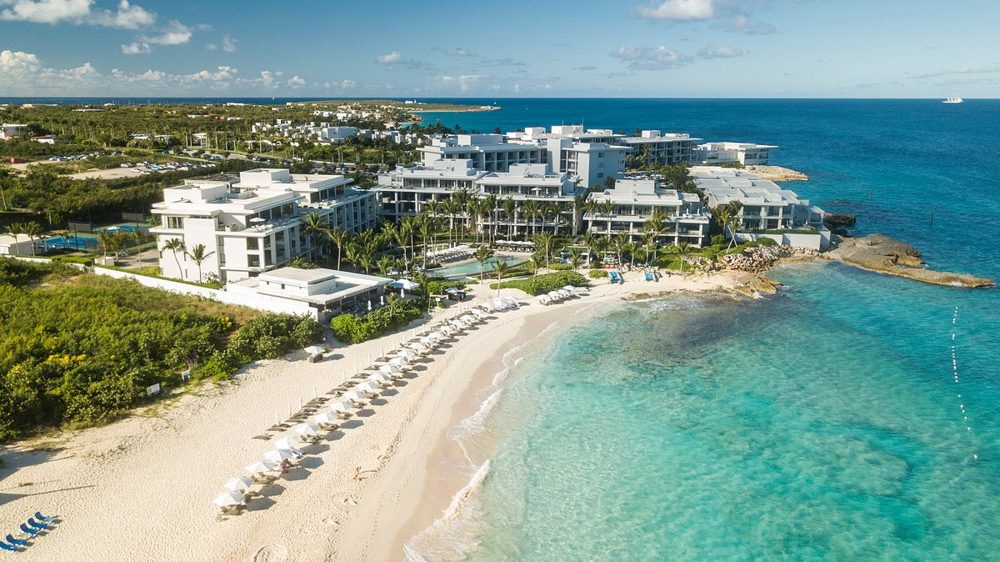
New Providence is the axis the whole market turns on. Nassau anchors it, with Paradise Island — home to the country's best-known resorts and its marquee branded residences — a bridge away. West of the capital, the gated enclaves of Lyford Cay, Old Fort Bay and Albany hold the top of the market: guarded, club-centered communities with deep-water marinas, golf and the international schooling that keeps families resident year-round. These are the addresses with the most reliable resale, the deepest tenant pool and the clearest pricing history, and they are where Dan steers buyers who want liquidity as much as lifestyle. Albany in particular — a sports-and-marina community on the island's southwest coast — has drawn a concentration of ultra-high-net-worth owners and set the benchmark for what the top of the New Providence market looks like.
The Out Islands: the private-retreat tier
Beyond New Providence lie the Out Islands, and they play a different role. Harbour Island, with its pink-sand beach and clapboard cottages, trades on scarcity and old-money cachet; the Exumas offer cays, sandbars and some of the clearest water in the hemisphere; the Abacos are the region's sailing heartland. What these markets share is space and privacy in exchange for the infrastructure New Providence takes for granted — thinner services, more seasonal access and a shallower resale pool. Dan's counsel to Out Island buyers is consistent: underwrite the purchase as somewhere you genuinely want to spend time, because the exit is slower here than it is in Nassau. The buyer here is usually someone who already owns elsewhere and wants a genuine escape rather than a base — a boater, a fly-fisher, a family chasing quiet — and who values a dock and a clear horizon over a concierge. A representative example on Dan's books is a seven-bedroom beachfront villa on Little Exuma: a completed, freehold house of roughly 465 square meters at Forbes Hill, built for self-sufficiency with its own wells, reverse-osmosis water and standby power — the kind of end-of-the-road privacy the Out Islands do better than anywhere.
The branded-residence surge
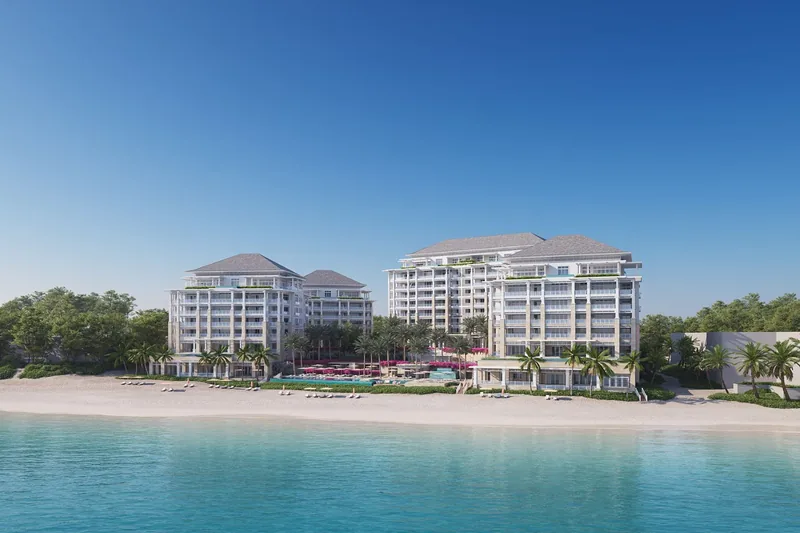
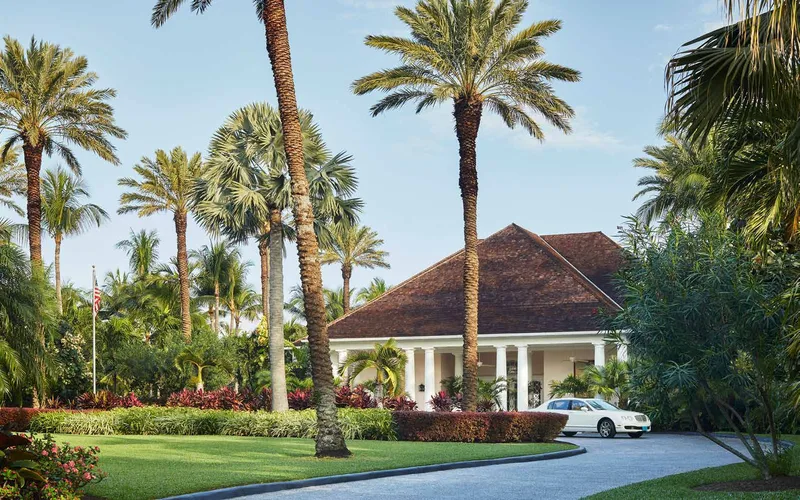
The most visible shift in the market is the arrival of branded residences at the top end. On Paradise Island, The Ocean Club, A Four Seasons Resort has brought hotel-managed ownership to one of the country's most storied addresses — roughly thirty-five acres on the island's five-mile beach, the former Huntington Hartford estate and later the One&Only, with its Versailles-inspired gardens and 12th-century French cloister intact. The new residences are a small, scarce collection (reported at around 67 units, part of a roughly $400M expansion) sold off-plan and targeted to open around 2027, with recent reporting pointing to 2028. Dan represents two positions there: the Ocean Club Residences, two-bedroom-plus-den homes of about 290 square meters from $7,310,000, and the penthouses crowning the building from $15,740,000, both fully resort-managed. The wider estate — historic resort, private villas and the new condominiums — is covered on the Four Seasons Ocean Club community page. These sit within a broader cluster, Albany's residences and the Rosewood at Baha Mar on Cable Beach among them, that has in a few years given the Bahamas one of the deepest benches of branded product in the region; you can see how Dan ranks it against the field in his honest ranking of six Caribbean branded residences and in his independent buyer's guide to the Ocean Club. For a lock-and-leave owner the appeal is plain: the building maintains the home, staffs it and, where an owner chooses, rents it. Pricelists, floorplans and current availability sit in Dan's private dataroom, alongside the rest of his Caribbean development shortlist.
What to buy, and at what price
Product in the Bahamas sorts into three broad shapes, and the right one follows from how a family plans to use the place rather than from budget alone. At the top sit the fully managed branded residences — the Four Seasons Ocean Club homes above are the clearest example, priced from $7,310,000 for a residence to $15,740,000 for a penthouse — where the trade is a premium price and real annual carrying cost in exchange for a home that runs itself. A tier below are the whole-ownership villas and estates of the gated New Providence enclaves and the better Out Islands, where a completed, freehold house such as the Little Exuma villa at $2,739,000 buys space, land and self-sufficiency rather than a concierge. And beneath both is a deep resale market of condominiums and family homes on New Providence that rarely reaches Dan's shortlist but underpins the country's liquidity. Dan's current, verified inventory — with figures confirmed in writing before any offer — is kept on the listings marketplace; he does not quote price bands he cannot stand behind.
Buying as a foreigner
Foreign buyers are welcome in the Bahamas, and the process is among the more straightforward in the region. Acquisitions by non-Bahamians fall under the International Persons Landholding Act, which for most single-residence purchases means registering the transaction rather than seeking prior approval; larger or undeveloped holdings can require a permit, and Dan confirms which applies before an offer goes in. Purchases are handled by Bahamian attorneys, title is well-established, and — as with any move here — source-of-funds disclosure is expected rather than exceptional. Most buyers at this level pay cash; where financing is part of the plan, arrange it early, because a non-resident mortgage on a Caribbean home is slower and more conservative than its US equivalent, as Dan sets out in whether a foreigner can get a mortgage on a Caribbean villa.
The residency and tax angle
Property is also the gateway to residency. A qualifying real-estate investment of $1,000,000 or more supports an application for permanent residency, with an accelerated track for larger commitments; once granted, it is held for life, with no renewal cycle. The full residency and tax mechanics — what the threshold buys, and how it interacts with your tax home — are set out on Dan's Bahamas residency and tax page. The draw is not a passport — the Bahamas runs no citizenship-by-investment program — but the tax profile: no tax on income, capital gains or inheritance, which puts the country in the small club Dan surveys in the countries with zero income tax in 2026. One caveat he repeats: residency is not the same as moving your tax home, and US citizens remain taxed on worldwide income wherever they live, so the structuring is worth settling before, not after, the purchase. Whether residency alone is enough, or a family also wants the optionality of a second citizenship, is the question Dan works through in second residency versus second citizenship.
How it sits against Cayman and Bermuda
The Bahamas is one of three tax-neutral, US-adjacent jurisdictions global families weigh against one another, and the choice usually comes down to price of entry and use. The Cayman Islands offer a similar no-direct-tax profile with a more corporate, financial-services centre of gravity and Seven Mile Beach as its trophy address; Bermuda sits closer to the US East Coast with a tightly controlled, high-priced market and a smaller pool of homes foreigners may buy. Against both, the Bahamas leads on breadth of product and the sheer proximity of its principal market to Florida — more ways in, at more price points, an hour from Miami. Dan advises across all three, so the comparison is done on the merits rather than on which listing happens to be in front of you.
Risks and trade-offs
None of this is a reason to underwrite loosely. The branded residences at the top of the market are new construction sold off-plan, so the honest discipline is to treat them as such: confirm the build status, the delivery date and how the deposit is protected before relying on any headline. Rental income is the figure most often oversold — Bahamian returns soften once the management split, service charges and seasonality are counted, a pattern Dan documents in why Caribbean rental cashflow is harder than it looks — so model it conservatively and treat any yield as a bonus rather than the thesis. Carrying costs at the trophy tier are a real annual number, not an afterthought. And on the Out Islands the exit is genuinely slower than in Nassau, which is why Dan's counsel there is to buy for use, not resale speed. The country rewards buyers who go in with clear eyes; it punishes those who confuse a lifestyle purchase with a cashflow one.
Bahamas real estate, answered.
Does the Bahamas offer citizenship or residency by investment?
Residency, not citizenship — the Bahamas has no citizenship-by-investment program. A qualifying real-estate investment of $1,000,000 or more supports an application for permanent residency, with an accelerated track for larger commitments, and once granted it is held for life with no renewal cycle. See Dan's Bahamas residency and tax page for the full process.
Can foreigners buy property in the Bahamas?
Yes. Foreign buyers are welcome, and acquisitions by non-Bahamians fall under the International Persons Landholding Act — for most single-residence purchases that means registering the transaction rather than seeking prior approval, while larger or undeveloped holdings can require a permit. A Bahamian attorney handles the conveyance, and source-of-funds disclosure is expected.
Where do most buyers focus?
New Providence is the core of the market — Nassau, Paradise Island and the gated enclaves of Lyford Cay, Old Fort Bay and Albany — prized for schools, clubs and resale depth. The Out Islands, from Harbour Island to the Exumas and the Abacos, trade that infrastructure for privacy and space.
What are the branded-residence options?
The headline address is The Ocean Club, A Four Seasons Resort on Paradise Island, where Dan represents Ocean Club Residences from $7,310,000 and penthouses from $15,740,000. These are new-build homes sold off-plan ahead of a targeted opening around 2027 (recent reporting points to 2028), so confirm build status and delivery in writing. Pricelists and floorplans are in the private dataroom.
What taxes apply in the Bahamas?
The Bahamas levies no tax on income, capital gains or inheritance. Residency alone does not change where you are tax-resident, though — US citizens in particular remain taxed on worldwide income until residency genuinely moves — so Dan coordinates the tax question alongside the purchase.
How does the Bahamas compare with the Cayman Islands and Bermuda?
All three are tax-neutral and close to the US. Cayman is more corporate and financial-services led, with Seven Mile Beach as its trophy address; Bermuda is closer to the US East Coast but tightly controlled and highly priced, with fewer homes foreigners may buy. The Bahamas leads on breadth of product and proximity to Florida, and Dan advises across all three.
How close is the Bahamas to the United States?
Very close — New Providence is roughly fifty minutes' flight from Miami and under an hour from Florida. That proximity is the market's defining advantage, and the main reason US families treat a Bahamian home as a lock-and-leave asset near home rather than a distant retreat.


Thinking about the Bahamas?
Dan lives and works in the region. Book a call for an honest, first-hand read on the market.
Book a Private Call