St. Lucia Real Estate
Dramatic landscapes and luxury branded residences from Sugar Beach to Rodney Bay.
Why invest in St. Lucia
Of the islands Dan works across, St. Lucia is the one clients can already picture before he says a word — decades as the Caribbean's honeymoon capital did the marketing no citizenship program could buy. What buyers underestimate is how much the geography protects value at the top of the market: the UNESCO-listed Pitons, and the planning controls around them, keep trophy supply near zero, while the north keeps adding the marina, dining and rental demand that make a home usable between visits. Dan lives and works in the Eastern Caribbean and represents Rodney Bay Marina Condos, the CBI-eligible branded residences at Rodney Bay; this guide is the same first-hand read he gives clients on the first call, and it sits inside his wider Caribbean market coverage.
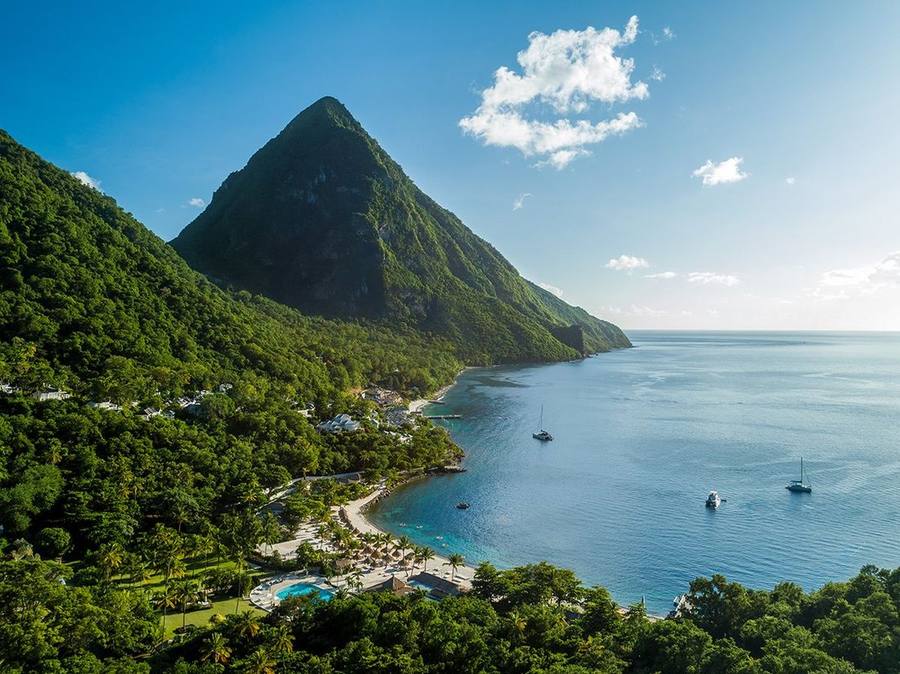
- Iconic Pitons & rainforest setting
- Branded residences (Viceroy, Rodney Bay Marina Condos)
- CBI-eligible developments
- Strong tourism & rental demand
Two coasts, one island.
St. Lucia is really two markets. In the southwest, around Soufrière, the UNESCO-listed Pitons rise straight from the sea and give the island its trophy addresses — Sugar Beach's Viceroy residences sit in the valley directly between the peaks, with a scarcity the terrain itself enforces. In the northwest, Rodney Bay carries the island's momentum: the marina, the walkable restaurants, and most of the new construction — including Rodney Bay Marina Condos, the CBI-eligible branded residences Dan represents. His shorthand for clients: the south is where you buy scarcity, the north is where you buy momentum — and the first question is which one matches how the home will actually be used.
The split is practical as much as aesthetic. Long-haul flights land at Hewanorra International in the south, a genuine drive from the northern resorts, so Pitons-coast owners reach the villa sooner, while Rodney Bay owners trade transfer time for amenity, boat access and deeper rental demand between visits. At both ends the flagship inventory is branded — Viceroy in the south, Rodney Bay Marina Condos in the north — and the flag earns its keep three ways: it underwrites rental income while the owner is away, keeps the home to hotel standard, and gives the eventual resale a market beyond the island.
Between those poles the west coast reads as a ladder of distinct addresses. Cap Estate, at the northern tip, is the established villa enclave around the island's golf course; Rodney Bay Village wraps the marina where the transatlantic ARC rally makes its Caribbean landfall each December; and Soufrière anchors the UNESCO-listed Pitons Management Area, where planning control keeps new supply near zero — the quiet mechanics behind Sugar Beach's pricing power.
Who is buying St. Lucia now
St. Lucia is the market clients already know — decades as the Caribbean's honeymoon capital have done marketing no citizenship program could buy. The enquiries follow: families who want the passport but insist the home earn its place, preferring a branded residence they will actually use to a contribution written off; and owners planning real time on the island. Dan's caution cuts the other way — a holiday-brand market rents seasonally, so he underwrites the income case from the rental program's numbers, not the brochure.
Citizenship, and the purchase
St. Lucia runs the newest of the five Caribbean citizenship programs — established 2015 — and the most flexible, with contribution, real-estate, bond and enterprise routes. A qualifying purchase from $300,000 in an approved development carries a family to a passport in roughly 4–6 months, with visa-free access to 145 countries, no tax on worldwide income and no residency requirement. Because a simpler contribution route exists from $240,000, Dan's advice is to let the property justify itself first: buy the residence you would want to own anyway, plan around the program's holding period before resale, and stay inside the government-approved list — which is where due diligence on the developer matters most. Pricelists and underwriting for both developments below are shared privately through the dataroom. When St. Lucia is one of several candidates, comparing all five programs is where the first call usually starts.
The west-coast ladder
Almost everything a foreign buyer will look at sits on the calmer, west-facing Caribbean coast, and it reads from north to south as a ladder of distinct addresses — each with its own reason to own.
Soufrière & the Val des Pitons — scarcity
The southwest is the island's trophy shelf. Sugar Beach, A Viceroy Resort sits in the Val des Pitons directly between the two peaks — arguably the most photographed setting in the region — and, because it falls inside the UNESCO-listed Pitons Management Area, planning control keeps new supply near zero. That is the quiet engine behind its pricing: the community's villas and residences have been built out over a decade-plus, resell regularly and have appreciated over that period, so today it trades largely as a resale market with real comparables rather than off-plan risk. Dan advises here independently; for the full picture read his independent read on Sugar Beach.
Rodney Bay & Gros Islet — momentum
The north is where the island's day-to-day life and most of its new construction are. Rodney Bay wraps the marina — the transatlantic ARC rally's Caribbean landfall each December — with walkable restaurants, shopping, good beaches and the shortest airport transfers. It holds the two developments Dan works with most closely: Rodney Bay Marina Condos, the CBI-eligible branded residences rising on the slopes of Mount Pimard, and The Landings, the freehold, already-operating resort around the island's only private marina. Background on both sits in Dan's guides to the Rodney Bay Marina Condos residences and The Landings.
Cap Estate & Point Hardy — the villa north
At the very tip of the island, Cap Estate is the established villa enclave around St. Lucia's golf course, now paired with a clifftop championship course at Point Hardy that has put the area on the global golf map and anchored a run of golf-led luxury residences. It suits a specific buyer — the golf is the value engine, so a non-golfer pays for an amenity they may not use. For the bespoke, build-your-own end of Cap Estate, and for the golf project itself, see Dan's reads on Mount du Cap and Cabot Saint Lucia.
Product types and price bands
St. Lucia spans a wide range, and the on-site figures below are the honest anchors — Dan maps the right band to a budget on the first call, and full pricelists live in the dataroom.
Branded hotel residences (CBI entry). The efficient way into the citizenship program is an income-generating residence inside an approved resort. At Rodney Bay Marina Condos's Rodney Bay residences, a one-bedroom hotel unit of 106 square meters is offered on a leasehold basis at $540,000, structured to earn while the owner is away — comfortably above the program's $300,000 real-estate floor. These are the units where the flag underwrites the rental case.
Freehold resort homes. For buyers who want a title and a resale market rather than a hotel unit, The Landings offers freehold two- and three-bedroom homes around the marina; reported pricing runs from roughly US$575,000 for two-bedrooms toward US$2.25M for three-bedrooms, with beachfront Grand Villas around US$3.75M (publicly reported ranges, not a confirmed pricelist — Dan confirms current numbers before anyone relies on them).
Trophy residences. At the top, a completed three-bedroom Sugar Beach residence of 238 square meters — built around a 32-foot infinity pool, Viceroy-managed and offered freehold at US$6,000,000 — is the kind of Pitons-coast asset the terrain keeps rare. Point Hardy's turnkey golf residences have been publicly reported from around US$6 million as well. Current inventory across the island sits in the listings marketplace.
Developments & opportunities.
Dan represents Rodney Bay Marina Condos directly and advises independently across Sugar Beach, The Landings and the Point Hardy golf residences. See the full Caribbean developments index or browse current St. Lucia listings, and compare the branded-residence field in Dan's honest ranking of six Caribbean branded residences.
How a foreigner actually buys
St. Lucia is straightforward for overseas buyers. There is no foreign-buyer ban; non-nationals purchase through an Alien Landholding Licence, a routine government consent Dan builds into the timeline from the start so it runs in parallel rather than holding up completion. Most branded-resort inventory is sold freehold — The Landings and the Sugar Beach community trade freehold — while some hotel-residence programs, including Rodney Bay Marina Condos's income units, are structured on a leasehold basis; which one applies changes both the resale story and the citizenship treatment, so it is the first thing Dan checks on any given unit.
Closing runs through a local attorney who handles title search, the sale agreement and the licence; buyers should budget for government stamp duty, legal fees and, on resort product, service charges and any rental-management split — real numbers Dan insists on seeing in writing before anyone commits. Financing is possible but not the norm: most purchases here are cash or funded offshore, and where a citizenship application is attached, the qualifying investment generally needs to be unencumbered. Anyone buying off-plan should walk the off-plan due-diligence checklist before wiring a deposit; where the passport is the real objective, the donation-versus-real-estate comparison is usually the clearest way to decide the route.
Risks worth pricing in
The honest cautions are specific to this island. St. Lucia is a holiday-brand market, so rentals are seasonal and the resort-management split and service charges are real — Dan underwrites income from a program's actual numbers, not a brochure, and clients who want the full picture should read why Caribbean rental cashflow is harder than it looks. Off-plan inventory like Rodney Bay Marina Condos carries delivery and deposit risk that an operating resort such as The Landings does not; the Point Hardy golf residences price in an amenity a non-golfer will not use; and the geography that gives the Pitons coast its scarcity also puts it a genuine drive from the northern airport. None of these are dealbreakers — they are simply the variables Dan wants named before an offer, which is the entire point of having someone on the ground.
Where St. Lucia sits
St. Lucia is one of five Caribbean citizenship programs, and it rarely gets chosen in isolation. Families weighing the Pitons-coast lifestyle against value elsewhere often look south to Grenada or across to Antigua — both honeymoon-market islands with their own CBI programs and branded beachfront residences. A side-by-side of costs, timelines and mobility across all five programs sits on the program comparison, and the wider picture across every island Dan covers is the Caribbean real estate hub.
St. Lucia real estate, answered.
Is St. Lucia eligible for citizenship or residency by investment?
Yes — St. Lucia runs a Citizenship by Investment program with a real-estate route from $300,000. See the full St. Lucia program page for the current process and timeline.
What does real estate in St. Lucia typically cost?
The citizenship-eligible entry point is $300,000 into an approved development. From there, branded residences at Sugar Beach and Rodney Bay run well into the millions, with exact pricelists shared privately — Dan maps the right band to your budget on the first call.
Pitons coast or Rodney Bay — where should I buy?
They suit different owners. The Pitons coast offers the region's most dramatic setting and a scarcity the terrain itself enforces; Rodney Bay offers the marina, walkable restaurants and deeper rental demand between visits. Dan starts every St. Lucia search with how — and how often — the home will actually be used.
Which airport should I plan around?
Two airports serve the island: Hewanorra International in the south, where long-haul flights land and the Pitons coast is the shorter transfer, and George F. L. Charles beside Castries, a short drive from Rodney Bay, for regional connections. The distance between the two ends is a genuine drive, so Dan plans the search around how you will actually arrive.
Real estate or contribution — which route fits better?
Real estate, from $300,000, is an asset you can use, rent and resell after the program's holding period; the contribution, from $240,000, is simpler but non-refundable. St. Lucia also offers bond and enterprise routes — Dan maps the full trade-off against your goals on the first call.
Do I have to live in St. Lucia, and can my family be included?
No — there is no residency requirement to obtain or keep citizenship. Applications can include a spouse and dependent children, and in many cases parents and siblings, subject to the program's criteria.
Which St. Lucia developments does Dan cover?
Dan represents Rodney Bay Marina Condos, the CBI-eligible branded residences at Rodney Bay, and advises on Viceroy residences at Sugar Beach and the wider resale market. Floorplans, pricelists and underwriting are shared privately through the dataroom.
Thinking about St. Lucia?
Dan lives and works in the region. Book a call for an honest, first-hand read on the market.
Book a Private Call