St. Vincent & the Grenadines Real Estate
Thirty-two islands and cays where privacy is the product — the Caribbean's quiet aristocracy.
Why invest in the Grenadines
- Privacy as the underlying asset
- Half a century of Mustique pedigree
- Turnkey estates on Bequia's hillsides
- Canouan's ultra-luxury ascent
Who is buying the Grenadines now.
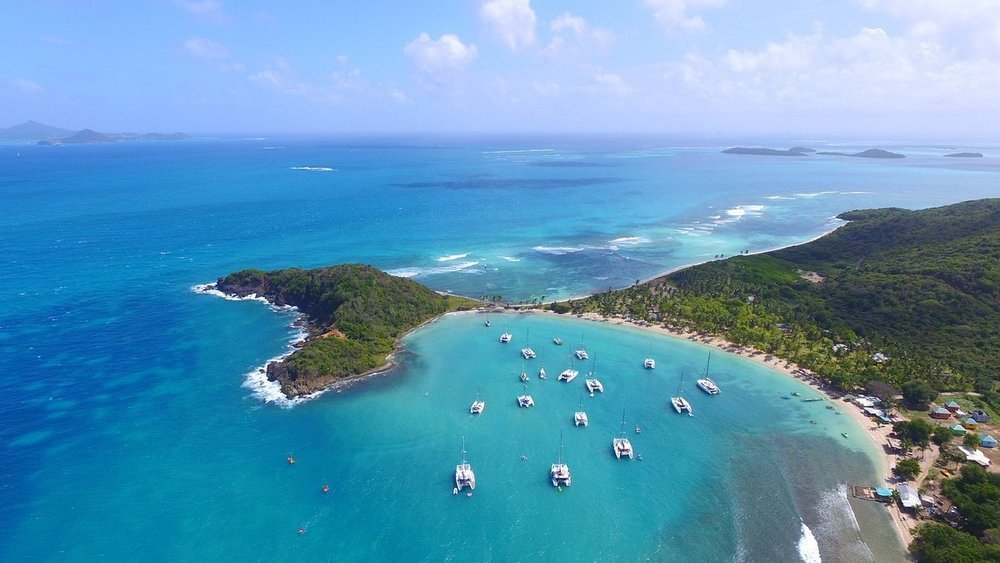
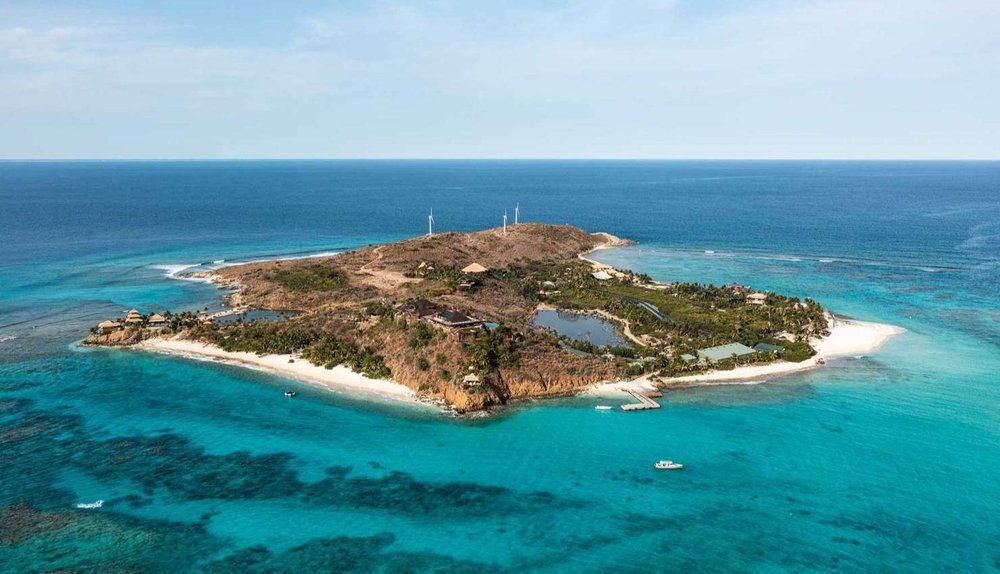
The Grenadines do not advertise. Thirty-two islands and cays run south from St. Vincent toward Grenada, and for half a century they have served as the Caribbean's quiet aristocracy — places where the point of arriving is that almost no one else can. There is no beach-club strip and no photographer at the jetty; privacy is not a marketing line here, it is the underlying asset. Dan has written on who actually owns the Caribbean's billionaire islands, and this chain is where a striking share of that ownership quietly sits. The buyers who reach his desk are a recognizable tribe: sailors who knew these anchorages years before they thought about title, families stepping off the see-and-be-seen circuit of the louder resort islands, and Mustique alumni — long-standing guests and renters — deciding the visit should become a holding. What they share is a preference for reputation earned quietly over amenity lists, and a time horizon measured in generations rather than seasons.
It is a market that rewards patience and relationships more than search filters. Inventory across the chain is thin by design — much of it changes hands quietly, family to family, before a listing ever appears — and the best of it is tightly held. Dan sources across the Grenadines through the private dataroom: current listings, off-market villas and land that has not yet decided to sell, with introductions made on a private call rather than through a portal. The honest starting point is a conversation about which island fits, because the islands differ far more than the charts suggest. For how the Grenadines sit against the region's other markets, the Caribbean real estate hub is the place to start.
Island by island: Mustique, Bequia, Canouan
Mustique built the legend. For half a century — from Princess Margaret's era through the rock royalty who followed — it has operated as a privately managed island under The Mustique Company, and ownership works accordingly: villas are held through the island's company structure, every purchase is subject to the company's approval, and the community's rules keep the island low-built, low-key and deliberate about who lands. Villas come to market rarely and trade discreetly; the process is as much introduction as transaction. That governance is precisely the value — few places anywhere can show half a century of proof that the character of the neighborhood will not change. It is the closest the region comes to the private-island ownership Dan describes in his piece on how Richard Branson secured Necker Island, only structured as a shared, self-governing community rather than one owner's fiefdom.
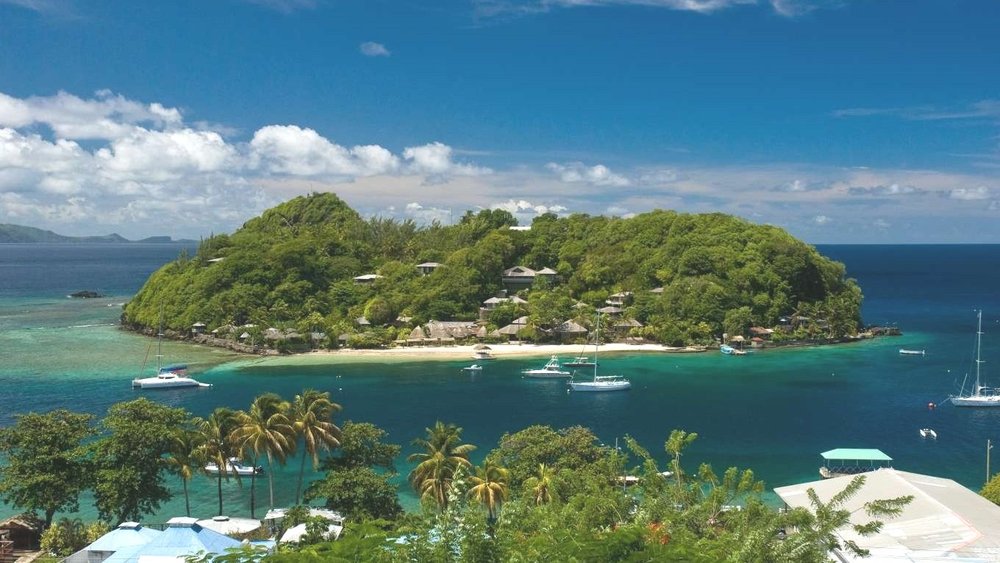
Bequia is the connoisseur's island — large enough for a real life, small enough that the harbor still recognizes its boats. Admiralty Bay is the anchorage every Eastern Caribbean sailor eventually swings into, with Port Elizabeth's waterfront behind it, and the residential market climbs from there: the western slopes above the bay for sunset views over the masts, and Friendship Bay on the southern shore, where turnkey estates look across open water toward Mustique. This is the most functional luxury in the chain — walled gardens, guest cottages, pools set above the sea — without Mustique's entry ritual. The current reference point in the dataroom is Mount Pleasant Estate, a completed seven-bedroom, seven-bathroom home on the Friendship Bay hillsides offered at $3,950,000 — freehold, and finished to what is, in Dan's assessment, the newest standard the island has to offer.
Canouan is the chain's ultra-luxury turn. A long cycle of patient capital has rebuilt the island around a five-star standard — the Mandarin Oriental era — with a deep-water superyacht marina and a runway that receives private jets directly, infrastructure the older islands deliberately never built. It is the Grenadines' statement address, and it trades accordingly: newer money than Mustique, with the polish to match. Mainland St. Vincent is the opposite proposition and the honest value entry: lush, volcanic and largely untouched by resort development, with villa-scale homes and land at levels the smaller islands left behind long ago. The mainland's new international airport has shortened the journey from North America and Europe, and access has always been the variable that kept this market quiet — a theme Dan takes up in his read on which Caribbean islands are actually a direct flight home.
Where to buy, and what your money buys
Product in the Grenadines is almost entirely one thing: private houses and the land to build them. There are no towers of branded condominiums here and very little of the rental-pool inventory that defines the citizenship islands — the point of the chain is the single-family estate, held for the family that owns it. On Bequia that means walled hillside homes with guest cottages and sea-facing pools, the category Mount Pleasant Estate sits at the top of; the only on-site reference price Dan will quote is that home's $3,950,000, because pricing across the chain is too thin and too negotiated to reduce to a per-square-foot rule. On Mustique the unit is the villa inside a governed community; on Canouan it is the marina residence or the estate lot within a five-star footprint; on the mainland it is the villa or the raw parcel, at a fraction of island-cay levels. Buyers weighing the Grenadines against branded, service-backed product elsewhere should read this alongside the wider set of Caribbean developments Dan tracks and the live regional listings — the trade here is privacy and permanence for amenity and liquidity there.
No citizenship program — and the pairing that works
One line of honesty before anything else: St. Vincent & the Grenadines runs no citizenship-by-investment program and no residency-by-investment program, and there is no sign that will change. Nobody should buy here expecting a passport, and the market is healthier for it — every owner in the chain is here for the islands themselves. For families who want mobility alongside the base, the pairing is straightforward: a Grenadines estate combined with citizenship from a nearby program, with Dan running the property purchase and the application as parallel tracks. The two natural neighbors are Grenada, immediately to the south, and St. Lucia, just to the north — both running established Caribbean citizenship programs backed by approved real estate. Buyers drawn to that combination can compare the property directly through the Grenada real estate guide and the St. Lucia real estate guide.
How foreigners buy: license, closing and financing
Foreign buyers take freehold title in St. Vincent & the Grenadines, which is one of the market's quiet strengths — you own the land outright, not a lease or a share. The procedural gate is the license non-nationals need in order to hold land; it is granted as part of the conveyance rather than a barrier to it, but it adds time, so Dan builds it into the plan from the first call. Anyone who has bought elsewhere in the region will recognize the mechanism from Dan's explainer on the alien landholding license, its cost and timeline. Closings run through local attorneys, with government stamp duty and legal fees layered on top of the price; those figures are best confirmed deal by deal rather than assumed. Financing is the honest caveat — mortgage lending to non-residents is limited across the smaller islands, and most Grenadines purchases at this level are cash or privately arranged. Set against all of that are the ordinary challenges of owning property in the Caribbean: distance, upkeep, thin resale and the patience the chain demands — trade-offs Dan would rather a buyer weigh before a purchase than discover after one.
Featured in the dataroom.
The Grenadines, answered.
Does St. Vincent & the Grenadines offer citizenship or residency by investment?
No — the country runs neither a citizenship-by-investment nor a residency-by-investment program, and there is no sign that will change. Buyers come for the islands themselves. Families who want a second passport alongside a Grenadines base typically pair the purchase with a program in nearby St. Lucia or Grenada, and Dan structures the two tracks in parallel.
Can foreigners buy property in St. Vincent & the Grenadines?
Yes. Foreign buyers take freehold title, with a government license for non-nationals forming part of the conveyance. The step is procedural rather than a barrier, but it adds time to a purchase, so Dan builds it into the transaction plan from the first call.
How does buying a villa on Mustique work?
Mustique is a privately managed island, and villa ownership runs through the island's company structure, with every purchase subject to its approval. Villas come to market rarely and often trade quietly, so the process is as much introduction as transaction — Dan opens the right doors and manages the approach.
Why is Bequia called the connoisseur's island?
Because it offers the most livable version of the Grenadines: Admiralty Bay, one of the Eastern Caribbean's great natural anchorages, a real town in Port Elizabeth, and turnkey hillside estates above Admiralty and Friendship Bays. The current reference point in Dan's dataroom is Mount Pleasant Estate, a seven-bedroom property on the Friendship Bay hillsides at $3,950,000.
What is happening on Canouan?
Canouan has taken the chain's ultra-luxury turn: the Mandarin Oriental era brought a five-star standard to the island, alongside a deep-water superyacht marina and a runway that receives private jets directly. It is the Grenadines' statement address — newer money than Mustique, with infrastructure the older islands deliberately never built.
Is mainland St. Vincent worth considering?
For value, yes. The mainland is lush, volcanic and largely untouched by resort development, with homes and land at levels the Grenadines left behind long ago — and the new international airport has improved access to the whole country. It suits buyers who want the flag and the landscape before the polish.
How do you reach the Grenadines?
Through mainland St. Vincent's new international airport, then a short hop or ferry down the chain; Canouan also receives private jets on its own runway. Many owners simply arrive by sea — these are some of the world's most celebrated sailing waters, and the boat remains the honest way to see them.
Thinking about the Grenadines?
Dan lives and works in the region. Book a call for an honest, first-hand read on the market.
Book a Private Call