Apes Hill
A 475-acre elevated golf community in the Barbados hills, with both-coast views and a championship course.
Apes Hill sits high in the hills of St James — roughly 1,000 feet up, with views to both coasts, cooling breezes and a championship golf course at its heart, about seven minutes from Holetown. It's a golf-led community: the course is the value engine, and a non-golfer pays for an amenity they won't fully use.
Product runs from move-in-ready fairway homes to custom land-and-build plots, with villas in the several-thousand-square-foot range. Barbados offers residency rather than citizenship, so the case here is lifestyle, golf and an elevated west-of-island base.
Apes Hill occupies 475 acres in the hills of St James, Barbados, 1,000 feet above sea level on old sugar plantation land. It is a freehold golf community: an 18-hole championship course, the "Little Apes" par-three course, eight padel courts and two tennis courts, with serviced building lots and finished villas across the estate. Glenn Chamandy, founder of Gildan, acquired it in 2019 and rebuilt it. The golf course closed in November 2019 and reopened in January 2022 as a Ron Kirby redesign, which the course-rankings record puts at par 71 and 7,002 yards from the back tees.
Here is what buyers get wrong, and it is expensive. They underwrite the house and stop there. The club at Apes Hill is open only to property owners, and the resort's own membership page puts it at a one-time US$200,000 initiation plus US$20,000 a year — and states the initiation is included in the developer pricing of a home. So if you buy new, you have already paid the US$200,000 whether or not you costed it. The US$20,000 recurs every year, including the years you barely visit. Price the club alongside the house rather than after it, and the whole decision looks different.
What you actually own at Apes Hill
Apes Hill is freehold — you own the land, not a lease or a right-to-use — and Barbados places no nationality bar on foreign freehold ownership. The terms are not quite identical to a local buyer's, though. The Central Bank of Barbados requires permission for a non-resident to purchase real estate here, and its published position is that permission is usually granted where the non-resident remits funds into Barbados to cover the entire cost of the property. It also states that non-residents are not normally allowed to borrow in Barbados to finance such purchases — with an explicit carve-out for Barbadian nationals who happen to be non-resident, who may borrow locally. So the rules do distinguish.
Register the incoming funds with the Central Bank at the time they arrive, with the credit advice and the purchase documents. That registration is what supports taking money back out later. I treat it as a day-one item, not a closing item. One thing to press your attorney on: the law firm Withers states that the Central Bank permits repatriation of the original purchase price plus a mark-up of 4-8%, with any remaining balance released in instalments of US$100,000 a year. The Central Bank's own published exchange-control FAQ says nothing of the sort. I cannot reconcile the two from public sources, and it is material enough that I would want a Barbados attorney to confirm the current position in writing before funds move — not after you have a signed contract.
There are two common ways to hold the property. The first is a straightforward domestic conveyance into your own name. The second, which Withers describes as standard practice for non-residents in Barbados, is buying the shares of an offshore company that already owns the property — often BVI — which sidesteps the Barbados transfer tax and stamp duty that a conveyance would trigger on the next sale. Both are legitimate and both are widely used. They behave differently on exit, on estate planning and on who bears which cost, and the right answer depends on your tax position, not the seller's preference. That is a conversation with your own adviser before you make an offer.
What is for sale falls into two shapes: finished villas you can walk through, and house lots where you take a design from the developer's portfolio, adapt one, or build bespoke. If you are looking at anything unbuilt, the images are renderings — computer-generated impressions of a house that does not exist yet. Walk a completed example by the same builder before you commit to a drawing.
The carrying costs at Apes Hill, in full
Start with the club. Apes Hill publishes one membership level, available only to owners: US$200,000 one-time initiation and US$20,000 a year, covering you, a spouse or partner, and children up to the age of 26. Adult children over 26 and your guests pay golf fees on top, which the club does not publish.
Two gaps in the published material matter, and neither is answered anywhere I can find. First, the resort says the initiation is included in developer pricing — fine if you are buying from the developer, but on a resale from a private owner it is an open question whether membership travels with the house or whether a fresh initiation is triggered. Second, nothing published says whether membership is compulsory for owners or merely available to them. Get both in writing before you exchange. Note also that at least one Barbados agency page still advertises the initiation at US$125,000. When two published figures disagree by US$75,000, you do not split the difference — you obtain the club's current fee schedule on letterhead.
Then land tax. The Barbados Revenue Authority charges it annually on improved value in Barbados dollars, fixed at BBD2.00 to US$1.00 since 1975. The residential bands apply as progressive slices: 0% up to BBD$400,000, 0.1% to BBD$450,000, 0.7% to BBD$850,000, and 1.0% above that. Work an example on those bands and the number is not trivial — a house assessed at BBD$6,000,000, which is US$3,000,000 at the fixed rate, produces roughly BBD$54,000, about US$27,000 a year. That is an illustration on an assumed assessment, not a quote, and assessed value is not asking price. But it makes the point: at Apes Hill price levels land tax is in the same order as the club dues and can exceed them. Both PwC and Withers report an annual cap of BBD$100,000 on the tax; the BRA pages I read state no cap. Confirm the actual assessment and the cap position before you buy, not after.
Transfer tax at 2.5% and stamp duty at 1% are, by Barbados convention, borne by the seller. They hit you on the way out, not the way in, so they belong in your resale model rather than your purchase budget — and they are part of why the offshore share-sale route exists. Legal fees follow a published conveyancing scale that tapers to 1% on consideration above Bds$500,000. Barbados charges no capital gains tax.
Renting it out, and what the levies take
Letting is clearly contemplated — the resort markets villas for short stays itself, and agency inventory includes an Apes Hill villa offered at US$16,000 a month. What is not published anywhere I could find is whether your paying guests get access to the club, the golf and the beach club. That access is most of what would make an inland villa competitive against a beachfront alternative, so if rental income is part of your case, it is the single most important thing to have confirmed in writing before you buy. Do not assume it.
Then the tax stack on the income, which is rarely explained up front. Accommodation is charged VAT at the concessionary 10% rate rather than the 17.5% standard rate. Villas and vacation rentals pay a Room Rate Levy of 2.5% of the nightly rate, capped at BBD$20 per bedroom per night, plus a Product Development Levy, which was introduced at 2.5% in 2018 and raised to 3.75% from April 2019. Short-term accommodation supplied by someone not registered for VAT — the platform-listing route — carries a Shared Economy Levy of 10% instead, and a 2026 amendment to the Tourism Levy Act pushes collection of that 10% onto the global booking platforms themselves. Levies are reported on the VAT return, filed every two months by the 21st of the following month.
Now the honest part about demand. Apes Hill is 1,000 feet up and inland. The estate's own beach club opened in December 2025 on the shoreline at Speightstown, on the northwest coast, open daily 9am to 6pm and reserved for members and their guests, reached by a complimentary shuttle — the resort's published figure is 11 minutes, though trade coverage of the opening described it as a 15-minute transfer. That is a genuinely good answer to the beach question. It is not the same answer as walking out of your own gate onto sand, and a meaningful share of Barbados rental demand will not consider an inland address at any price.
So if your model leans on rental income to carry the club dues, stress-test it against occupancy well below what any letting agent quotes, and ask to see actual booked nights and net receipts for comparable villas rather than a projection. Projections are marketing. Booking histories are evidence.
Apes Hill against the obvious alternative
The comparison every buyer makes is Royal Westmoreland, the other large gated golf estate on the west coast. It was first established in 1994, has over 200 villas and apartments built out, and its beach club is at Mullins Bay. That three-decade head start is the entire point of the comparison. Apes Hill's course closed in 2019 and reopened in 2022, and the resort publishes no price list at all, so the public record of what property there resells for — through good markets and bad — is short by comparison. That is not a criticism of the asset. It is a statement about how much evidence you have to price against, which is less.
What Apes Hill has that the older estate does not is the elevation and a course rebuilt from the ground up and reopened in 2022 rather than one maturing since the mid-1990s. At 1,000 feet, with the Atlantic breeze off the east coast that the resort makes much of, the outdoor living is a different proposition from sea level. The third alternative is buying the beach itself on the west coast, where in my experience you pay a clear premium for the sand and get no course, no padel and no club to belong to.
My honest read: if you play golf seriously and would rather be comfortable outdoors at three in the afternoon, Apes Hill wins on the living. If resale liquidity and a proven exit are your first priority, the established estates and the beachfront have more transaction history behind them. Both positions are defensible. What is not defensible is buying the first and telling yourself you have bought the second.
What I would raise before you sign
First, and it comes up on nearly every call: buying at Apes Hill does not buy a passport. Barbados runs no citizenship-by-investment program. On 18 August 2025 Prime Minister Mia Mottley said so in a national address, in terms — Barbados will not sell citizenship. What property can support is residency, through the Special Entry and Reside Permit. The published thresholds put the indefinite category at a US$2 million investment from funds sourced outside Barbados together with net worth above US$5 million, with a separate lower tier granting renewable five-year permits on a US$300,000 investment. I have not been able to confirm from a government source whether that US$300,000 tier must specifically be real estate, or what employment rights it carries, so treat those as questions for a Barbadian immigration attorney rather than settled facts.
If you are a US citizen or green card holder, none of this alters your American tax position. The United States taxes its citizens and permanent residents on worldwide income regardless of where they live, and renouncing citizenship is the only exit from that — a step with significant tax consequences of its own. Barbados having no capital gains tax is a Barbadian fact, not a US one.
Then the items I want in writing before a client signs:
- Whether club membership is compulsory for owners at all, and whether it transfers with the property on a resale or triggers a fresh initiation for the buyer.
- Who sets the annual dues, on what notice, and whether any cap or escalation formula applies. US$20,000 today is a number that can move.
- Whether renters and guests get club and beach club access, and on what terms.
- Whether any estate or common-area charge exists separate from the club dues, and precisely what it covers. Nothing is published either way.
- What happens to the club and its facilities if the resort changes ownership. Apes Hill has been rebuilt under a single owner since 2019 — that has bought a fast, coherent program, and it also concentrates the risk in one balance sheet.
- The current Central Bank position on repatriating sale proceeds, in writing, given the conflict in published sources.
- On a lot purchase: build-out deadlines, design approval, approved contractors, and what happens if you simply hold the land undeveloped.
None of these are reasons not to buy. They are what separates a seven-figure decision made properly from one made on a brochure.
Frequently asked questions
How much does a home at Apes Hill cost?
Apes Hill publishes no price list. What I can point to is live agency inventory: as I write in August 2026, one Barbados agency lists Apes Hill villas from US$2,999,000 up to US$12,250,000 for the largest house on the estate, and another lists villas from US$3,250,000, design-and-build packages from US$3,300,000, and a residential lot in Holders Meadow at US$997,500. Those are asking prices on whatever happens to be available at that moment, not a market. Whatever number you are quoted, add the US$200,000 club initiation and the US$20,000 annual dues before you compare it against anything else.
Is the Apes Hill golf membership optional?
The club is open only to owners — you or an immediate family member must own a property at Apes Hill to join, and there is a single membership level. What Apes Hill does not publish is whether owners are required to join. It does say the US$200,000 initiation is included in the developer pricing of a home, so a buyer purchasing new has paid it either way. Annual dues are US$20,000, covering you, a spouse or partner, and children up to the age of 26; adult children over 26 and your guests pay golf fees separately. Ask directly, in writing, whether membership is compulsory and whether it transfers on a resale. I would not assume either answer.
Does buying at Apes Hill get me Barbados citizenship?
No. Barbados has no citizenship-by-investment program, and Prime Minister Mia Mottley stated in a national address on 18 August 2025 that Barbados will not sell citizenship. Property can support residency through the Special Entry and Reside Permit, whose published tiers run from a US$300,000 investment for renewable five-year permits up to a US$2 million investment with net worth above US$5 million for the indefinite category — confirm the detail with a Barbadian immigration attorney, because the government's own published material is thin. If a Caribbean passport is your actual objective, that means St Kitts and Nevis, Antigua and Barbuda, Grenada, Dominica or St. Lucia, not Barbados. Those are entirely different purchases, and I would want to know which problem you are really solving.
Can I rent out my villa at Apes Hill?
Short-term letting is clearly contemplated — the resort markets villas for short stays and agency listings include an Apes Hill villa at US$16,000 a month. The thing to confirm before you rely on rental income is whether your guests get access to the club, golf and beach club, because that access is most of what would make an inland villa competitive with beachfront. It is not published. Budget for the levy stack too: VAT on accommodation at the concessionary 10% rate rather than the 17.5% standard rate, a Room Rate Levy of 2.5% of the nightly rate capped at BBD$20 per bedroom per night, and a Product Development Levy at 3.75%. If you are not VAT-registered and let through a platform, a Shared Economy Levy of 10% applies instead, and from a 2026 amendment the platforms themselves collect it. Levies are filed with the VAT return every two months.
What does it actually cost to own at Apes Hill each year?
Club dues of US$20,000 if you hold the membership. Land tax, which the Barbados Revenue Authority charges in progressive slices topping out at 1% above BBD$850,000 of improved value — on an assumed assessment of BBD$6,000,000, roughly US$3,000,000 at the fixed exchange rate, that arithmetic gives about US$27,000 a year, so land tax here is not a smaller line than the club. PwC and Withers both report an annual cap of BBD$100,000, which the BRA pages do not mention, so confirm it. Then the running costs of the house itself — insurance, maintenance, pool, garden and any staff. And ask specifically whether an estate or common-area charge exists beyond the club dues. That is a question I want answered in writing before exchange, not discovered on the first invoice.
Is Apes Hill on the beach?
No. It sits 1,000 feet up in the hills of St James. The estate's own beach club opened in December 2025 on the shoreline at Speightstown on the northwest coast, reserved for members and their guests, open 9am to 6pm daily, with a complimentary shuttle the resort puts at 11 minutes and trade coverage described as a 15-minute transfer. That is a good solution, and it is a solution rather than a substitute. If your definition of a Caribbean house involves walking from the terrace onto sand, tell me early and I will point you elsewhere.
What is the catch at Apes Hill?
Three things, none of them disqualifying. The club is a large recurring cost — US$20,000 a year on top of a US$200,000 initiation — and the published material does not tell you whether it is compulsory or whether it transfers on resale, which is exactly why you ask. The public resale record is short: the course reopened in 2022 and the resort publishes no pricing, so there is far less evidence of where values settle than at an estate trading since 1994. And the project has been rebuilt under a single owner since 2019, which has bought a fast and coherent program while concentrating the risk in one place. All of it is manageable. All of it should be priced into what you offer.
Dan advises buyers independently across this community — on which product, ownership structure and price actually fit your goals.
Book a Private Call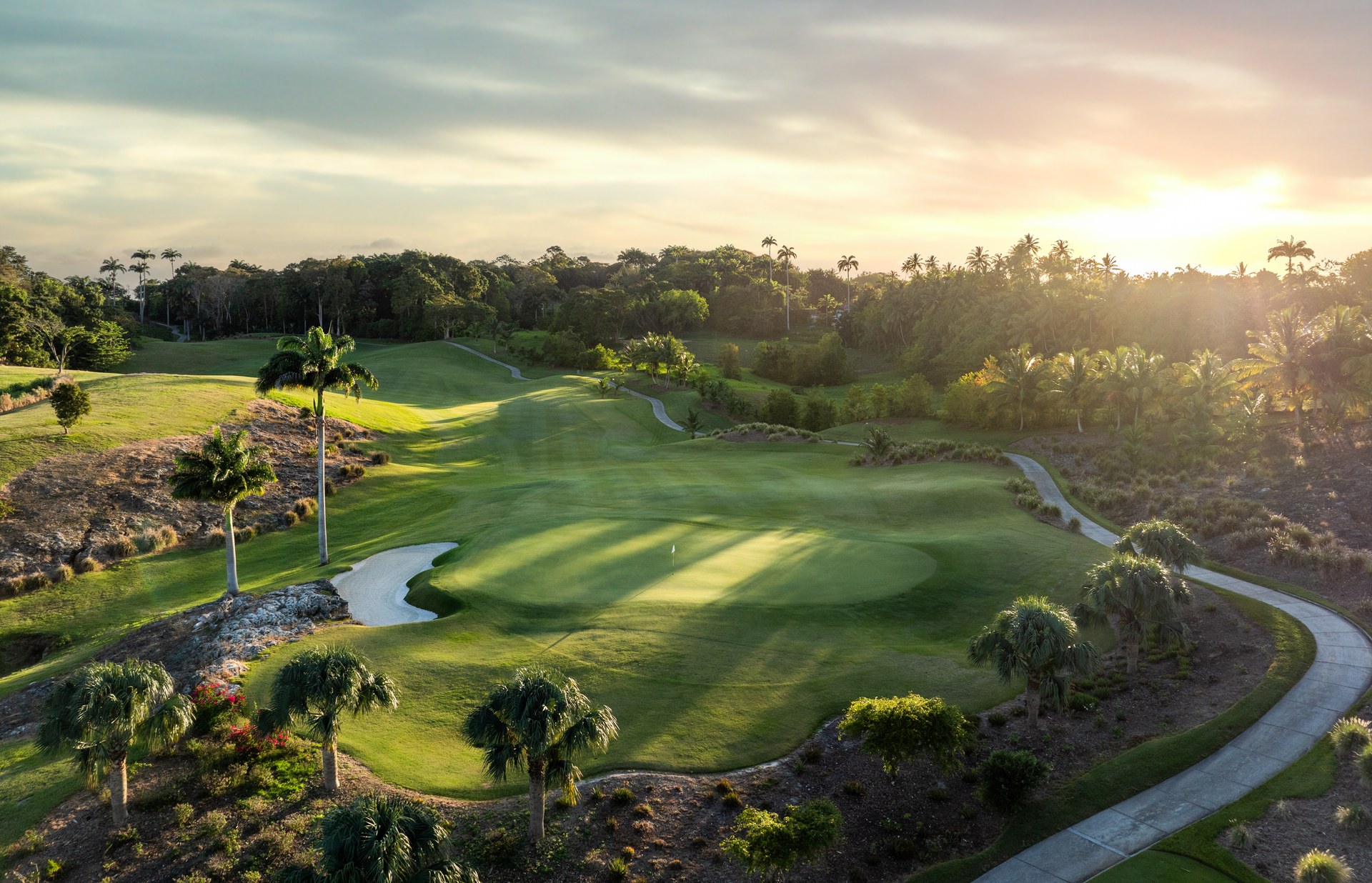
Explore Apes Hill with Dan.
Book a private call to see current availability, ownership structure and pricing.
Book a Private CallDan Merriam & Associates acts for the buyer. Our advice is independent, not contingent on any sale, and we hold no brokerage or developer mandate.