Bermuda
Residency from the day the certificate issues — in the world's reinsurance capital, a short flight off the US East Coast.
About Bermuda
Bermuda in brief. Residency runs through the Economic Investment Residential Certificate — the EIRC — which grants residency from the date the certificate issues in exchange for a qualifying investment of at least US$2.5 million in the island, held alongside 90 days a year of physical presence for five years. Processing time varies by file and is confirmed against current government policy. Bermuda levies no personal income tax; that describes Bermuda’s system, not an American family’s position, because US citizens are taxed by the United States on worldwide income wherever they live. The certificate suits principals who already have a reason to be on the island and families who will genuinely use a permanent Atlantic base. It confers no passport.
- Qualifying investment from US$2.5 million — property can form part of it
- Residency effective from the date of issue, not after a waiting period
- 90 days a year on-island, maintained for five years
- No personal income tax; an annual land tax assessed on Annual Rental Value
- A licensed top-tier property market — a few dozen eligible homes island-wide
- Residency only — no travel document
Not the Caribbean, and never trying to be
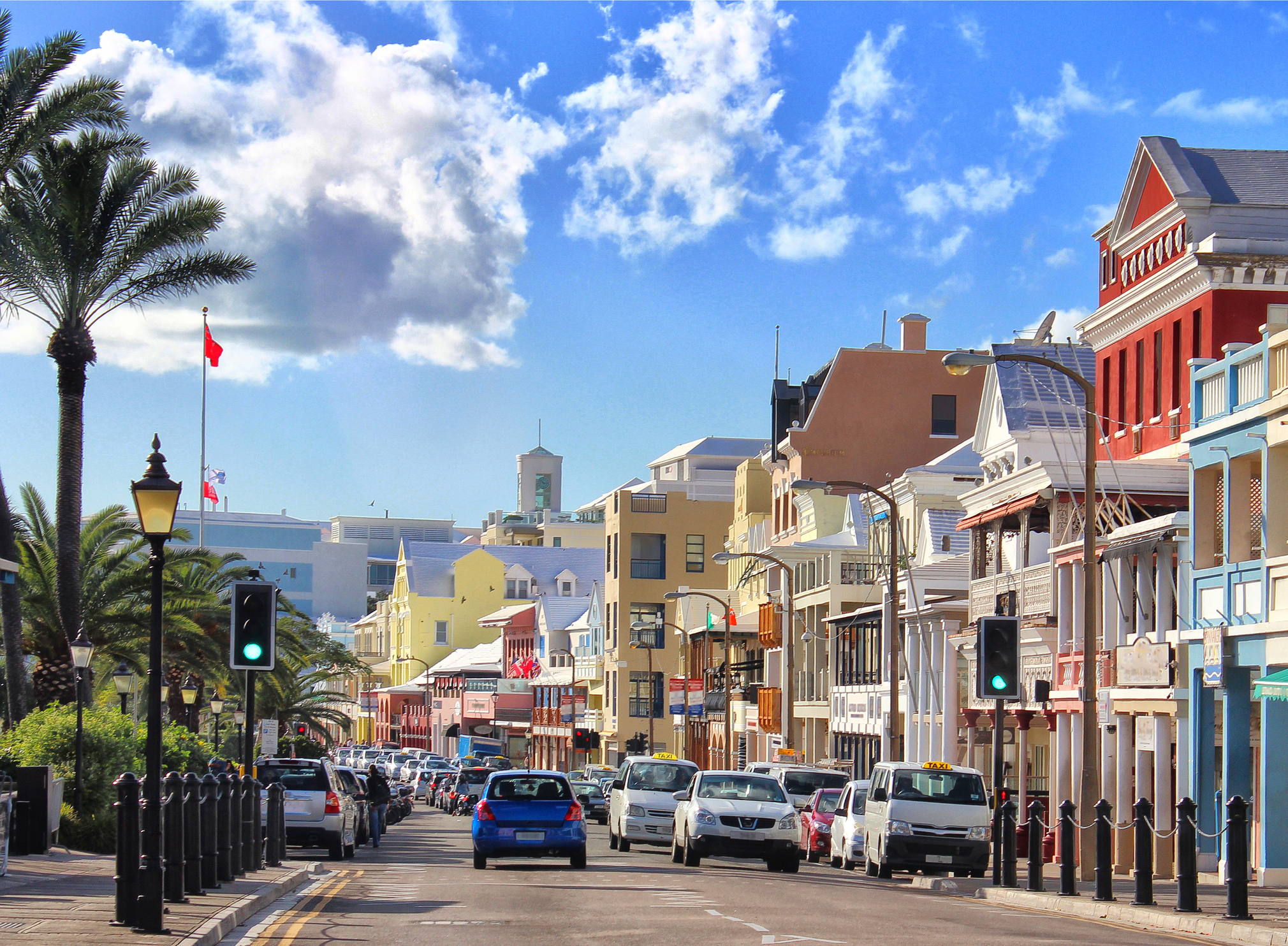
Bermuda sits alone in the North Atlantic, a short flight off the US East Coast, and trades tropical volume for something scarcer: pastel cottages under white stepped roofs, English common law and clean title, and the gravity of the world’s reinsurance capital. That concentration of reinsurance and fund capital gives the island an economy that behaves nothing like a resort market. Access is the second advantage: scheduled service and full private-aviation handling put New York and Boston within easy reach, which is what makes 90 days a year workable for a family whose working life is still in the Northeast.
Who Bermuda suits, and who it does not
The families who reach the practice about Bermuda are rarely first-time offshore buyers; most already know the island through work. A meaningful share of current demand traces to the end of the UK non-dom regime, which has pushed long-settled international families toward a stable common-law base of their own.
Bermuda suits insurance, reinsurance and fund principals basing a home where they do business, and families who want a permanent Atlantic address and will use it. It is the wrong jurisdiction for a house visited twice a year — the presence requirement simply lapses — and for anyone needing open foreign ownership at a modest entry point; the wider Caribbean property market offers both far more cheaply. Measured against the Cayman Islands, which asks US$1.2 million and 30 days a year for a 25-year certificate, Bermuda is the prestige address, the higher entry point, and by some distance the more demanding on presence.
Residency
The EIRC is an investment instrument with a residency right attached rather than the reverse. The qualifying US$2.5 million goes into the island’s economy, and a property purchase can form part of it — which is why the practice runs the residency question and the house search as one exercise rather than two. The application is document-driven: certified identity documents, source-of-funds evidence that stands on its own, and proof the qualifying commitment will remain in place. Thresholds and government fees are confirmed against current policy rather than last year’s answer.
Presence is the requirement that decides the file
Ninety days a year, sustained for five years alongside the investment, is not a stamp in a passport — it is a season. This is the most demanding presence requirement among the residency routes the practice covers: the Cayman Islands certificate asks 30 days a year, and a Barbados permit asks no minimum stay at all. A family that cannot give Bermuda 90 days a year for five years should not buy the certificate, and no amount of capital corrects that. The day-count question therefore comes before the budget question.
The tax position, stated plainly
Bermuda levies no personal income tax, and is one of roughly sixteen jurisdictions worldwide that still levy none at all. That single fact drives most enquiries, and the footnote runs longer than the headline.
For an American family it describes Bermuda’s system, not their own position. The United States taxes its citizens on worldwide income wherever they live — one of only two countries that does — and neither a second residency nor a second citizenship changes it. An EIRC does not move a US federal tax bill by itself; only a genuine change of tax residence does, and the honest versions are a relocation inside the US system such as Puerto Rico’s Act 60, or the far larger step of expatriation. That analysis sits on the tax residency side of the file, alongside your own cross-border counsel.
Zero income tax is also not zero cost. Bermuda funds itself through duties, fees and a payroll tax on remuneration, and assesses an annual land tax based on a property’s Annual Rental Value — so unlike Cayman, where holding costs close to nothing, a Bermuda home carries a recurring charge. From 2025 a 15% minimum tax applies to large multinationals with revenue above €750 million under the OECD’s Pillar Two rules; individuals remain untaxed.
Residency, not citizenship
The certificate confers the right to live in Bermuda. It is not a travel document and not a route to a Bermudian passport, which is why holders commonly pair it with a Caribbean second citizenship: St. Kitts & Nevis reaches approximately 155 destinations (Henley Passport Index, 2026), with donation routes from US$200,000 — a rounding error against a Bermuda file, and the one thing Bermuda cannot supply. Dan Merriam & Associates advises from offices in Nevis, St. Kitts, Antigua, St. Lucia and Dominica, and coordinates Bermuda counsel, the license to acquire and the certificate as a single sequence. The fee schedule, document list and sequencing are worked through on a strategy call rather than published here.
Figures are indicative and change with government policy; exact costs are confirmed during your consultation. The tax line describes Bermuda’s own system, not an American family’s global position — US citizens are taxed on worldwide income wherever they live.
Frequently asked questions
What is Bermuda’s Economic Investment Residential Certificate?
Bermuda’s residency route. The EIRC grants residency from the date it is issued in exchange for a qualifying investment of at least US$2.5 million in the island, maintained alongside 90 days a year of physical presence for five years. A property purchase can form part of that investment.
How many days a year must be spent in Bermuda?
Ninety, sustained for five years alongside the investment — the most demanding presence requirement among the residency routes the practice covers. Cayman’s certificate asks 30 days a year; a Barbados permit asks none at all. Presence eliminates more shortlists than price does.
What does an EIRC cost in total?
The qualifying investment starts at US$2.5 million into the island, and property can form part of it. Government fees, due-diligence charges and the per-dependant schedule move with policy and are confirmed on a strategy call rather than published.
Does Bermuda residency lead to a passport?
No. The EIRC is a right of residence, not a travel document and not a route to Bermudian citizenship. Holders commonly pair it with a Caribbean second citizenship — St. Kitts & Nevis reaches approximately 155 destinations (Henley Passport Index, 2026), with donation routes from US$200,000.
Will Bermuda residency lower a US tax bill?
No. Bermuda levies no personal income tax, but US citizens are taxed on worldwide income wherever they live, and an EIRC does not change that. Only a genuine change of tax residence moves the number — inside the US system through Puerto Rico’s Act 60, or through expatriation.
Can non-Bermudians buy property in Bermuda?
Only at the top of the market. Bermuda reserves its housing for Bermudians by law; non-Bermudians may generally acquire only the highest-value houses — a licensed tier defined by Annual Rental Value — plus condominiums in a handful of designated developments. Every purchase requires a government license to acquire.
Does Bermuda tax property?
There is no personal income tax, but Bermuda is not costless. It funds itself through duties, fees and a payroll tax on remuneration, and assesses an annual land tax based on a property’s Annual Rental Value. The carrying cost is modelled before purchase, not after.
How does Bermuda compare with the Cayman Islands?
Two blue-chip, English-common-law bases close to the US at opposite ends of one spectrum. Cayman places no restrictions on foreign ownership, charges no annual property tax, and asks US$1.2 million and 30 days a year for a 25-year certificate. Bermuda restricts buyers to a licensed top tier, levies an annual land tax, and asks US$2.5 million and 90 days.
Real Estate
Property can form part of the qualifying EIRC investment, but Bermuda is the most tightly controlled market the practice covers, and the restriction is the story. The island reserves its housing stock for Bermudians by law. Non-Bermudians may generally acquire only the top band of the market — the largest, highest-value houses, defined by Annual Rental Value — plus condominiums in a handful of designated developments. At any moment that is a few dozen qualifying homes island-wide, not thousands, and a purchase completes only once the government grants a license to acquire. The question is not which neighborhood, but which of a very short list of eligible properties fits.
Where the eligible inventory sits
- Tucker’s Town — the island’s most rarefied enclave, around the Mid Ocean Club: private, gated waterfront estates.
- Fairylands — the peninsula near the capital, with deep-water frontage and dock-side homes minutes from Hamilton.
- Hamilton Parish and Harrington Sound — calm shorelines offering water, space and privacy within an easy commute of town.
These parishes hold the densest concentration of licensed, foreign-eligible stock. The parish-by-parish detail, the license process and the current market are set out in the Bermuda real estate market guide; this page does not repeat them.
A market that admits only a few dozen homes at the top does not overbuild and does not correct the way open markets do. Values move slowly and hold: Bermuda is a keep, not a trade. The practice confirms a property’s eligibility before a client commits to it, sequences the offer and the license application on a realistic timeline, models the carrying cost including land tax, and runs the certificate alongside the purchase. Qualifying homes rarely reach open portals, so the Bermuda shortlist is released by appointment; current listings in the practice’s other markets are published openly.
Dan represents property across the Eastern Caribbean. View current listings →
The tax line describes Bermuda's system, not an American family's global position — US citizens are taxed on worldwide income wherever they live.
Explore Bermuda with Dan.
Book a private call to test the certificate against your calendar, your capital and the alternatives.
Book a Private Call