Four Seasons Anguilla
Beachfront branded residences inside one of the Caribbean's most understated ultra-luxury markets.
The Four Seasons Resort and Residences Anguilla brings branded, resort-managed ownership to the island's celebrated west end — a market defined by restraint, privacy and arguably the finest beaches in the region. Anguilla builds little and prices its scarcity directly.
There's no citizenship route here: the draw is tax-advantaged residency (Anguilla levies no income, capital gains or inheritance tax) and a flat-tax option, alongside branded beachfront living. Dan places Anguilla in the region's tax-neutral tier as its discretion play.
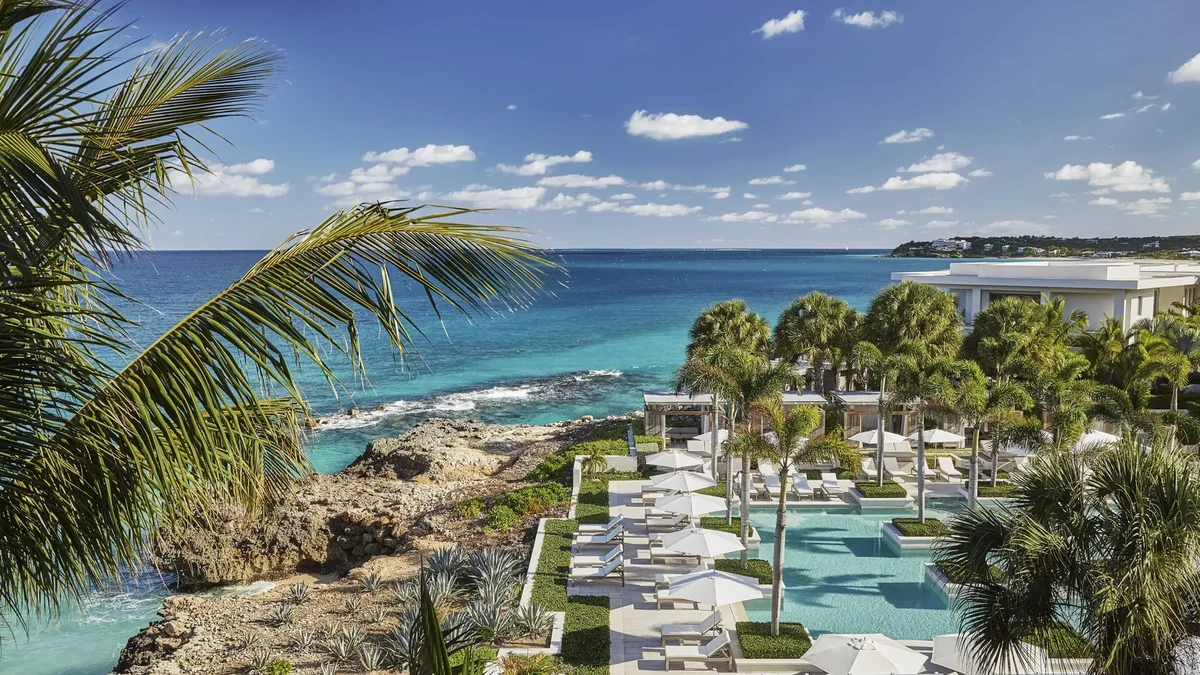
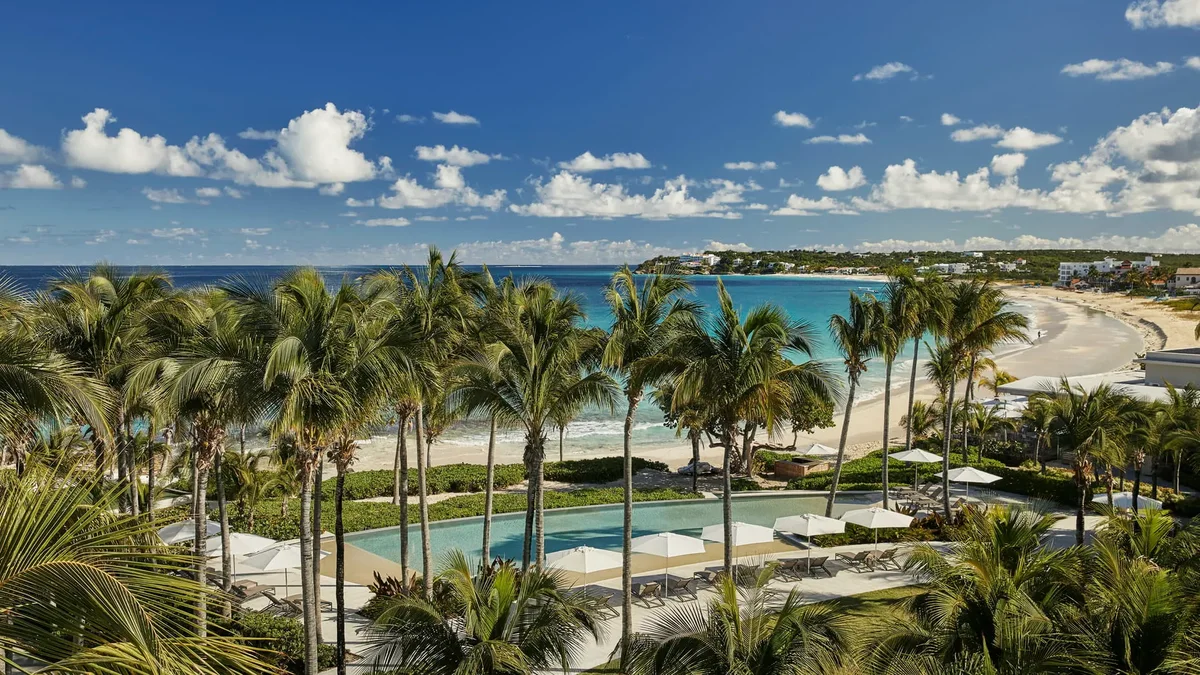
Four Seasons Anguilla occupies a rocky point at the island's west end, with Barnes Bay on one side and Meads Bay on the other, across roughly 35 acres. It is not a new development and it is not a launch. It opened under the Four Seasons flag in October 2016, when the brand took over management of what had been the Viceroy Anguilla, and it runs today as 181 accommodations — 70 guest rooms, 50 suites, 24 villas, 4 townhomes and 33 residences. The residences are whole ownership and they are built. You can sleep in the unit you are considering before you wire anything. In a region where most of what gets sold to overseas buyers exists only as a developer rendering, that is a genuine advantage and I would weight it heavily.
Here is what buyers get wrong. They read "Anguilla", "no income tax" and "Four Seasons", and they quietly assume the three connect — that buying the residence puts them inside the tax story. It does not. Owning property in Anguilla gives you no residency, no tax status and no passport. Anguilla is a British Overseas Territory and runs no citizenship-by-investment program at any price. The tax residency is a separate and ongoing purchase, priced at US$75,000 a year. What you are buying at Barnes Bay is a home and a hotel unit. Everything else is bought separately, and I would rather you understood that before the brochure arrives than after.
What you actually own — and who owns everything around it
The residences are sold as whole ownership, not fractions and not weeks. Four Seasons and Starwood Capital described them as whole-ownership beachfront private residences when the rebrand was announced in June 2016. As a foreign buyer you take fee simple title, and you will need an Alien Land Holding Licence to do it. That is not a formality. The government's guidance notes require police records from every country you have lived in over the past seven years and your place of birth, a bank reference showing net worth, a personal reference, and tax clearance for both you and the seller. The Minister of Lands interviews applicants who clear the basic requirements, the grant itself is an Executive Council decision, and the licence lapses if you do not collect it within two months of that decision.
The inventory spans a wide range, and the two published lists do not agree with each other. The residences' own listings page shows a two-bedroom beach residence at US$3,725,000 with 2,300 sq ft of interior space, a second two-bedroom at the same price with 2,335 sq ft, and a three-bedroom penthouse at US$6,995,000 with 3,567 sq ft interior and 6,050 sq ft in total. The separate availability list runs lower and wider — a 662 sq ft studio at US$700,000, a 991 sq ft one-bedroom at US$1,025,000, three-bedrooms from US$2,950,000 to US$4,250,000, and four-bedroom villas between US$4,525,000 and US$5,500,000.
Hold those two lists side by side and the problem is obvious. The listings page wants US$3,725,000 for a 2,300 sq ft two-bedroom. The availability list carries a 2,299 sq ft two-bedroom at US$2,457,056. Same size, same development, a gap of more than a million dollars. Which figure is genuine is the kind of discrepancy to resolve in writing before any offer. I am going to tell you that a marketing portal is not a price, and that you should work from a written, dated offer and nothing else.
Now the part that rarely comes up on a sales call. This resort has a hard history. The original developer, Barnes Bay Development Ltd, entered a loan agreement with Citigroup Global Markets Realty Corp in June 2006; those obligations were acquired by a Starwood affiliate in October 2010; the company filed for Chapter 11 in the US Bankruptcy Court for the District of Delaware in March 2011, had its plan rejected over unequal treatment of creditors, and saw the case dismissed that November. The property was sold at auction on 27 July 2011 to that same Starwood affiliate, which was the only bidder. Barnes Bay Development was placed in liquidation by the High Court of Anguilla in 2012. Purchasers who had signed contracts and paid deposits during the Viceroy era brought proceedings to terminate their agreements and recover their money; some settled, some obtained judgments. Dart, the Cayman-based investment and development group, acquired the whole thing from the Starwood affiliate on 28 July 2022. None of that makes today's asset unsound — a single well-capitalised owner is arguably the best structure available here. But it does mean the amenities, the brand and the rental engine around your unit are controlled entirely by one counterparty, and you should read the deal on the assumption that ownership can change again.
The carrying costs nobody leads with
This is where branded residences separate from ordinary Caribbean houses, and where I do most of my arguing on behalf of clients.
The residences' own rental-program FAQ states that owners pay an annual Homeowner Assessment Fee to the Four Seasons Private Residences Anguilla Homeowners' Association, and that the initial fee currently averages "approximately $33 per interior square foot per year". Run that against the published unit sizes and the number stops being abstract: on a 2,300 sq ft two-bedroom that is roughly US$76,000 a year, and on the 3,567 sq ft penthouse it is close to US$118,000 a year. That is the single most important figure on this page and it is the one most likely to be glossed over.
In fairness, it is not pure overhead. The FAQ says the Association pays, on the owner's behalf, all utilities, taxes, property, casualty and liability insurance, common area maintenance, access to all resort amenities, and wireless and telecom. Elsewhere the same document confirms the Association's property and casualty cover extends to hurricane damage. Four Seasons also provides routine maintenance on the residence itself. Compared with running a standalone villa — where you carry your own insurance, staff, generator, pool and grounds — the gap narrows considerably. But it is a fixed cost that does not care whether you visit.
On the way in, Anguilla's published guidance notes for the Alien Land Holding Licence put stamp duty on the licence at 12.5% of freehold value for freehold land, with a further 5% stamp duty on the transfer itself, plus an application fee of EC$1,075. Two warnings. First, those guidance notes are dated 14 April 2004, and rates move. Second, the residences' rental FAQ refers to an 11.5% Alien Landholder Licence fee and says the government waives it for buyers who join the rental program — a different number from the government's own document, attached to a concession that may or may not still be on offer. I would not let a client budget off either figure without written confirmation from an Anguillian attorney and, if the waiver is being offered, from the government.
Annual property tax is assessed yearly and paid in two instalments, by 1 June and 1 December. On the rate itself, be careful. The Government of Anguilla's own property tax page states the tax is presently calculated at .075% of the value of the property. Widely republished third-party summaries instead give 0.75% on land with buildings on it. That is a tenfold difference and I am not going to pick one for you or print a figure I cannot stand behind. What is safe to say is that Anguilla's property tax is low by international standards on either reading, and that in this development the Homeowners' Association pays it on your behalf out of the assessment fee. The rental FAQ adds that real estate taxes are waived for five years from the date of purchase and discounted for as long as you stay in the rental program — again, confirm in writing, because that is a marketing document and it is undated.
The Four Seasons Anguilla rental program, read properly
Start with the good news: participation is optional. The FAQ is explicit that you are not required to join, which is not true of every branded residence in the Caribbean, and it matters. It also is not a rental pool — revenues from your residence are not pooled with anyone else's, and you are paid on what your unit actually earns, distributed monthly by ACH or wire.
Now the mechanics. The initial term is two years and renews automatically for a further two unless you terminate. The majority of units in the program carry a use restriction: no more than 90 days per year of owner usage, of which up to 60 may fall in high season. If your plan is to spend a Caribbean winter in your own home, that plan and this program are in tension.
The split is the part people misread. The agreement provides that you receive 50% of the net rental income, after allowance for payment of 12.75% of the gross rental income as a service charge to the resort. Gross first, then net, then halved. On top of that, 5% of the income from your residence's rental goes into an FF&E reserve account used to repaint, replace worn furnishings and make repairs — and note that if a material repair or replacement becomes necessary, the resort draws on your FF&E reserve to pay for it. Units are rented on a computerised rotation within their property class, usually properties sharing the same floor plan, so you are not competing unit-by-unit, but you are also not in control of who gets booked.
Government sits on top of that stack. Renting is not an automatic right of ownership in Anguilla — express permission is required, and the Inland Revenue Department charges non-belongers with rental permission EC$6,750 for the first 2,000 sq ft, due the first working day in January, with further per-square-foot charges on built development above that. Rented accommodation carries a 10% Accommodation Tax on the account, charged to the guest and remitted within 20 working days of month end, and a Tourism Marketing Levy of US$3.00 per night per room collected from the guest which the owner is required to match. The tax is the guest's; the levy match is yours.
One last thing, and it is the question I would ask first. The FAQ says actual historical occupancy for every property in the development is available on request, while noting it is not a predictor and not guaranteed. Ask for it, in writing, for your specific unit type — not the resort average. Any seller unwilling to produce it has told you something.
Residency, tax and the passport question
Let me be blunt, because this is where the most money gets wasted. Anguilla runs no citizenship-by-investment program. There is no Anguillian passport for sale at any price, and no Four Seasons purchase produces one. Anyone telling you otherwise is either confused or selling something else. Barbados, the Bahamas and the Dominican Republic are in the same position — residency routes only, no citizenship program.
What Anguilla does offer is genuinely interesting on its own terms. Under the High Value Resident route, tax residency is available for an annual lump-sum worldwide income tax payment of US$75,000, with a requirement to own property worth at least US$400,000 — a threshold every unit discussed on this page clears comfortably. You must spend a minimum of 45 non-consecutive days a year in Anguilla and make an annual declaration that you spent fewer than 183 days in any other country. Fees are US$7,500 due diligence per adult, US$2,500 for children aged 16 to 17 and nil for children 15 and under, plus US$3,000 processing for a family of four and US$500 for each additional applicant. Approval is quoted at three months, and there is an option to transfer five years of the annual lump-sum obligation up front.
There is also a separate Residence by Investment route. I am deliberately not printing the investment thresholds that circulate for it in third-party summaries, because Select Anguilla does not publish them on its public pages and I could not verify them against any source that stands up. If that route interests you, get the current terms from the program in writing before you budget a penny against it.
On that Residence by Investment route specifically — not the High Value Resident tax route above — Select Anguilla describes de facto residence as providing a pathway to British Overseas Territory Citizenship in five years and British citizenship in ten. That is a real and unusual feature of a British Overseas Territory. It is also a decade-long commitment involving actual presence, not a product you buy.
If you are a US citizen or green card holder, none of this reduces your US tax bill. The United States taxes its citizens and permanent residents on worldwide income regardless of where they live, what other residency they hold or how many days they spend abroad. An Anguillian tax residency sits alongside your US filing obligations, not instead of them. Renouncing US citizenship is the only exit, and it carries its own exit-tax consequences. Anyone presenting Anguilla as a solution to a US tax problem is misleading you, and I would end that conversation.
The obvious alternatives, and what I would raise before you sign
The nearest direct comparison on Anguilla is Beach Enclave's project on Rendezvous Bay — the brand's first outside Turks and Caicos, on nearly 10 acres, with an initial phase of five beachfront and seven ocean-view homes. Published pricing runs from US$4.95m for a four-bedroom Anguilla House to US$10.5m for a five-bedroom Beach Villa of about 8,950 sq ft. The distinction that matters: construction is slated to begin in late 2026 with first residences anticipated by the end of 2027, so everything you can see of it today is a developer rendering. Four Seasons Anguilla is standing, operating and inspectable. On a risk-adjusted basis that is a meaningful point in its favour, and it is exactly the trade the Viceroy-era purchasers lost.
The other alternative is a standalone villa. Anguilla's market is wide — a recent survey of active listings put the top of the market around US$1,173 per square foot for a five-bedroom villa on Rendezvous Bay and the bottom around US$194 for an 11,000 sq ft estate in Island Harbour. A private villa buys you no rental cap, no rotation system, no assessment fee and no service charge. It also buys you every operational problem yourself, no brand-managed booking engine, and a resale audience of one buyer at a time. Neither is obviously right; they are different jobs.
And if the passport is what you actually want, buy the passport. The Caribbean citizenship programs — Grenada, St Kitts and Nevis, Antigua and Barbuda, Dominica, St. Lucia — attach real citizenship to a qualifying property purchase at a fraction of what a Four Seasons residence costs. Buying at Barnes Bay to get a document is the most expensive way to not get one. Ask me for the current thresholds and I will give you the statutory references rather than a brochure.
The risks I would put in front of you unprompted:
- Liquidity is thin. One recent market review tracked only 22 active listings across the whole island through Sotheby's International Realty. That is not a market you exit quickly, and the exit is to another foreign buyer who must themselves clear an Alien Land Holding Licence.
- The two published price lists contradict each other. A near-identical two-bedroom appears on one at US$3,725,000 and on the other at US$2,457,056. Until someone explains that gap in writing, treat every published number here as marketing.
- Precedent exists for buyers losing money here. Deposit-holders at this exact site once had to litigate. That was a different developer, a different structure and a completed building is a different risk — but it should shape how you handle deposits, escrow and title.
- Concentration. The brand, the amenities, the rental engine and the HOA all sit with one owner. Read the documents assuming that owner changes.
- Seasonality and weather. The resort historically closed for an annual autumn shutdown — the 2016 rebrand announcement describes a closure running from August to October — which compresses the earning year. Confirm whether that still happens before you model income. And this is a low, flat coral island in the hurricane belt; Irma in 2017 is the reference point. The HOA carries property and casualty insurance including hurricane cover; confirm the limits and the deductible, not just that cover exists.
- The documents I have worked from here are undated. The rental FAQ figures, the fee rate, the licence waiver and the tax holiday all need re-confirming in writing against the current offering documents before anyone relies on them. I would not sign on any number in this article without doing that, and neither should you.
Frequently asked questions
How much do residences at Four Seasons Anguilla cost?
Two published lists disagree, which is itself the answer you need. The residences' listings page shows a two-bedroom beach residence at US$3,725,000 (2,300 sq ft interior), a second two-bedroom at the same price, and a three-bedroom penthouse at US$6,995,000 with 3,567 sq ft interior and 6,050 sq ft total. A separate availability list runs lower and wider: a 662 sq ft studio at US$700,000, a 991 sq ft one-bedroom at US$1,025,000, three-bedrooms from US$2,950,000 to US$4,250,000, and four-bedroom villas between US$4,525,000 and US$5,500,000. That second list also carries a 2,299 sq ft two-bedroom at US$2,457,056 — over a million below the near-identical unit on the first list. Price off a dated written offer, never off a portal page.
What are the annual fees at Four Seasons Anguilla?
Owners pay an annual Homeowner Assessment Fee to the Homeowners' Association. The residences' rental-program FAQ puts the initial fee at approximately US$33 per interior square foot per year, which works out to roughly US$76,000 a year on a 2,300 sq ft two-bedroom and close to US$118,000 on the 3,567 sq ft penthouse. It covers utilities, taxes, property, casualty and liability insurance, common area maintenance, access to resort amenities, and wireless and telecom, and the same document confirms hurricane damage is within the cover. That FAQ is undated, so treat the rate as indicative and confirm the current assessment in writing before you commit.
Can I rent out my residence at Four Seasons Anguilla, and what is the split?
Yes, and participation is optional — you are not required to join. It is not a rental pool: you are paid on what your own unit earns, distributed monthly by ACH or wire. The agreement provides that you receive 50% of the net rental income after 12.75% of the gross is taken as a service charge to the resort, and a further 5% of your rental income goes into an FF&E reserve for your residence, which the resort can draw on for material repairs. Most units in the program cap owner usage at 90 days per year, of which up to 60 may be in high season. Separately, renting in Anguilla requires express government permission, with a fee of EC$6,750 for the first 2,000 sq ft due the first working day in January.
Does buying at Four Seasons Anguilla qualify me for citizenship or a passport?
No. Anguilla is a British Overseas Territory and runs no citizenship-by-investment program at any price. Buying property gives you no residency and no tax status on its own. What is available separately is tax residency under the High Value Resident route — US$75,000 a year as a lump-sum worldwide income tax, property worth at least US$400,000, a minimum of 45 non-consecutive days a year in Anguilla and an annual declaration that you spent under 183 days in any other country. A separate Residence by Investment route exists and is described as leading, through de facto residence, to British Overseas Territory Citizenship in five years and British citizenship in ten. If a passport is the objective, one of the Caribbean citizenship programs will do it for a fraction of the cost.
I am a US citizen. Does an Anguilla residence cut my tax bill?
No. The United States taxes its citizens and green card holders on worldwide income regardless of where they live or what other residency they hold. An Anguillian tax residency sits alongside your US filing obligations, not instead of them. Renouncing US citizenship is the only way out of that system, and renunciation carries its own exit-tax consequences. Anyone marketing Anguilla to you as a US tax solution is misleading you.
What taxes and fees do I pay to buy at Four Seasons Anguilla?
Anguilla's published guidance notes for the Alien Land Holding Licence set stamp duty on the licence at 12.5% of freehold value, with a further 5% stamp duty on the transfer, plus an EC$1,075 application fee. Two cautions: those guidance notes are dated 14 April 2004, and the residences' own rental FAQ instead refers to an 11.5% licence fee that the government waives for buyers who join the rental program. The figures do not match and the waiver may no longer be offered. On annual property tax, the government's own page and the third-party summaries differ by a factor of ten, so I will not quote a rate — it is low either way and the Association pays it out of your assessment. Budget off written confirmation from an Anguillian attorney, not off any of these documents.
What is the catch with Four Seasons Anguilla?
Three things. Fixed carrying costs are substantial and do not care whether you visit. Liquidity is thin — one recent survey tracked only 22 active listings across the entire island, and your buyer must clear an Alien Land Holding Licence to take title from you. And the site has a difficult history: the original developer filed Chapter 11 in Delaware in March 2011, had its plan rejected and the case dismissed that November, the property was sold at auction in July 2011 to its lender's affiliate as the only bidder, the company was liquidated in Anguilla in 2012, and deposit-holders from that era had to litigate to recover money. Today's asset is built, operating and owned by a single well-capitalised group, which is a genuinely better structure. But read every document assuming ownership can change again.
Dan advises buyers independently across this community — on which product, ownership structure and price actually fit your goals.
Book a Private Call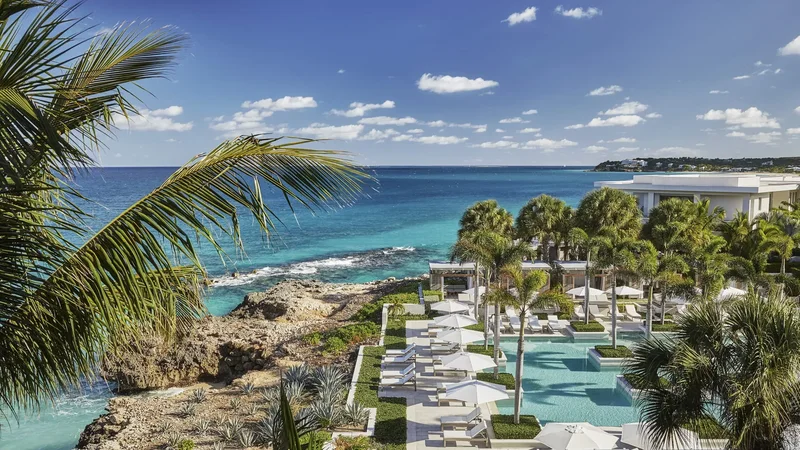
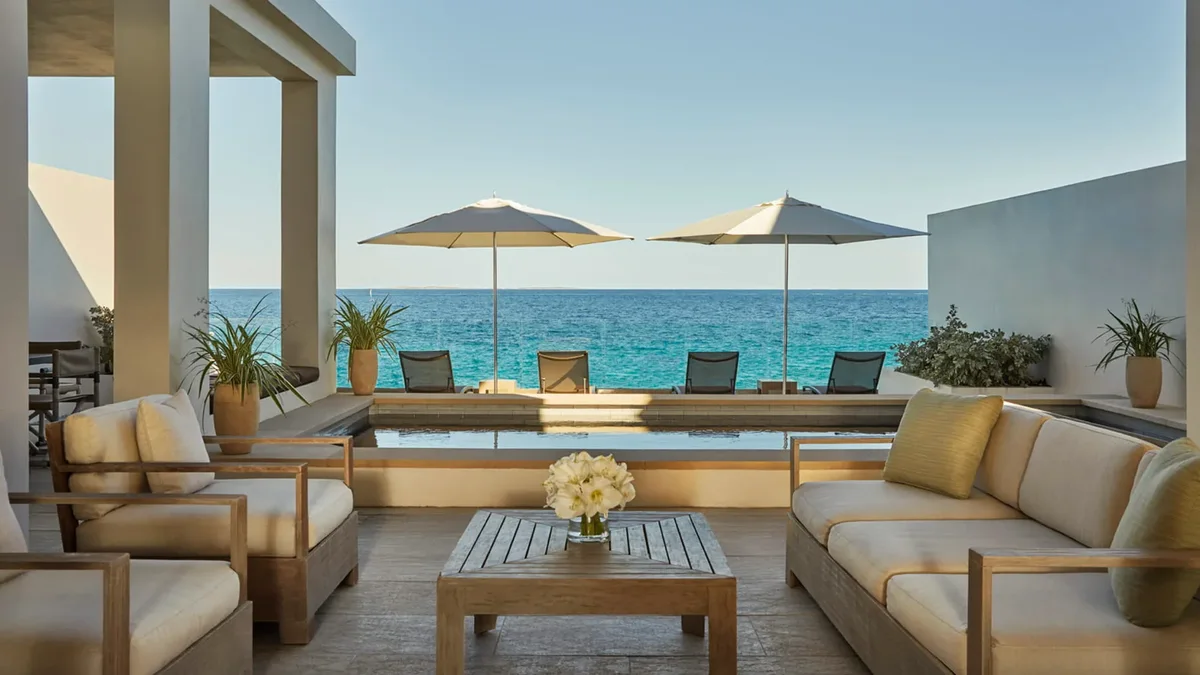
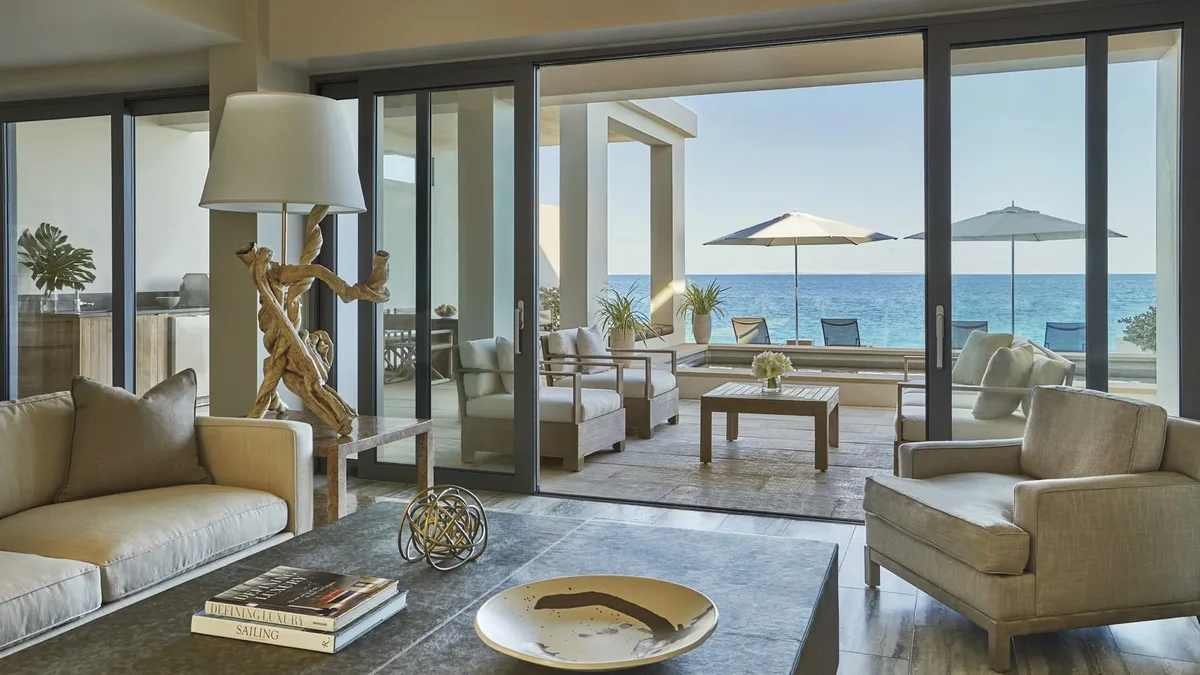
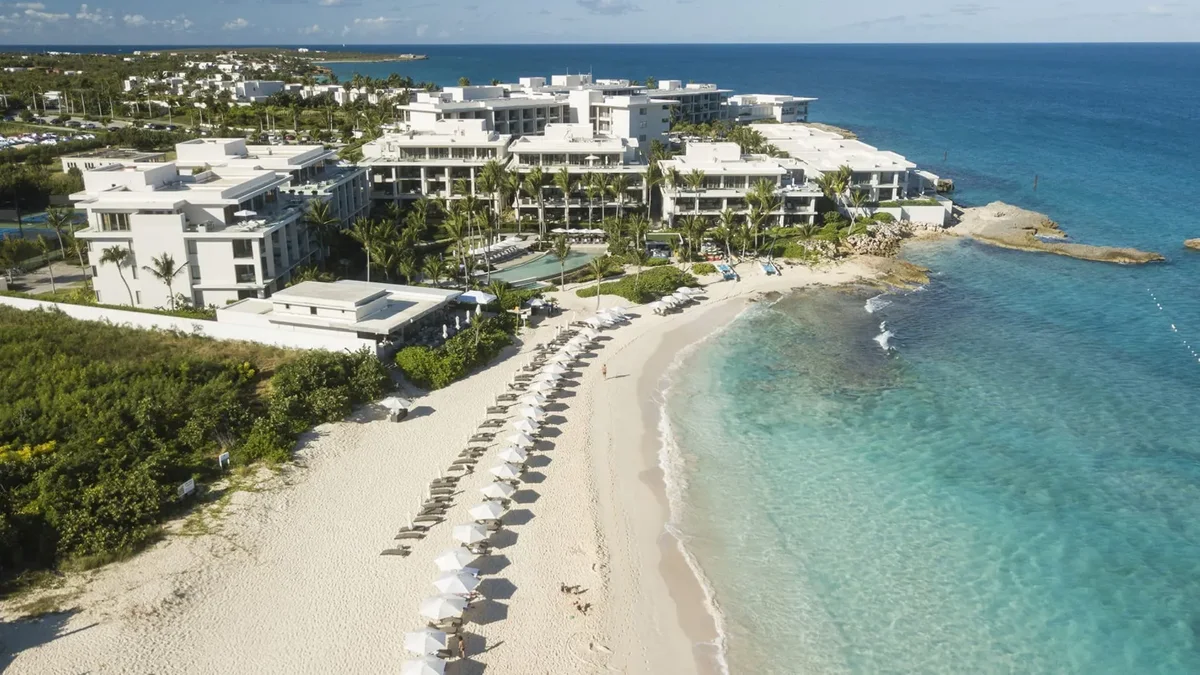
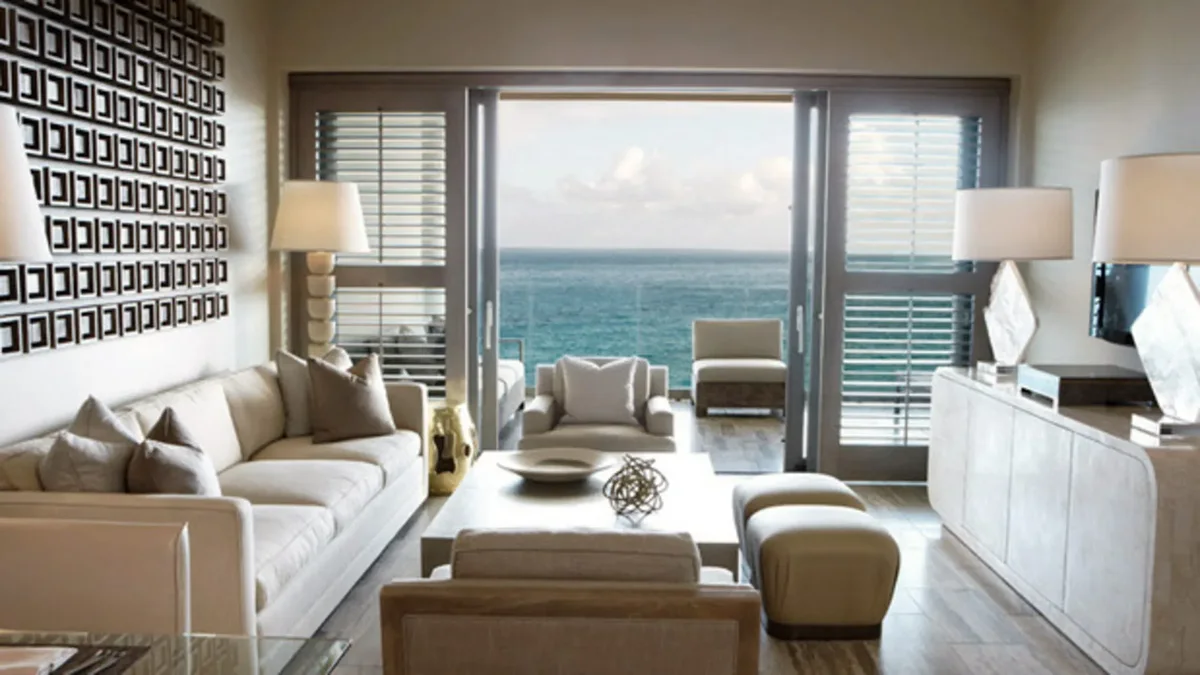
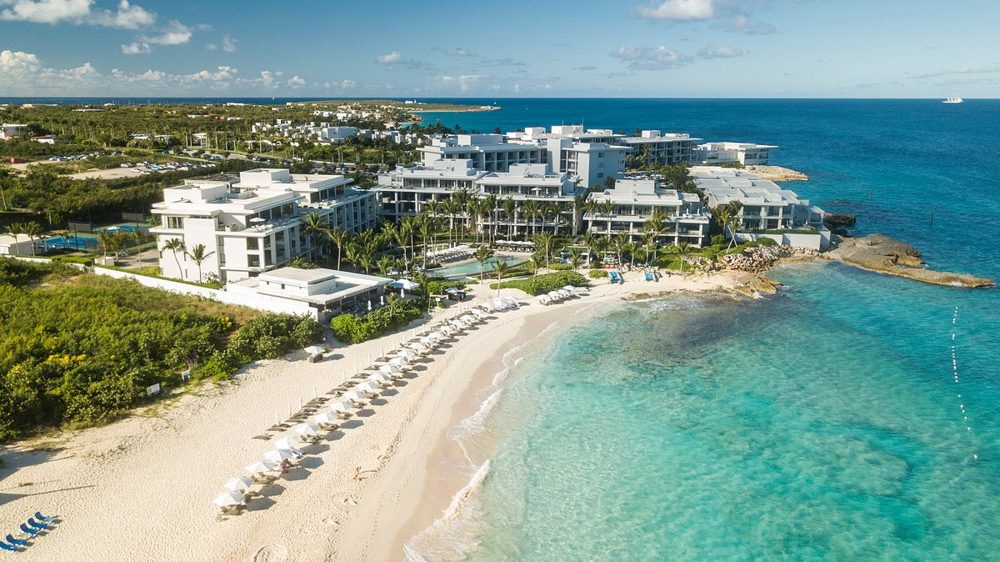
One listing at Four Seasons Anguilla.
Explore Four Seasons Anguilla with Dan.
Book a private call to see current availability, ownership structure and pricing.
Book a Private CallDan Merriam & Associates acts for the buyer. Our advice is independent, not contingent on any sale, and we hold no brokerage or developer mandate.