Sugar Beach
Between the Pitons — a Viceroy-managed resort community in one of the region's most photographed settings.
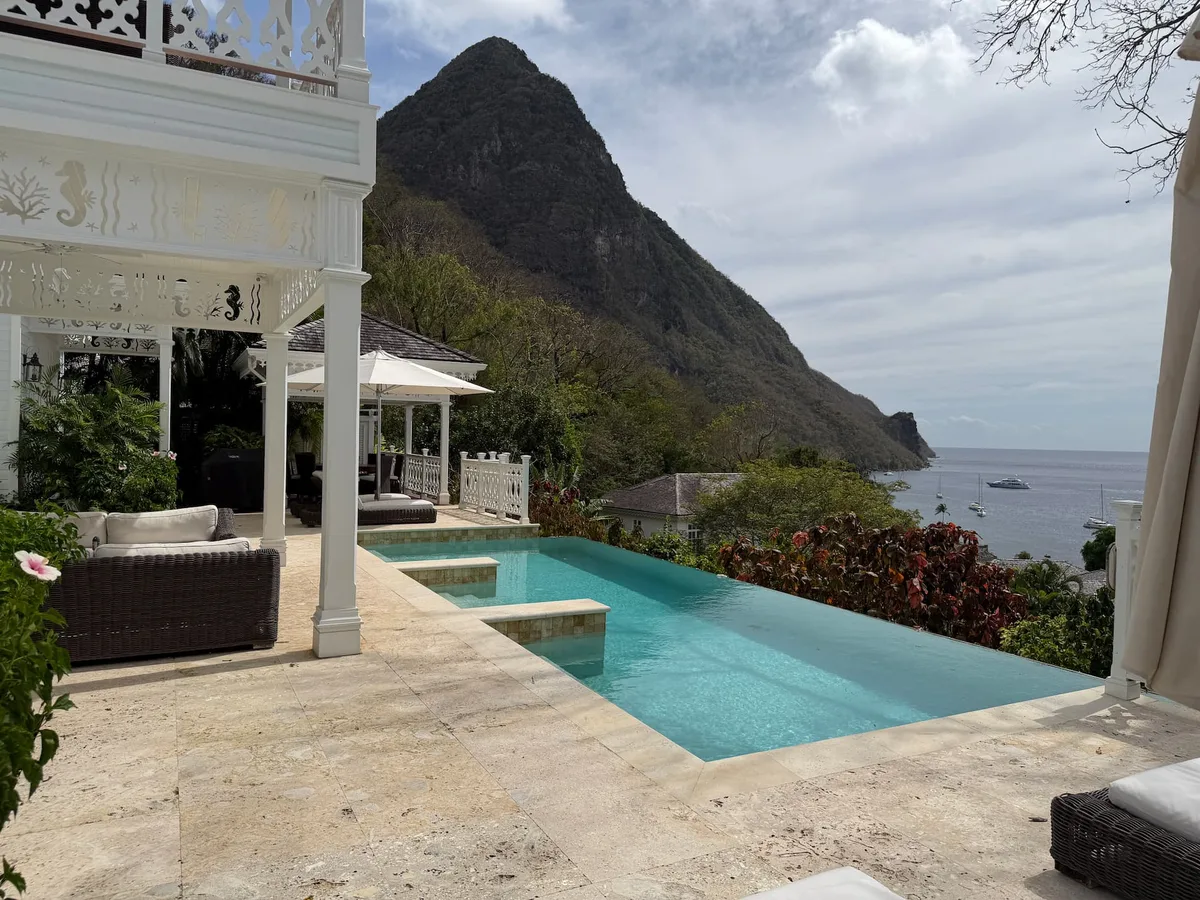
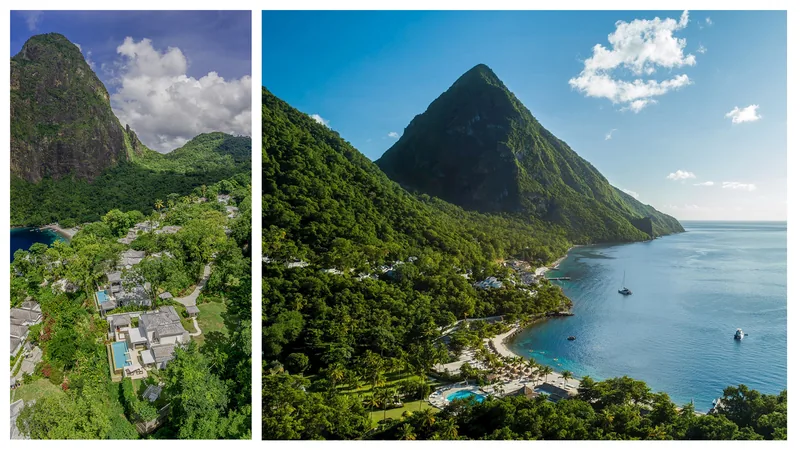
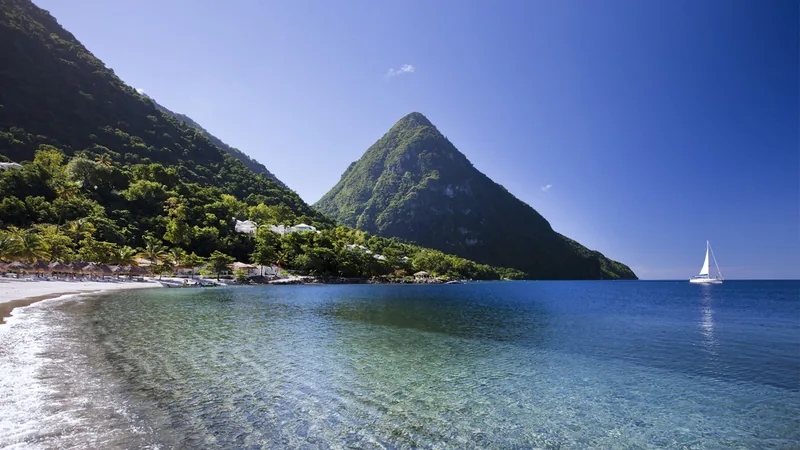
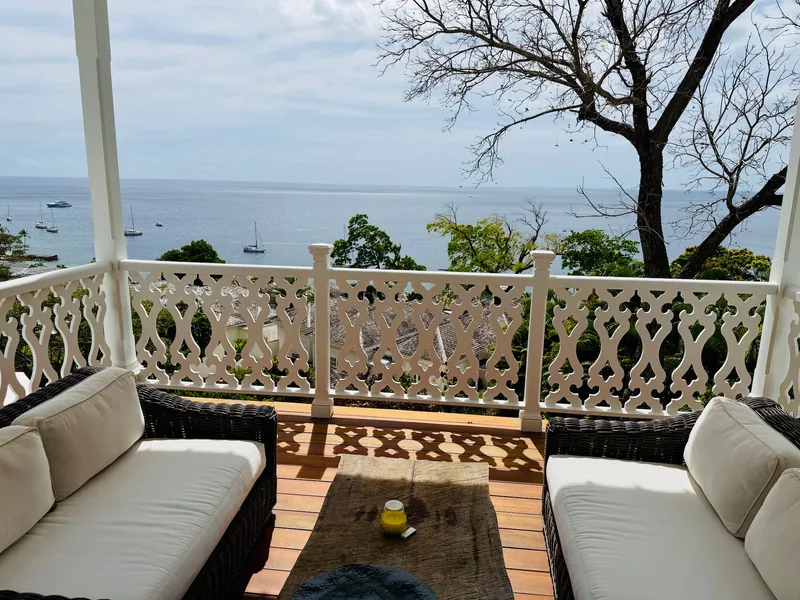
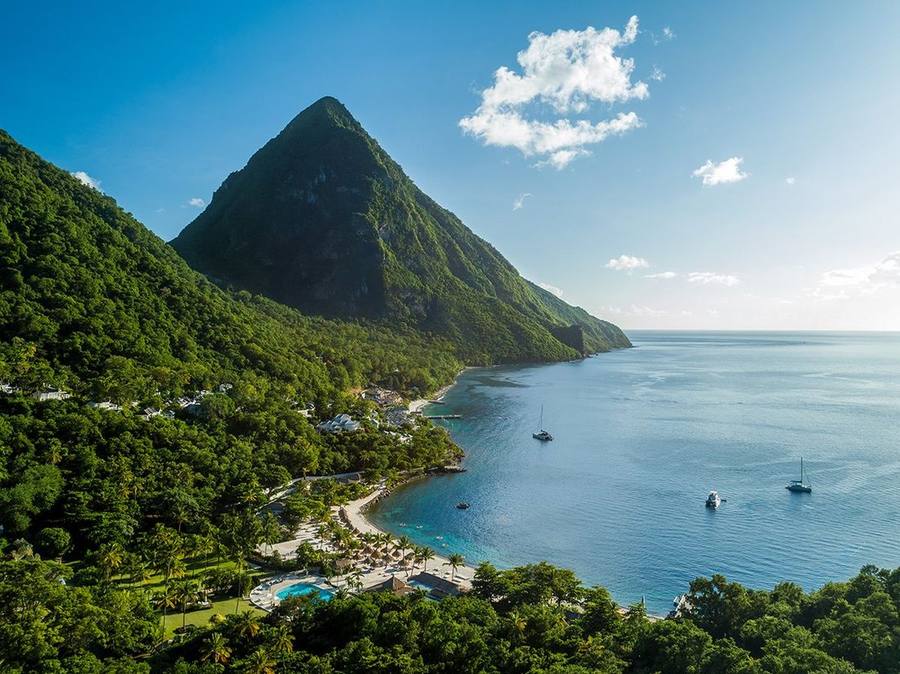
Sugar Beach, A Viceroy Resort, sits in the Val des Pitons near Soufrière — arguably the most dramatic setting in the Caribbean. It's an established resort-residential community whose villas and residences have been built over the past decade-plus, resell regularly, and have appreciated over that period.
There's no major new-build phase at present, so this is largely a resale market — which means real comparables and a liveable, rentable asset rather than off-plan risk. St. Lucia CBI may apply to qualifying inventory.
Sugar Beach sits in Val des Pitons at Soufrière, in the valley between Gros Piton and Petit Piton, on St. Lucia's most recognisable stretch of coastline. The former Jalousie estate is now a five-star hotel with a small residential component inside it. Forbes Travel Guide describes a 130-key resort — guestrooms, villas, beachfront bungalows and residences all counted together — set in 100 acres of rainforest, comprising 25 one- to four-bedroom residences plus a single nine-bedroom residence. Note that St. Lucia MLS listings for the same resort describe a 130-acre property, so treat the acreage as approximate. What is not approximate is the residential count: 26 houses. When people talk about "buying at Sugar Beach," that is the entire market.
Here is the thing buyers get wrong, and I correct it most weeks. St. Lucia runs a citizenship-by-investment program, and that program has a real-estate route, so people reasonably assume that spending seven or eight figures on a St Lucian house at the island's most famous address must qualify. It does not. The government's route requires a minimum of US$300,000 in a project it has specifically approved, and Sugar Beach does not appear on that list. A US$300,000 unit in a listed development earns citizenship; a US$8.95 million house at Sugar Beach does not. Buy here for the house and the setting, with your eyes open — not for a passport.
What you actually own at Sugar Beach
Third-party listing research on the development describes the residences as freehold, conveyed with a title deed. That is the right starting point: you are buying land and a house on St Lucian soil, not a club membership, a right-to-use, or a share in an operating company. What you are also buying, unavoidably, is a permanent relationship with the hotel that surrounds you.
Read the Forbes numbers properly, because they are easy to misread in your favour. The 26 residences are not additional to the 130 keys — they are counted within them, alongside the guestrooms, villas and beachfront bungalows. So the residential piece is a small minority of a working five-star resort, and the rest of that key count is inventory the operator sells against yours. The access road, the beach club, the security gate, the restaurants, the water and the staff belong to the hotel operation, and your house sits inside it. That is the appeal — a serviced estate you never have to run yourself — and it is also the exposure. You do not control the thing that gives your asset its value.
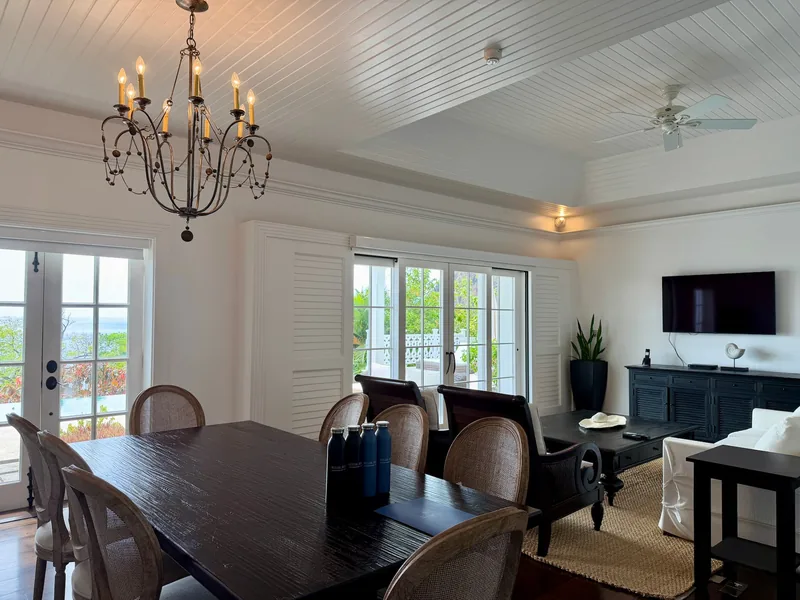
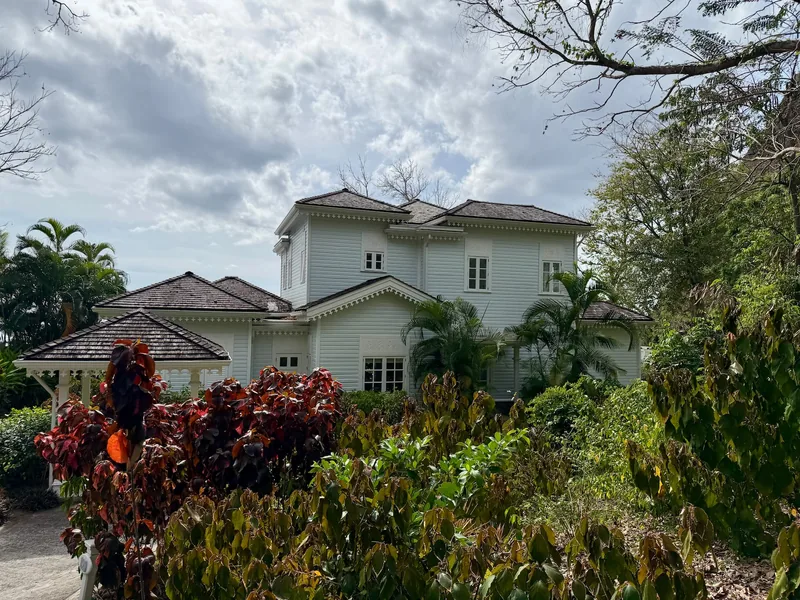
The inventory that actually trades is thin. One four-bedroom beachfront residence currently listed on the St. Lucia MLS is asking US$8,950,000: 5,310 sq ft of house on 27,749 sq ft of land, designed by Michaelis Boyd Associates. A second, a four-bedroom oceanfront residence of 5,024 sq ft on 9,766 sq ft of land, is listed with no public price. A third-party research hub run by a citizenship advisory firm puts resale villas from around US$2.5 million and estate homes in a roughly US$4 million to US$10 million-plus band; that is a marketing-adjacent source, so treat it as orientation rather than a price list. With this few units, one motivated seller sets the market and one stubborn one removes it.
One practical note before you get attached to the view: non-nationals need an Alien Landholding Licence to hold land in St. Lucia, and the deed cannot be registered without it. That is a process, not a formality, and it belongs in your timeline from day one.
Does Sugar Beach qualify for St. Lucia citizenship? No — and here is the route that does
St. Lucia's citizenship-by-investment program offers a real-estate option at a minimum of US$300,000 plus applicable administration fees, and Henley & Partners describes the same requirement with the detail that matters: the investment must be in an approved real estate development and must be held for a minimum of five years. There is also a National Economic Fund contribution route published at US$240,000 for a main applicant with up to three qualifying dependants, an approved-enterprise route at US$250,000 plus administrative fees, and a government bond route at a minimum of US$300,000, likewise held for five years.
The word carrying all the weight is approved. The government publishes its list of approved real-estate and enterprise projects. At the time of writing that list names two: A'ILA Resorts Villas & Residences at Mount Pimard, Rodney Bay, and The St. Lucia Canelles Resort on Poinsettia Road, Vigie, Castries. Sugar Beach is not on it. Third-party research on the development states it flatly — ownership there does not confer eligibility for citizenship.
So if a second passport is any part of your objective, treat these as two entirely separate transactions and price them separately. Do not let anyone bundle them for you, and be sceptical of any marketing that puts the words "Sugar Beach" and "citizenship" in the same paragraph. If you want both, the honest structure is a qualifying investment in a listed project for the citizenship, and Sugar Beach — or anywhere else you actually want to sleep — for the house.
If you are American, there is a further point I will not let a client skip. US citizens are taxed by the United States on their worldwide income regardless of where they live or what other citizenship they hold. A second passport does not change that. Renouncing US citizenship is the only exit, and it is an irreversible step with its own tax consequences that needs specialist US advice before it is ever seriously contemplated. A Caribbean passport is a mobility and contingency asset. It is not a US tax plan, and anyone selling it to you as one is telling you something untrue.
The honest carrying costs: getting in, holding, and getting out
Caribbean brochures are good at the purchase price and quiet about everything either side of it. Here is what is publicly documented, and what is not.
Getting in. As a non-national you need an Alien Landholding Licence: a non-refundable application fee of EC$5,000 (about US$1,870), then a licence fee of EC$5,000 (about US$1,859) for up to one acre, or EC$10,000 (about US$3,718) for over one acre up to ten. The beachfront residence above sits on 27,749 sq ft — comfortably under an acre — so it falls in the lower band. A St Lucian agency's buyers' guide puts typical processing at four to six months and notes it can run considerably longer, which is why I said timeline rather than formality. Stamp duty to register the Deed of Sale is 2% of the purchase price, payable on the conveyance whether the purchaser is resident or non-resident. Legal fees are quoted at 1% to 1.2% of the price for standard conveyancing, rising to around 3% where the attorney also obtains the licence and prepares and registers the deed.
Holding. Annual property tax on residential property is 0.25% of open market value. On a property valued near US$9 million, that single line is a five-figure sum every year before you have paid anyone to cut the grass. St. Lucia's standard VAT is 12.5%, with a reduced 10% rate applying to hotels and related services — relevant, because a good deal of what you consume at a resort-managed residence will be billed through the hotel.
Getting out. This is the number that changes the arithmetic and it is the one I put in front of clients first. Stamp duty on a conveyance by a non-resident vendor is 10% of the sale price, against a scale for residents that runs from 2.5% up to 5% depending on value. Ten per cent of the gross, not of the gain. On an exit near US$9 million that is close to US$900,000 leaving before you count agency commission or legal fees. Any story about medium-term appreciation has to clear that hurdle before it means anything.
What I could not source publicly, and what you must therefore get in writing before you go firm: the annual homeowners' association, maintenance or resort-services charge; how it is calculated and how much it has moved in the last five years; who sets it; and what happens to it if the hotel's operating costs rise. In resort-attached ownership, that recurring charge is frequently the difference between a good decision and an expensive one, and its absence from the marketing is not evidence that it is small.
Renting it out when you are not there
A rental program managed by the resort is available to owners — that much is documented. What is not published anywhere I could verify is the part that determines whether it is worth doing: the revenue split between owner and operator, what is deducted before the split, whether participation is optional or effectively required, how your house is priced and positioned against the hotel's own rooms, and whether there are blackout periods or notice requirements on your own use.
The structural point stands without any of those numbers. Your residence is not competing in an open rental market. It sits inside a 130-key resort, and the remaining keys — guestrooms, villas and beachfront bungalows — are inventory the same operator sells through the same booking channel. When occupancy softens, the operator has an obvious interest in filling its own rooms first. That is not an accusation; it is simply how the incentives sit, and it is why the contract language matters more than the projection.
Before you sign anything, I would want in writing: the exact split and the deduction waterfall; a definition of "net"; how maintenance, refurbishment reserves and FF&E replacement are funded and who decides when they are spent; your guaranteed personal-use nights and how they are booked; the term of the agreement and your exit from it; and audited historical performance for comparable residences — not a pro forma. If the operator will not provide realised historicals for actual residences, that refusal is your answer. Treat any yield figure that arrives without a signed contract behind it as marketing, and underwrite the purchase as though the rental income were zero. If the numbers only work with the rental income, you cannot afford the house.
The obvious alternative, and the risks I would raise unprompted
The realistic comparison for a buyer at this level is Cabot Saint Lucia at Point Hardy, on the island's northern tip: around 375 acres of protected coastline, an 18-hole Coore & Crenshaw course, homesites from approximately US$1.5 million and turnkey villas and residences from approximately US$3 million and up. It is also not approved under the citizenship program, so on that question the two are equivalent. The genuine trade is different: Cabot offers land and a build with a golf-led community around it; Sugar Beach offers a finished house inside a mature hotel at a setting that cannot be replicated. Cabot lets you control the asset; Sugar Beach lets you not think about it. Location cuts Sugar Beach's way on arrival — Soufrière is roughly 45 to 60 minutes by road from Hewanorra, against 70 to 90 minutes to Rodney Bay and Gros Islet in the north — though the Soufrière drive itself is mountainous.
Now the things worth saying before you are emotionally committed:
- You are buying inside a World Heritage property under active scrutiny. The IUCN's 2025 World Heritage Outlook assessment rates the Pitons Management Area as Significant Concern, finding that the construction of vacation homes and resorts within the PMA is degrading aesthetic values and threatening the site's Outstanding Universal Value, and that the outlook for those aesthetic values has been declining because of poorly controlled development. The assessment names development in Sugar Bay as not fully complying with the Policy Area Design Guidelines — I have not been able to confirm whether that refers to this resort or to a neighbouring bay, and you should not assume either way. Recommendations from the Limits of Acceptable Change study were incorporated into the Physical Planning and Development Act in 2024, which declared the Pitons Management Area an Environmental Protected Area. In practice: assume future alteration, extension or rebuild will be constrained, and have your attorney confirm the exact planning status of anything you buy or intend to change.
- Liquidity is genuinely poor. Twenty-six residences means there is no depth of market. Exits at this price point in St. Lucia are measured in seasons, not weeks, and the 10% non-resident vendor's stamp duty sits on top.
- Brand and operator risk is real. A great deal of the price is the hotel's flag and service standard. Management agreements have terms and renewal dates. Ask what happens to your rental program, your service access and your resale story if the operator changes.
- Off-plan is a different transaction entirely. Any images of an unbuilt residence are developer CGI renderings, not photographs of a finished product. If you buy off-plan, the diligence shifts to the developer's balance sheet, the escrow arrangements, the completion covenants and your remedies for delay.
- Get the shoreline in writing. Have your attorney spell out precisely what your title conveys at the waterline and what is common, hotel-controlled or public — do not infer it from a listing photograph or the phrase "private beach access."
None of this is a reason not to buy. It is a reason to buy on facts. On a purchase like this my job is largely to make sure the boring documents get read before the deposit moves.
Frequently asked questions
How much does a residence at Sugar Beach, St. Lucia cost?
There is no fixed price list, because only 26 residences exist and very few are on the market at any time. As a concrete current data point, a four-bedroom beachfront residence of 5,310 sq ft on 27,749 sq ft of land is listed on the St. Lucia MLS at US$8,950,000. A second, a four-bedroom oceanfront residence of 5,024 sq ft on 9,766 sq ft of land, is listed with no public price. A third-party research hub run by a citizenship advisory firm puts resale villas from around US$2.5 million and estate homes in a roughly US$4 million to US$10 million-plus range; that is orientation, not data. With inventory this thin, individual asking prices tell you more than any range does.
Does buying at Sugar Beach qualify me for St. Lucia citizenship by investment?
No. St. Lucia's real-estate route requires a minimum of US$300,000 plus administration fees in a development the government has specifically approved, held for at least five years. The published list of approved projects names two: A'ILA Resorts Villas & Residences at Mount Pimard, Rodney Bay, and The St. Lucia Canelles Resort at Poinsettia Road, Vigie, Castries. Sugar Beach is not on it, and third-party research on the development confirms that ownership there does not confer eligibility. If you want both a passport and a house at Sugar Beach, they are two separate transactions.
Can a foreigner buy property at Sugar Beach?
Yes. Non-nationals can own freehold in St. Lucia, but you need an Alien Landholding Licence before the deed can be registered. Budget a non-refundable application fee of EC$5,000 (about US$1,870), plus a licence fee of EC$5,000 (about US$1,859) for a parcel up to one acre or EC$10,000 (about US$3,718) for over one acre up to ten. A St Lucian agency's buyers' guide puts typical processing at four to six months and notes it can run longer, so build the licence into your timeline rather than treating it as a closing formality.
Can I rent out my Sugar Beach residence when I am not using it?
A rental program managed by the resort is available to owners. What is not published is the commercial detail: the owner/operator revenue split, what is deducted before that split, whether participation is optional, blackout periods on your own use, and the agreement's term. Remember that your house sits inside a 130-key resort and competes for guests with the operator's own rooms through the operator's own booking channel. Get the split, the deduction waterfall and audited historicals for comparable residences in writing, and underwrite the purchase as though the rental income were zero.
What are the ongoing costs of owning at Sugar Beach?
Publicly documented: annual property tax at 0.25% of open market value, which on a property valued near US$9 million is a five-figure sum every year. St. Lucia's standard VAT is 12.5%, with a reduced 10% rate on hotels and related services, which affects a lot of what a resort-managed residence consumes. Not publicly documented, and the figure you must obtain before going firm: the annual homeowners' association or resort-services charge, how it is calculated, who sets it, and how much it has increased over the last five years.
What does it cost to sell a Sugar Beach residence as a foreign owner?
Stamp duty on a conveyance by a non-resident vendor is 10% of the sale price - not of the gain - compared with a scale for residents running from 2.5% up to 5% depending on value. On a sale near US$9 million that is close to US$900,000 before agency commission and legal fees. This is the single number that most often breaks an appreciation argument, and it should be in your model from the first conversation, not discovered at exit.
What is the catch with buying at Sugar Beach?
Three things. First, it sits inside the Pitons Management Area, which the IUCN's 2025 World Heritage Outlook rates as Significant Concern, finding that vacation-home and resort construction within the area is degrading the site's values; recommendations from the Limits of Acceptable Change study were written into the Physical Planning and Development Act in 2024, which declared the area an Environmental Protected Area, so expect real constraints on altering or rebuilding. Second, with 26 residences in total, resale is slow and the 10% non-resident vendor's stamp duty compounds it. Third, much of the value rests on the hotel operator's brand and service, which you do not control. It can still be the right purchase - but as a place you genuinely want to own and use, not as a yield play or a citizenship route.
Dan advises buyers independently across this community — on which product, ownership structure and price actually fit your goals.
Book a Private Call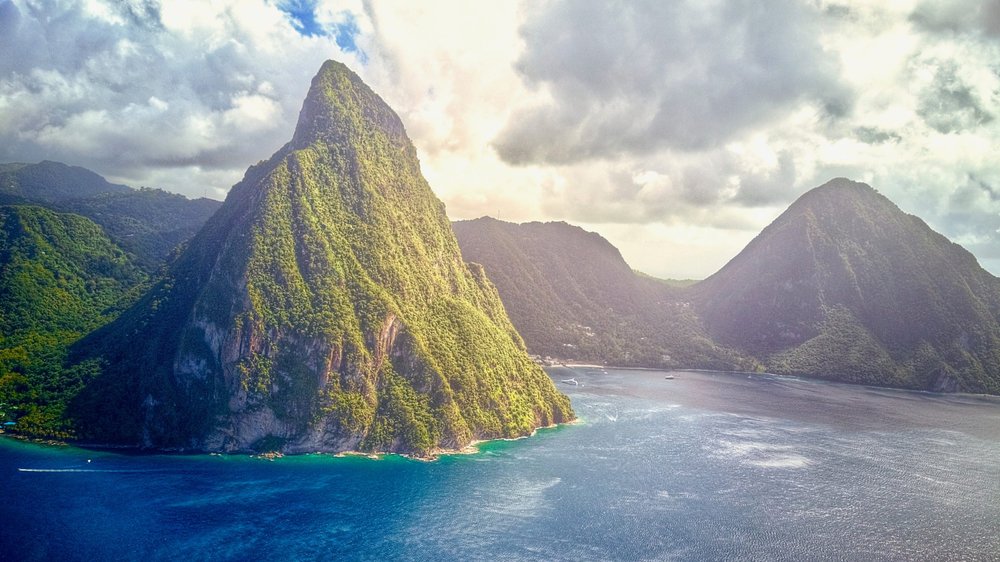
Explore Sugar Beach with Dan.
Book a private call to see current availability, ownership structure and pricing.
Book a Private CallDan Merriam & Associates acts for the buyer. Our advice is independent, not contingent on any sale, and we hold no brokerage or developer mandate.