Four Seasons Ocean Club
The storied Paradise Island estate — the historic Ocean Club, its villas, and the new Four Seasons-managed residences.
The Ocean Club is one of a very small number of Caribbean addresses that were famous before any hotel brand attached itself to them. In 1959 Huntington Hartford — heir to the A&P grocery fortune and one of the era's more extravagant spenders — bought Hog Island off Nassau, renamed it Paradise Island, and set about turning it into his idea of an estate. Almost everything that gives the property its character today dates from that decision.
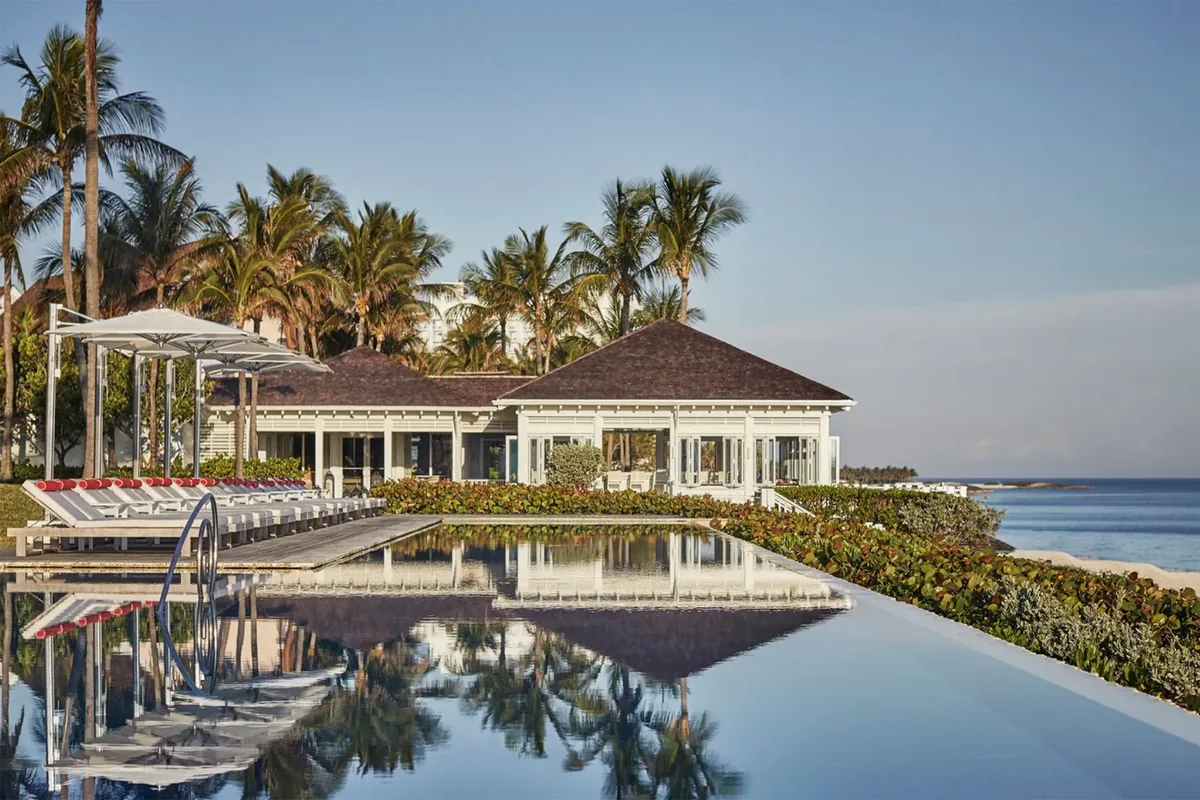
The two landmarks are genuinely singular. The Cloister is a 12th-century French Augustinian monastery that William Randolph Hearst had shipped to the United States in pieces; Hartford bought it, had it reassembled here, and set it at the head of the property. Below it fall the Versailles Gardens — a series of terraces stepping down toward the water, statuary along the axis, the whole thing framed as a formal European garden dropped onto a Bahamian island. It should not work. It comprehensively does, and it is the reason the estate photographs like nowhere else in the region.
The property spent years as the One&Only Ocean Club, during which it became shorthand for discreet Caribbean luxury and picked up a second life in film. Four Seasons subsequently took over management, layering its operating standard onto an asset whose provenance was already established. That sequence matters for buyers: you are not underwriting a brand's ability to create a destination, you are underwriting a top-tier operator running one that already existed.
As a place to own, Paradise Island is unusual in the Caribbean for being genuinely convenient. It is a causeway from Nassau, twenty-odd minutes from an international airport with direct flights up the US east coast, and roughly an hour's flying from Florida. That combination — trophy address, real infrastructure, no island-hopping — is rarer than it sounds, and it is a large part of why the estate's owners tend to be people who actually use their homes rather than visit them annually.
The community spans the historic resort, its villas and the residences, and it sits inside a Bahamian context worth understanding on its own terms: no citizenship program, but permanent residency supported by substantial property investment, and no income, capital gains or inheritance tax. The new-build condominium collection — sold off-plan, with the delivery questions that implies — is covered separately on the development page.
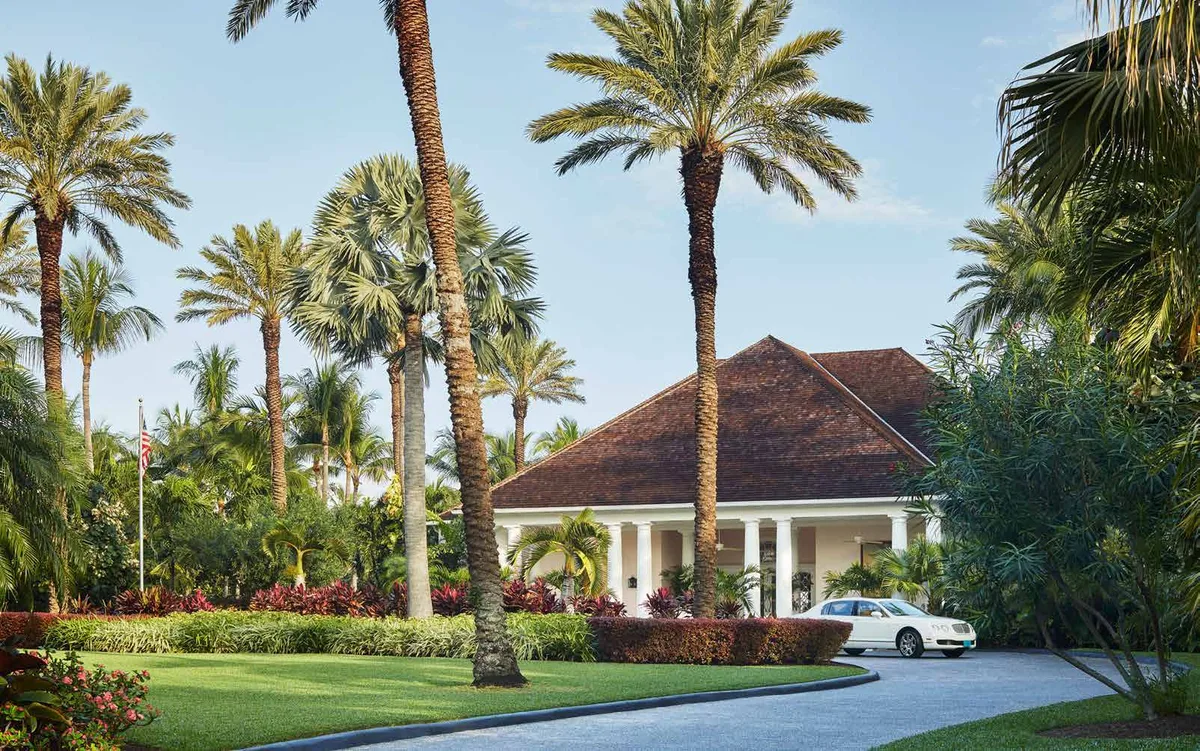
The Ocean Club — now The Ocean Club, A Four Seasons Resort — has anchored Paradise Island since 1962, when the A&P heir Huntington Hartford renamed Hog Island and laid out a set of formal terraced gardens around a fourteenth-century Augustinian cloister. William Randolph Hearst had bought that cloister in France and had it shipped to the United States in pieces; Hartford acquired the stones and had them reassembled here, where they still stand at the centre of the Versailles Gardens. Four Seasons and Access Industries took over management of the hotel in 2017 from Sol Kerzner's One&Only. It remains a low-rise property of a little over a hundred rooms on thirty-five acres — small, and deliberately so.
Here is the thing buyers get wrong, and they get it wrong constantly: "Ocean Club" on Paradise Island is not one address. It is three. There is the hotel, which you cannot buy. There is the new Four Seasons Ocean Club residential enclave on the resort's beachfront, which does not exist yet. And there is Ocean Club Estates, a separate gated golf-and-marina community at the island's eastern end with a real resale record behind it. The names get used interchangeably — one major Bahamian brokerage files the new Four Seasons residences under a page headed "Ocean Club Estates" — and they are different purchases with different fee structures, different delivery risk and different resale histories. I have watched buyers get a long way into a negotiation before working out which one they were actually looking at.
Three different Ocean Clubs, and only one of them is new
Sorting this out first will save you a wasted trip.
- The Ocean Club, A Four Seasons Resort is the hotel. Thirty-five acres, the Versailles Gardens, the cloister, Dune. You can stay there. You cannot own there.
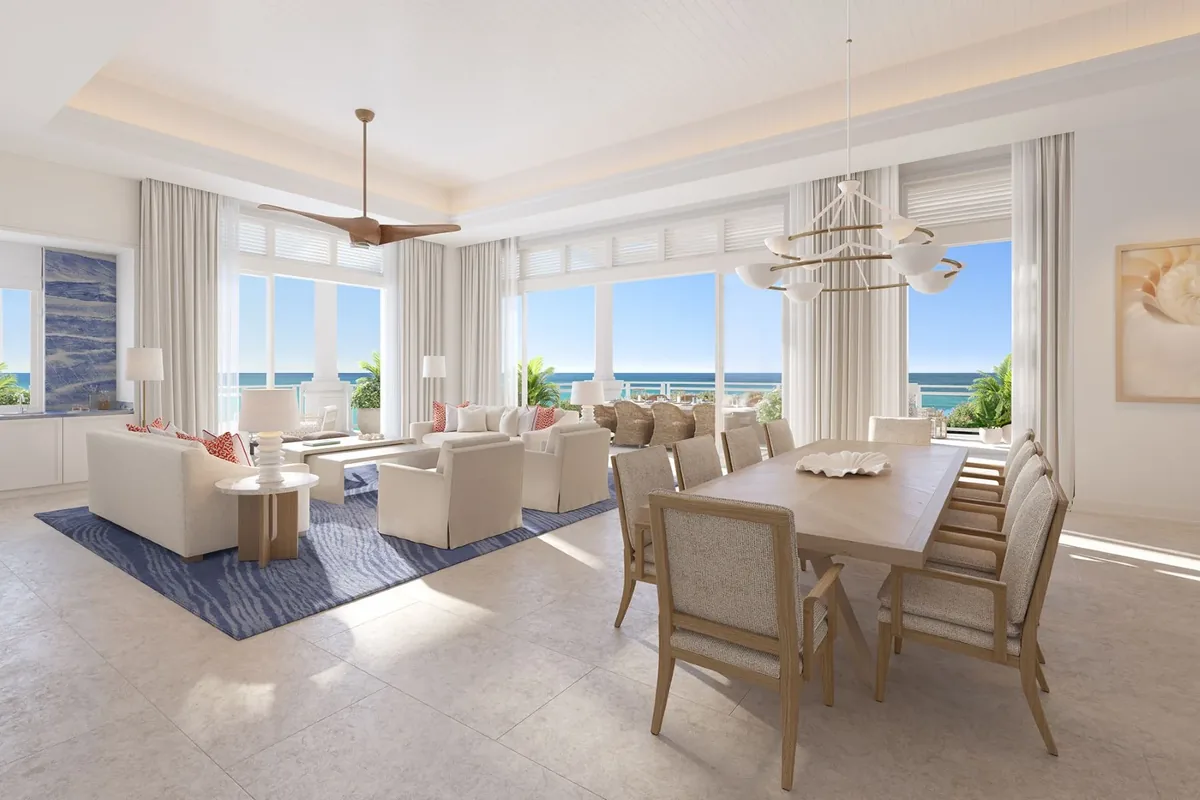
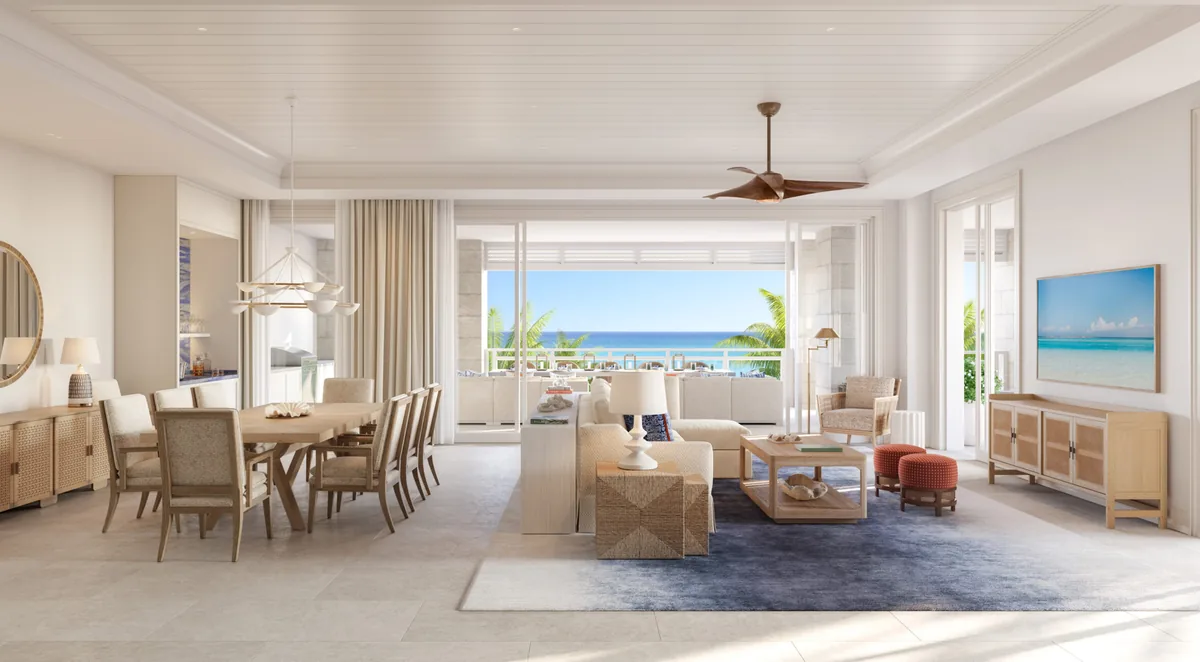
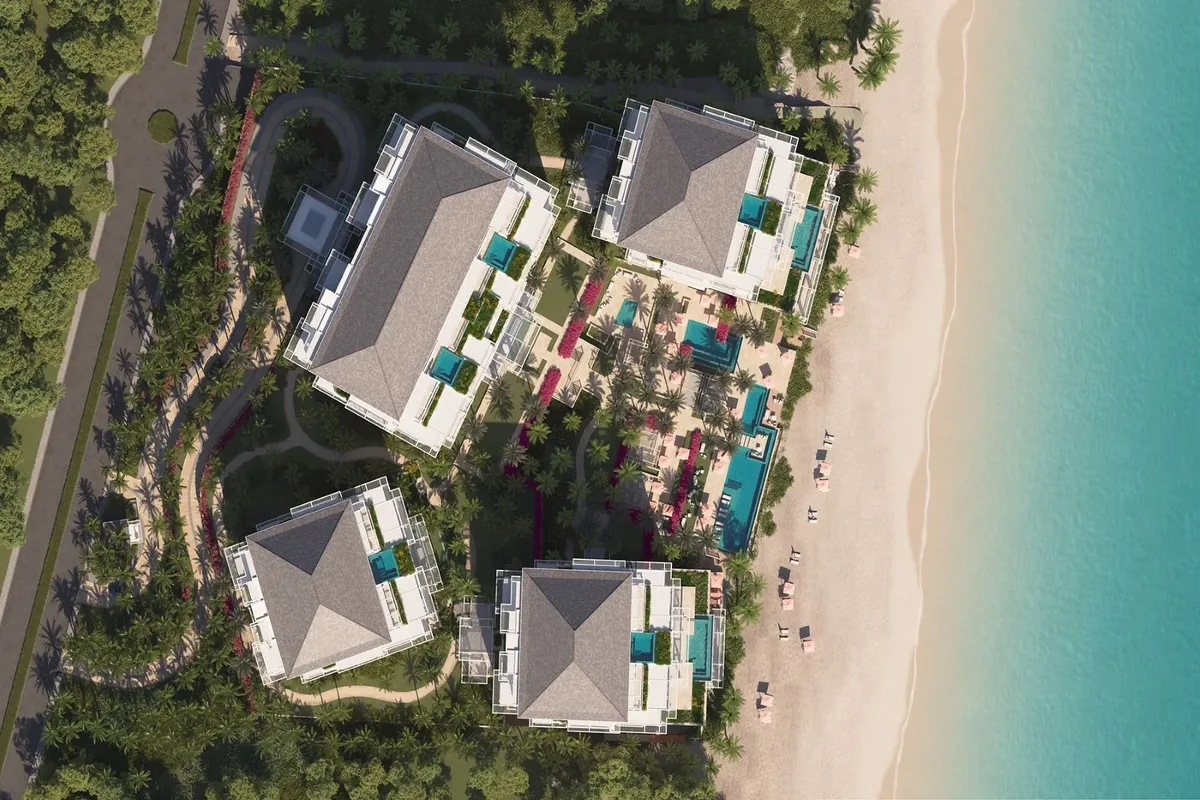
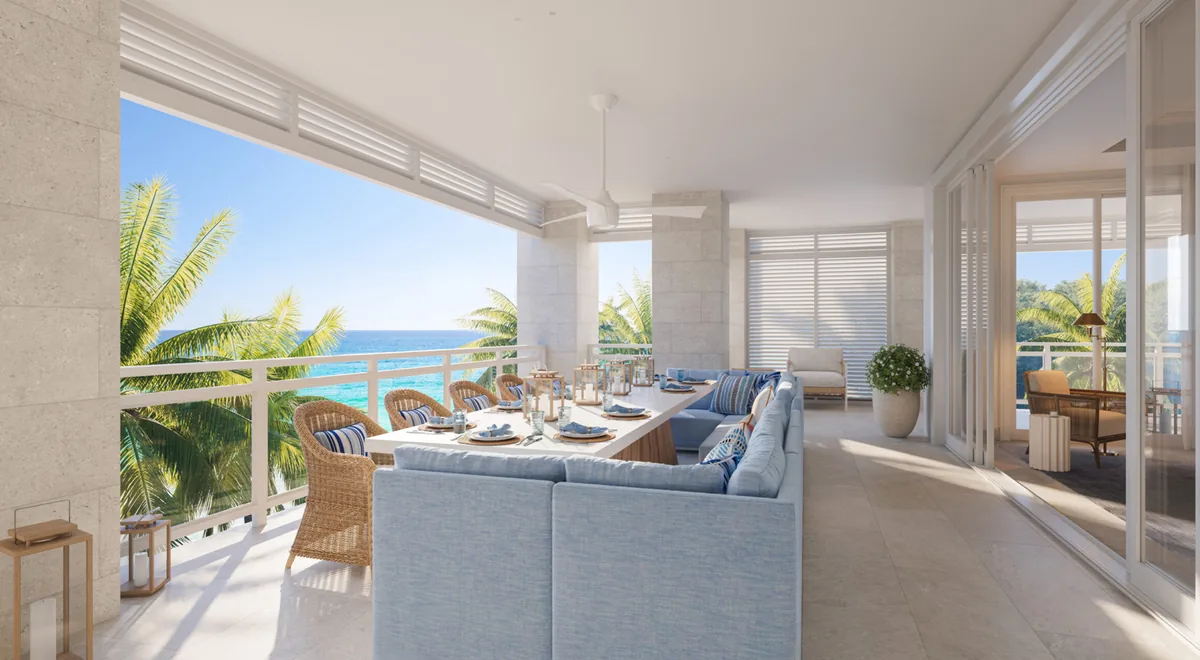
- The Ocean Club, Four Seasons Residences is the new build: 67 turnkey condominiums on the resort's own beachfront grounds, developed by Two Roads Development with Four Seasons and Access Real Estate, designed by SB Architects with interiors by Champalimaud Design. Two-bedrooms run 3,124 sq ft, three-bedrooms 4,073 sq ft, four-bedrooms 5,028 sq ft. Penthouses average about 5,263 sq ft inside with a further 3,917 sq ft outdoors. The five-bedroom beach villas are 7,459 sq ft of interior space with 6,604 sq ft of terrace.
- Ocean Club Estates is the established gated community further east — custom homes, homesites, its own condominiums and a marina. Separate governance, separate dues, an actual resale record.
Pricing on the new residences launched at $6.5 million when the project was announced on 5 January 2024. By mid-2025 Forbes reported two-bedrooms from roughly $7.3 million, three-bedrooms between $7 million and $12 million, four-bedrooms between $11 million and $17 million, and the beach villas at about $23 million. Ground was broken in 2024. Delivery was originally announced for 2027; Forbes reported 2028 in July 2025. Note that slip — it is the first data point you have on how this developer handles a schedule.
Ownership is freehold condominium, not fractional and not a leasehold. Non-Bahamians have been able to buy Bahamian property outright since the International Persons Landholding Act 1993, which came into force on 1 January 1994. Better than that: a non-Bahamian buying an interest in a condominium does not need a permit at all, only registration of the purchase with the Secretary to the Board, on payment of the scheduled fee. That part is genuinely straightforward, and it is one of the real advantages of buying in the Bahamas over most of the region.
What it costs to own at the Four Seasons Ocean Club before you spend a night there
The Bahamas does not tax income, capital gains, inheritance or gifts. It taxes transactions, and it taxes them hard.
On the way in: VAT on the conveyance of realty runs on a sliding scale that tops out at 10% on any transaction above $1 million. At Ocean Club price points you are in that top band on day one, on the full purchase price. On an $11 million residence that is $1.1 million of tax, and who pays it — buyer, seller, or split — is a negotiated contract term, which makes it one of the more consequential things I argue about on a client's behalf. One trap worth knowing before you design a holding structure: a transfer to a company rather than an individual is charged at the flat 10% regardless of price. If someone suggests taking title through an entity, price that in first.
Every year after: real property tax depends on how the Department of Inland Revenue classifies your unit, and the classification is where the money is. Owner-occupied — the Department's own test is that the owner resides there and uses the property exclusively as a dwelling — pays nothing on the first $300,000, 0.625% on the next $200,000, and 1% above $500,000. Foreign-owned rental property is assessed in the commercial band instead: 0.75% on the first $500,000, 1% on the next $1.5 million, and 1.5% on the balance. On an eight-figure residence those two schedules produce very different annual bills, and commercial is the default the moment you rent.
Two live complications, neither of which a brochure will raise. First, the commercial definition also catches buildings of more than four units even where they are used as dwellings — a question I would put to the Department in writing before closing on a unit inside a 67-home development, rather than assuming. Second, the 2026–27 Budget introduced a new "foreign owner-occupied" category at a flat 0.625% with no exemption, which Bahamian realtors publicly criticised for leaving Bahamians on a higher marginal rate than foreigners; the Department's published rate schedule still shows the older bands. Confirm what actually applies on the day you buy. Do not take it from a brochure, and do not take it from me.
What nobody will tell you: the condominium fee. It is not published, anywhere, by anyone. Pre-completion budgets at branded residences are developer estimates, and the number that matters is the one the owners' association sets after handover — by which point you have already closed. Windstorm insurance, carried at association level on beachfront concrete in a hurricane corridor, is usually the largest single line and the one that moves most. Ask for the draft budget, the reserve study and the insurance assumption in writing, and ask what happens if the premium doubles.
The rental program, and the twenty-year clause I would read first
Enrolment in the resort rental program is optional — the marketing is explicit that management of the rental is at the owner's option. The tax treatment attached to it, however, is not optional in part. You are in, or you are out.
The mechanism is the Hotels Encouragement Act. Developers of resort residential property receive duty and tax concessions on construction, and some of those benefits pass through to owners who put units into the rental pool. The headline benefit: while the residence stays in the program, real property tax is waived and the unit instead pays an annual Condo Hotel Tax. That is calculated off the 0.625% residential rate, with a minimum threshold of 75% of it and a cap of $150,000 a year. VAT of 10% applies to all rental income, and the VAT generated is offset against the Condo Hotel Tax threshold — if the VAT exceeds it, no Condo Hotel Tax is payable that year. For a unit that actually rents well, that is a real saving against the commercial property-tax band.
Now the clause. Under the standard Bahamian condo-hotel structure, the residence must be available for rent in the resort's reservation system for not less than nine months each year, for a minimum period of twenty years. Read that again. In exchange for the tax treatment, you have bought a hotel room that you may occupy for roughly three months a year, for two decades. For a family that wants a Christmas-and-Easter base, that can work. For anyone imagining they will drift down whenever the mood takes them, it does not.
I want to be precise about what I know here. Those are the terms of the general Bahamian condo-hotel framework as set out by Bahamian counsel. I have not seen the specific Ocean Club program terms published anywhere. They will be in the purchase and rental management agreements, and they are the first documents I would want in front of a lawyer — before the reservation deposit, not after.
Residency yes, citizenship no — and a separate warning for Americans
Let me kill a misconception that costs people real money. The Bahamas has no citizenship-by-investment program. Buying at the Ocean Club, at any price, does not produce a Bahamian passport. Anyone telling you otherwise is either confused or selling.
What the purchase can support is permanent residency. The Economic Certificate of Permanent Residence requires a minimum investment of $1,000,000 in Bahamian real estate or in zero-coupon bonds issued by the Central Bank of The Bahamas — raised from $750,000 with effect from 1 January 2025 — and the investment must be held for at least ten years, or the Immigration Board may revoke the status. There is no minimum stay or physical presence requirement to maintain it, which is unusual and genuinely useful if your life is elsewhere. Citizenship is available only by naturalisation, for which you become eligible after ten years of permanent residence, and it remains discretionary. Ten years is not a formality; it is a decade.
For US buyers, one more thing, and it is not optional reading. The absence of Bahamian income, capital gains and estate tax does nothing for you on its own. US citizens and green card holders are taxed by the United States on worldwide income regardless of where they live or where the asset sits. Bahamian residency does not change that. Renouncing US citizenship is the only exit, and it carries an exit-tax regime of its own. If mobility or a tax reset is the actual objective, a Paradise Island condominium is the wrong instrument — a Caribbean citizenship program does that job, and does it for a small fraction of what a residence here costs.
How it compares, and the risks I would raise unprompted
Against Ocean Club Estates. Same island, same golf course, and it exists. You can walk the streets, meet the neighbours, read years of association minutes and see what units actually resold for rather than what they were asked for. What you give up is Four Seasons management, the turnkey handover, and the lock-and-leave service that is the entire reason to pay the branded premium. If you want a house and a dock and you intend to use it whenever you like, the Estates is the more honest fit. If you want to arrive to a stocked fridge four times a year and never think about a contractor, the Residences are.
Against Albany. The other serious full-service option is Albany on New Providence — bigger, newer money, a deeper marina culture, and off Paradise Island entirely. Different crowd, genuinely. Worth seeing both before you decide, because the social fit matters more at this level than the specification sheet does.
The risks I would put on the table without being asked:
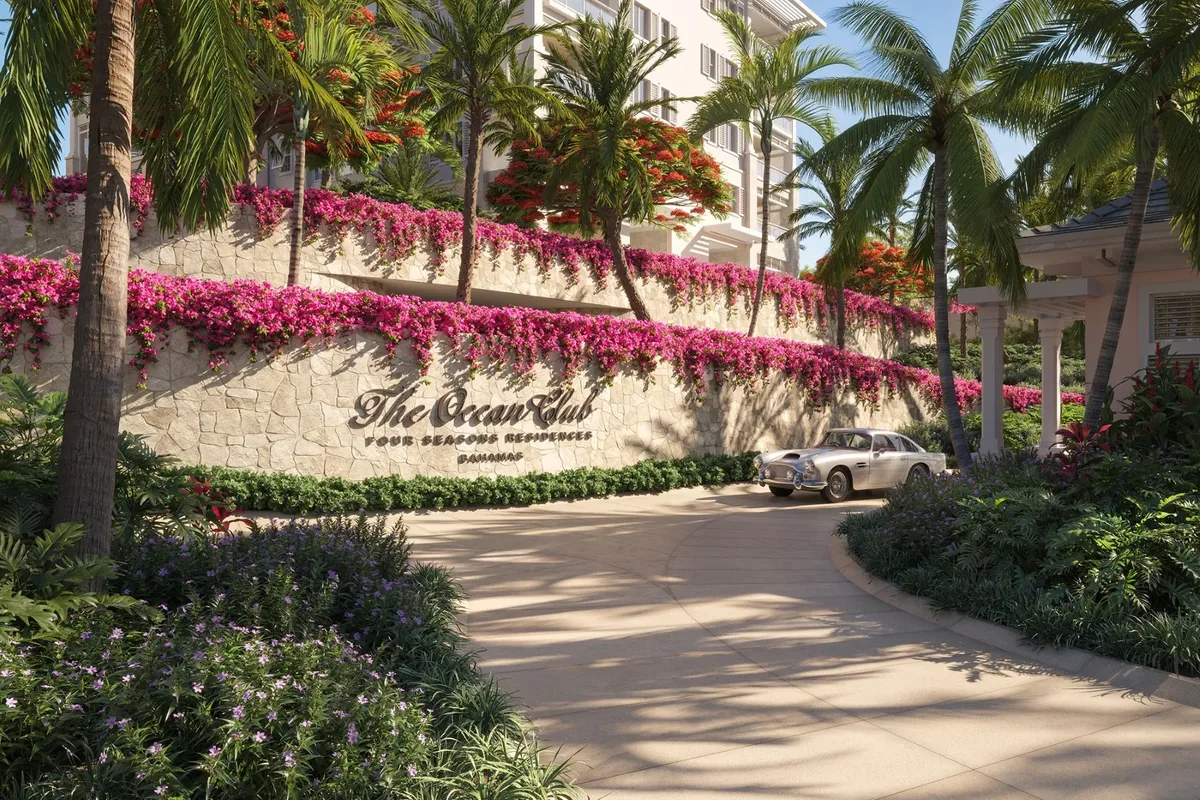
- It is off-plan. Every image you have seen is a developer rendering. Nothing has been delivered. The announced timetable has already moved from 2027 to 2028.
- The golf course is not Four Seasons'. The Ocean Club Golf Course — 18 holes, par 72, Tom Weiskopf, opened January 2001, 7,159 yards from the green tees — is part of Atlantis Paradise Island and managed by Troon. Resident access is marketed as an amenity, but it sits with a third party, not with your title. Get the access terms and the fee schedule in writing, and understand that both can be repriced by a company you have no relationship with.
- Your neighbour is a construction site. Brookfield, which has owned Atlantis since 2012, has completed a $1.93 billion refinancing alongside a $475 million investment program beginning with a full renovation of The Cove in 2026. Long term that is good for the island. Short term it is noise and cranes on a small island.
- Sixty-seven units is a thin exit. Branded-residence resale markets are shallow by construction. When three owners want out in the same quarter you are competing with two other people for the same handful of buyers, and the developer may still be selling inventory alongside you.
- The fees are unknowable today. That is not a criticism of this project specifically — it is true of every pre-completion branded residence. It is still a real hole in your underwriting.
None of this makes it a bad buy. Few addresses on Paradise Island carry this much history, and the hotel behind the brand is the real thing rather than a licence deal wrapped around a field. But I represent buyers, not developers, and I would rather you go in with the twenty-year rental clause, the property-tax classification and the Atlantis golf relationship clearly in view than discover them at signing. If you want the purchase documents read properly before you commit, that is what I am for.
Frequently asked questions
How much does a residence at the Four Seasons Ocean Club cost, and when will it be finished?
Pricing launched at $6.5 million when the project was announced on 5 January 2024. By mid-2025 Forbes reported two-bedroom residences from roughly $7.3 million, three-bedrooms between $7 million and $12 million, four-bedrooms between $11 million and $17 million, and the five-bedroom beach villas at about $23 million. Brokerage listings show a range of roughly $7 million to $23 million. On timing: the original announcement gave a 2027 opening and Forbes reported 2028 in July 2025. Treat every one of these as a dated snapshot. Off-plan pricing moves, nothing has been delivered yet, every image in the marketing is a developer rendering, and the only number that counts is the one on a current price list from the developer.
Is the Four Seasons Ocean Club the same thing as Ocean Club Estates?
No, and this is the single most common mix-up. The Ocean Club, Four Seasons Residences is a new 67-unit condominium enclave on the resort's beachfront, not yet built. Ocean Club Estates is a separate, established gated golf-and-marina community at the eastern end of Paradise Island, with its own homes, homesites, condominiums and governance. They share a name and an island. They do not share a fee structure, a delivery risk profile, or a resale record. Brokerage sites routinely blur the two, so confirm in writing which one a listing actually refers to before you get any further.
What are the fees at the Four Seasons Ocean Club Residences?
Not published, and I will not guess at them. For a pre-completion branded residence the operative number is whatever the owners' association sets after handover, not the developer's pre-sale estimate. Ask for the draft operating budget, the reserve study, the windstorm insurance assumption and the management agreement before you commit. Windstorm cover on beachfront property in a hurricane corridor is typically the largest and most volatile line item, and it is carried at association level, which means a premium increase lands on every owner at once.
Can I rent out my Four Seasons Ocean Club residence?
Yes. The rental program is optional, and the marketing is explicit that Four Seasons will manage the rental at the owner's option. But under the standard Bahamian condo-hotel structure, taking the associated tax treatment requires the unit to be available in the resort's reservation system for not less than nine months a year for a minimum period of twenty years, which leaves you roughly three months of personal use annually. In exchange, real property tax is waived and the residence pays an annual Condo Hotel Tax instead, calculated off the 0.625% residential rate with a 75% minimum threshold and a $150,000 annual cap, with 10% VAT applying to rental income and offsetting that threshold. Those are the general Bahamian terms set out by Bahamian counsel; the specific Ocean Club program terms are in the purchase documents and I have not seen them published. Read them before the deposit.
Does buying at the Four Seasons Ocean Club qualify me for Bahamian citizenship?
No. The Bahamas has no citizenship-by-investment program. What a qualifying purchase can support is permanent residency: the Economic Certificate of Permanent Residence requires a minimum $1,000,000 investment in Bahamian real estate or in zero-coupon bonds issued by the Central Bank of The Bahamas, raised from $750,000 on 1 January 2025, and held for at least ten years or the Immigration Board may revoke the status. There is no minimum stay or physical presence requirement. Citizenship comes only through naturalisation, for which you become eligible after ten years of permanent residence, and it remains at the government's discretion.
What taxes will I pay as a foreign owner in the Bahamas?
On purchase, VAT on the conveyance of realty runs on a sliding scale reaching 10% on transactions above $1 million, applied to the full price; a transfer to a company rather than an individual is charged at the flat 10% whatever the value. Who pays it is negotiable and worth fighting over. Annually, real property tax depends on classification: owner-occupied property, meaning the owner resides there and uses it exclusively as a dwelling, is exempt on the first $300,000, then 0.625% to $500,000 and 1% above, while foreign-owned rental property falls into the commercial band at 0.75% on the first $500,000, 1% on the next $1.5 million and 1.5% on the balance. The 2026-27 Budget introduced a new foreign owner-occupied category at a flat 0.625% with no exemption, so confirm the current schedule with the Department of Inland Revenue rather than relying on any published summary, including this one. The Bahamas itself levies no income, capital gains, inheritance, estate or gift tax. If you are a US citizen or green card holder, none of that helps you: the United States taxes you on worldwide income wherever you live, and renouncing is the only way out.
Do owners get access to the Ocean Club golf course?
Access is marketed as part of the package, but understand what it is. The Ocean Club Golf Course, 18 holes, par 72, designed by Tom Weiskopf and opened in January 2001, playing 7,159 yards from the green tees, is part of Atlantis Paradise Island and managed by Troon. It is not a Four Seasons asset. Any residents' privilege therefore sits in an arrangement with a third party rather than attaching to your title, and it can be repriced or restructured without your agreement. Get the current terms and fee schedule in writing before you rely on it.
Dan advises buyers independently across this community — on which product, ownership structure and price actually fit your goals.
Book a Private Call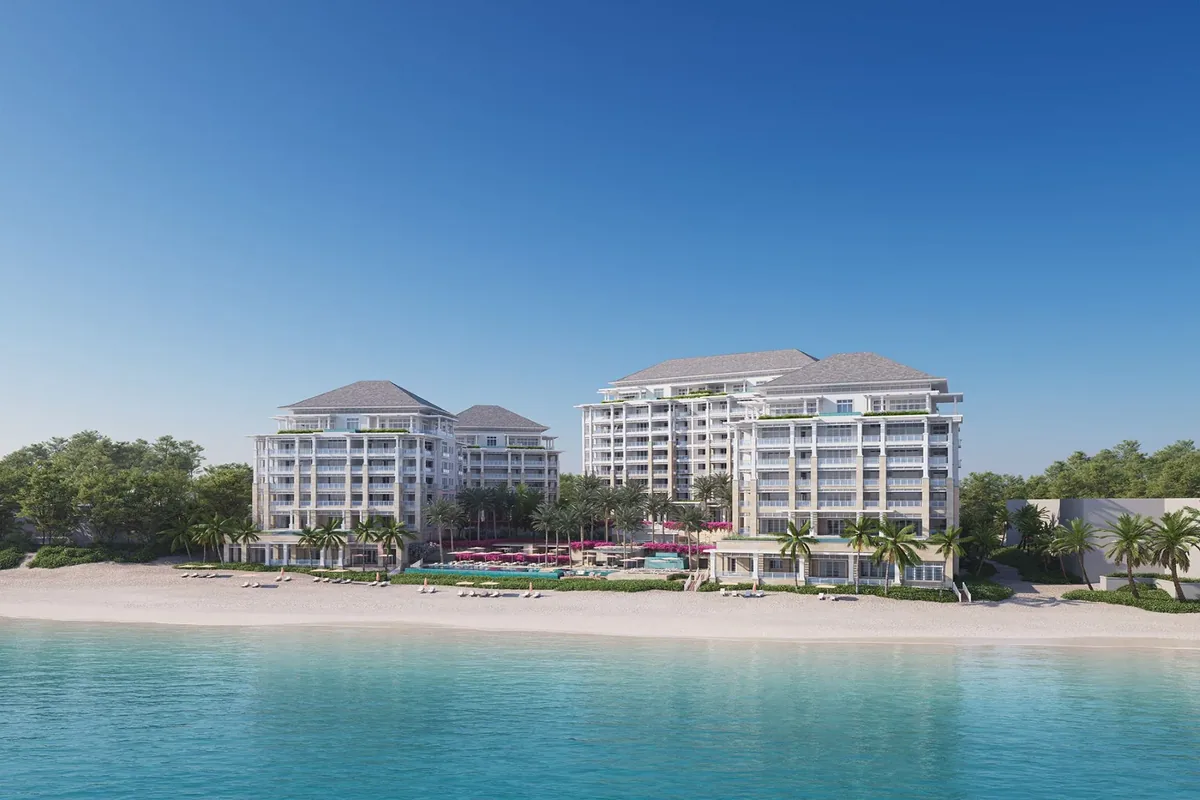
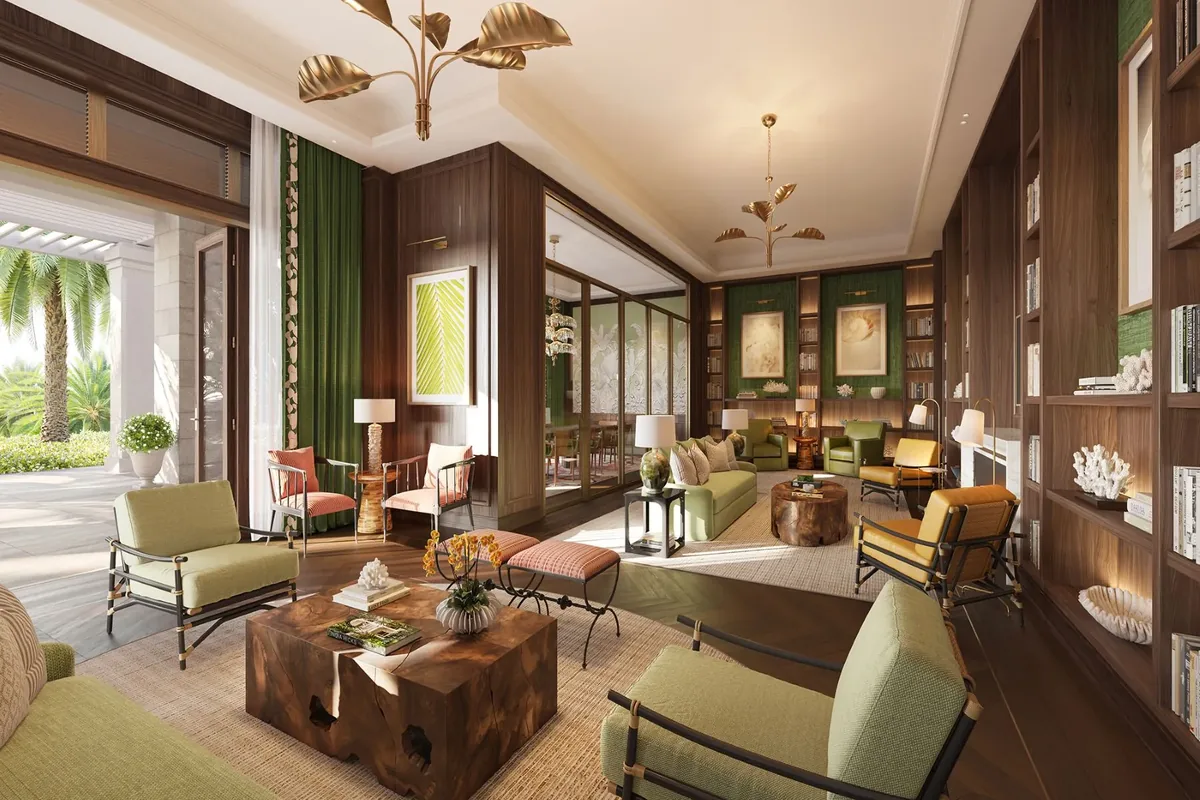
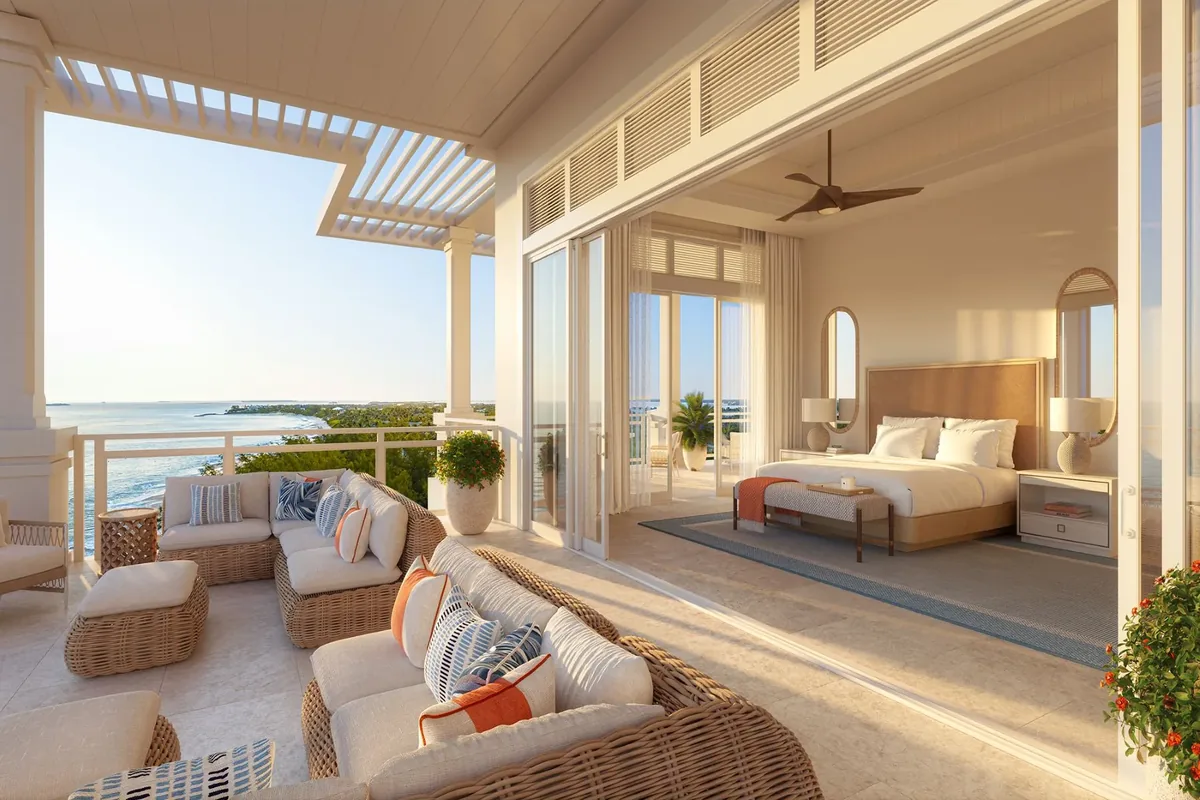
2 listings at Four Seasons Ocean Club.
Four Seasons Ocean Club Penthouses, Bahamas
Penthouse residences crowning The Ocean Club, A Four Seasons Resort on Paradise Island — four bedrooms with den and study across 5,262 interior…
Four Seasons Ocean Club Residences, Bahamas
Two-bedroom-plus-den residences at The Ocean Club, A Four Seasons Resort — 35 storied acres on Paradise Island's five-mile beach, with Four Seasons…
Explore Four Seasons Ocean Club with Dan.
Book a private call to see current availability, ownership structure and pricing.
Book a Private CallDan Merriam & Associates acts for the buyer. Our advice is independent, not contingent on any sale, and we hold no brokerage or developer mandate.