Dominica's Finance Minister, Hon. Dr Irving McIntyre, delivered the 2026/27 budget address on 4 August. Inside two days I had the same message from three directions: Dominica is going to a 10% flat tax — does this change where I should be tax resident?
The 10% is the number everyone is quoting, and it is the smaller half of the story. One line down in the same relief package sits the change that actually moves the residency question: Dominica is ending tax on worldwide income. In the government's own words, only income earned in Dominica is taxed. For a country that until now charged its residents on income arising anywhere in the world, that is not a tweak to a rate — it is a change of system, from taxing what you earn everywhere to taxing only what you earn on the island.
Both halves matter, and they matter to different people. The rate is for Dominicans, and for anyone who will earn in Dominica. The exemption is for the globally mobile — and it is worth exactly as much as you can stop your home country charging.
Last reviewed 6 August 2026. Measures announced in a budget address are not yet law. Confirm anything you plan to act on against the enacted legislation, with counsel in Dominica and at home.
The short answer
The budget does two things to personal income tax, and they are not equal. The structural one: Dominica is moving to a territorial system. Its relief package states it plainly — "no tax on worldwide income; only income earned in Dominica is taxed." Until now the Income Tax Act charged a resident of Dominica on income arising anywhere; under this change, income sourced outside the island — portfolio dividends, interest, a foreign pension, profits from a business operated abroad — falls outside the charge. Set on top of a system that already levies no capital gains tax, no inheritance tax and no wealth tax, that is about as clean a personal tax base as exists in the Eastern Caribbean.
The second thing is the rate on the income that is taxed. From 1 January 2027, a flat 10% replaces the 15%, 25% and 35% bands, with the first EC$30,000 still free of tax. The address called it the most significant income tax relief ever granted to the people of Dominica, and on the domestic arithmetic that is defensible.
Two cautions before anyone opens a spreadsheet. Every figure in that budget is in Eastern Caribbean dollars, pegged at 2.70 to the US dollar since 1976, so the tax-free band is about US$11,100, not US$30,000. And this is a budget announcement, not yet enacted law — the rate is dated to 1 January 2027, the territorial commitment sits in the same package, and both still have to be drafted and passed before you build a plan on the fine print.
One more thing you have probably heard, because the citizenship industry has repeated it for years: "Dominica doesn't tax foreign income." As marketing that was close enough; as law it was not. The statute taxed residents on their worldwide income, and most passport buyers simply never became resident, so the question never bit. What this budget does is make that marketing line true in law — which matters most to the one group for whom it was never true before: the people who actually go and live there.
My recommendation, which the rest of this has to earn: if you can genuinely break tax residency at home and will actually live there, Dominica after this budget is one of the cleanest personal tax positions in the region — and the 10% rate is the least important reason. Both conditions do real work, and most people who ask me fail at least one of them.
The rate is domestic relief. The exemption is aimed outward
Small governments do not cut a top rate by twenty-five points casually, and the fact that this one sits inside a cost-of-living package tells you who it was written for: Dominicans, on Dominican salaries, in a country where the median household is nowhere near the old top band. The rest of the package reads the same way — extended VAT relief on essentials, an end to the tax-on-tax that compounds every import from 1 October, thousands of resilient homes, free tuition at the state college. That is a domestic budget, written for a household on a Dominican salary, and reading it as an investor pitch is the commonest mistake being made this week.
The part aimed outward is the population target: 100,000 residents by 2040, against a base of roughly 66,000. The instruments attached to it are not tax instruments. They are citizenship through a Dominican grandparent from 1 January 2027, a free two-year "Live in Dominica" residence visa for remote workers and retirees, and a Returning Dominican One-Stop Service — all three from the address rather than independent confirmation, so treat the detail as provisional until regulations appear.
For a private client, though, the provision that matters most is the one the relief package spells out in a single line — only income earned in Dominica is taxed. It is announced, not yet enacted, and until it is I treat it as direction rather than guarantee. But if it lands as written, it is the piece that turns a Dominican relief budget into something a globally mobile family has to take seriously.
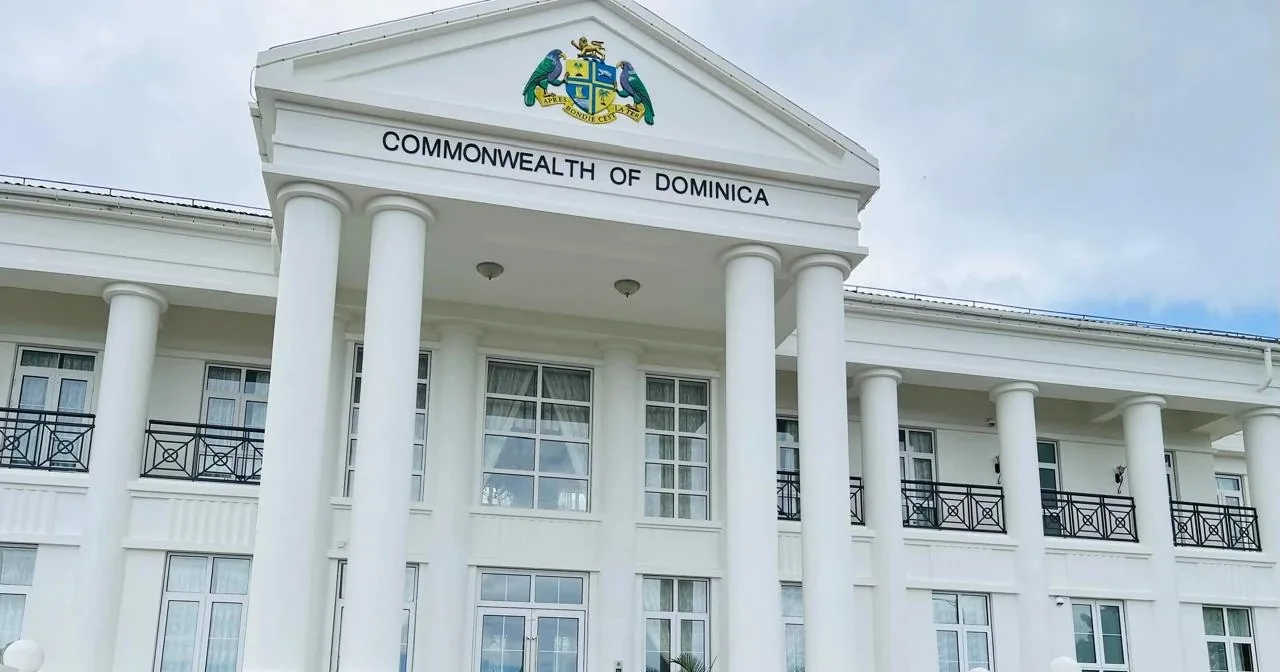
Where Dominica draws the line between foreign and local
This is the section that decides your answer, and the one the coverage skips.
A territorial system does not ask where you live. It asks where the income comes from — and that is the switch this budget flips. Until now, residence was decisive: a person resident and ordinarily resident in Dominica was chargeable on worldwide income, while non-residents, and residents not ordinarily resident, were taxed only on Dominica-source or remitted income. Under the territorial basis the government has announced, residence stops deciding what is charged and only decides who files: an individual is generally tax resident on physical presence of more than 183 days, with returns due to the Inland Revenue Division by 31 March, but resident and non-resident alike are then assessed on Dominica-source income and neither on foreign-source income. A non-resident simply loses the EC$30,000 allowance, and Dominica-source payments to non-residents carry a 15% withholding instead.
So the practical question is: which of my income streams are sourced in Dominica?
| Income stream | Where Dominica lands | What could change the answer |
|---|---|---|
| A foreign brokerage portfolio — dividends, interest, realised gains | Outside the charge, and no capital gains tax applies to anyone | Nothing on the Dominica side. Everything on your home side |
| A foreign pension or annuity | Outside the charge | Whether home still asserts a claim, and whether a treaty exists to break the tie. Dominica holds very few |
| Profits from a company you own and operate abroad | Outside the charge at the personal level | Where the company is actually managed. Run it from a desk in Roseau and the business may be carried on in Dominica |
| Fees invoiced to foreign clients for work performed in Dominica | The genuinely hard case | Source follows where the work is done, not where the client sits |
| Salary or director's fees for work performed in Dominica | Inside the charge — bands to 35% today, flat 10% from 1 January 2027 | — |
| Rent, bank interest or dividends from a Dominica source | Inside the charge | Non-residents face 15% withholding and no allowance |
| Gain on selling a Dominica house | No capital gains tax anywhere in the system | Transfer taxes and duties still fall on the conveyance — I budget roughly 16.5% in buyer-side closing costs, the highest of the five citizenship islands |
Two rows carry most of the risk. The remote-work row is where people get comfortable too early: work performed inside a jurisdiction is a strong candidate for arising there, whoever pays and wherever the invoice settles. If your plan is to sit in Portsmouth writing code for a company in Seattle and call the proceeds foreign income, have Dominican counsel confirm it against the Income Tax Act instead of assuming it from a relocation brochure. If it is Dominica-source, the news is hardly terrible: 10% from January 2027, above the allowance.
The management row matters to anyone bringing a business, because the company stays foreign only while it is genuinely run somewhere else.
What the rate change is actually worth
Here is the arithmetic, which nobody seems to have published. The current schedule gives an EC$30,000 allowance, then charges 15% on the first EC$20,000 of chargeable income, 25% on the next EC$30,000 and 35% above that. The new regime keeps the allowance and applies 10% to the same base.
| Local income (EC$) | ≈ US$ | Tax today | From 1 Jan 2027 | Effective rate, today → 2027 |
|---|---|---|---|---|
| 30,000 | 11,100 | nil | nil | 0% → 0% |
| 50,000 | 18,500 | EC$3,000 | EC$2,000 | 6.0% → 4.0% |
| 80,000 | 29,600 | EC$10,500 | EC$5,000 | 13.1% → 6.3% |
| 150,000 | 55,600 | EC$35,000 | EC$12,000 | 23.3% → 8.0% |
| 270,000 | 100,000 | EC$77,000 | EC$24,000 | 28.5% → 8.9% |
| 540,000 | 200,000 | EC$171,500 | EC$51,000 | 31.8% → 9.4% |
My calculation on the published bands, assuming no reliefs beyond the allowance; mortgage interest, approved donations and student loan relief are deductible and would move these figures.
The bottom row shows the scale — on a US$200,000 local income the bill falls from roughly US$63,500 to roughly US$18,900. The table also shows the limit: the effective rate stays under 10% at every level and only nears it above US$200,000, because the allowance does most of the work at the bottom, and above it the flat rate simply is the rate. There is no progressivity left to plan around.
Three things sit outside the table. The corporate rate is 25% on net profit, and the announcement addresses the personal bands; I have seen nothing confirming the company schedule moves. If it does not, the arithmetic of trading personally versus through a local company inverts in January 2027. Social security contributions are levied on local employment and self-employment separately from income tax, and were revised upward for 2026. VAT runs at a 15% standard rate, because Dominica takes much of its revenue at the till and at the port rather than on the payslip — which is why the CIF measure will matter more to a household living there than the income tax cut does.

Citizenship is not residency, and residency is not tax residency
Three things get sold as one, and they need separating.
Citizenship you can buy: US$200,000 through the Economic Diversification Fund for a single applicant, US$250,000 for a family of up to four, or from US$200,000 into an approved development plus government fees from US$75,000, on the region's shortest hold at three years. The passport reaches approximately 145 destinations and asks nothing of your calendar today — the full cost stack is on my Dominica citizenship program page.
Residency is permission to live there: the announced two-year "Live in Dominica" visa, or the existing Work In Nature route allowing remote workers up to 18 months. The address does not say whether the new visa replaces it.
Tax residency is a fact about days and connections, not a document — the 183-day test, and the only one of the three that changes what Dominica charges you.
The distinction is load-bearing. A citizenship buyer who never moves gets nothing from the foreign-income exemption, because they were never inside the net to be exempted from. It is not a benefit conferred by the passport; it is the absence of a charge that would only ever have applied had you gone and lived there. Hence the sentence I repeat most often on calls: Dominica not taxing your foreign income is only worth something once somebody else has stopped taxing it. For a British, Canadian, Australian or South African client that means genuinely severing home tax residency — a test of facts, not intentions, failed far more often than passed. A Canadian who keeps a house, a car, a provincial health card and a spouse in Ontario has not left Canada, whatever stamp is in the passport.
The case against taking this at face value
I would rather make the objections myself than have you find them later.
It is an address, not a statute — and that now cuts twice. The rate takes effect on 1 January 2027, and the territorial commitment sits in the same package; both have to be drafted, debated and passed first. This is exactly the window in which announced reforms get narrowed, phased, or hedged with conditions — and the fine print on a foreign-income exemption (what counts as Dominica-source, whether any substance or structuring test attaches) is where the value is actually won or lost.
The supporting numbers are the government's own. The address reports 2025 growth of 4.5%, comfortably above the regional and global averages, and a primary surplus running 0.8 points ahead of projection. If those hold, an EC$43.5 million package is affordable. They are budget-address figures, and I would want them in an IMF Article IV before treating the fiscal room as settled — particularly since the revenue line underneath is exposed. Dominica's citizenship receipts peaked near 37% of GDP in FY2022/23, and by letter dated 25 June 2026 the European Commission asked all five Caribbean program governments to phase their programs out by 1 June 2028. No program has actually lost EU access — that is a demand, not an action — but tax cuts are easier to announce than to keep.
Access is still the binding constraint. The international airport at Wesley is under construction, not open — the address reports EC$250 million invested with runway and taxiway over 60% complete, targeted for 2027. Until it lands every arrival routes through a neighbouring hub, which is simultaneously the largest discount on Dominica property today and the reason many families rule the island out at the shortlist stage.
And the two measures reward almost opposite people. The 10% rate only touches Dominica-source income, so it does nothing for someone whose money is all earned abroad. The exemption only helps someone who becomes resident — precisely the person who, under the old worldwide basis, had the most exposure to lose. Neither does anything for a passport holder who never moves, or an offshore structure with no one living behind it. This is a budget for residents. Read as anything else, it disappoints.

Who this suits, and what I would do
One line belongs in the calculation first, because it is a cost rather than a tax: the address reports 68% of June 2026 electricity generated from renewables, a first in CARICOM. Power in the Eastern Caribbean is punishingly expensive, so domestic geothermal generation lowers the real cost of living in a way no rate card shows. Buying mechanics and the liquidity problem sit on my Dominica real estate market guide.
| Dominica after this budget | |
|---|---|
| Suits | Anyone who can cleanly break home tax residency and will genuinely live there — the exemption is built for exactly this person · retirees on foreign pensions who will do the 183 days · remote workers testing the island on a two-year visa, source question settled first · the Dominican diaspora, especially grandchildren, from January 2027 · long-horizon buyers who want in before the airport opens |
| Does not suit | Anyone who cannot or will not actually leave home, since the exemption only rewards real residence · anyone whose home country taxes them wherever they live · passport holders who never move, who were never taxed on foreign income to begin with · buyers who need liquidity, or easy flights today |
The clean version: if you are a Canadian who has properly severed residence, a British national navigating life after non-dom, or an EU national with location-independent income and the willingness to spend more than half the year on a steep, wet, spectacularly green island, then Dominica — no charge on foreign income, a flat 10% on anything local, no capital gains or inheritance tax, and a two-year visa to try it — is a serious contender. What makes it one is the territorial move; the flat 10% on anything local is the sweetener. For a foreigner who actually moves, neither was true a month ago.
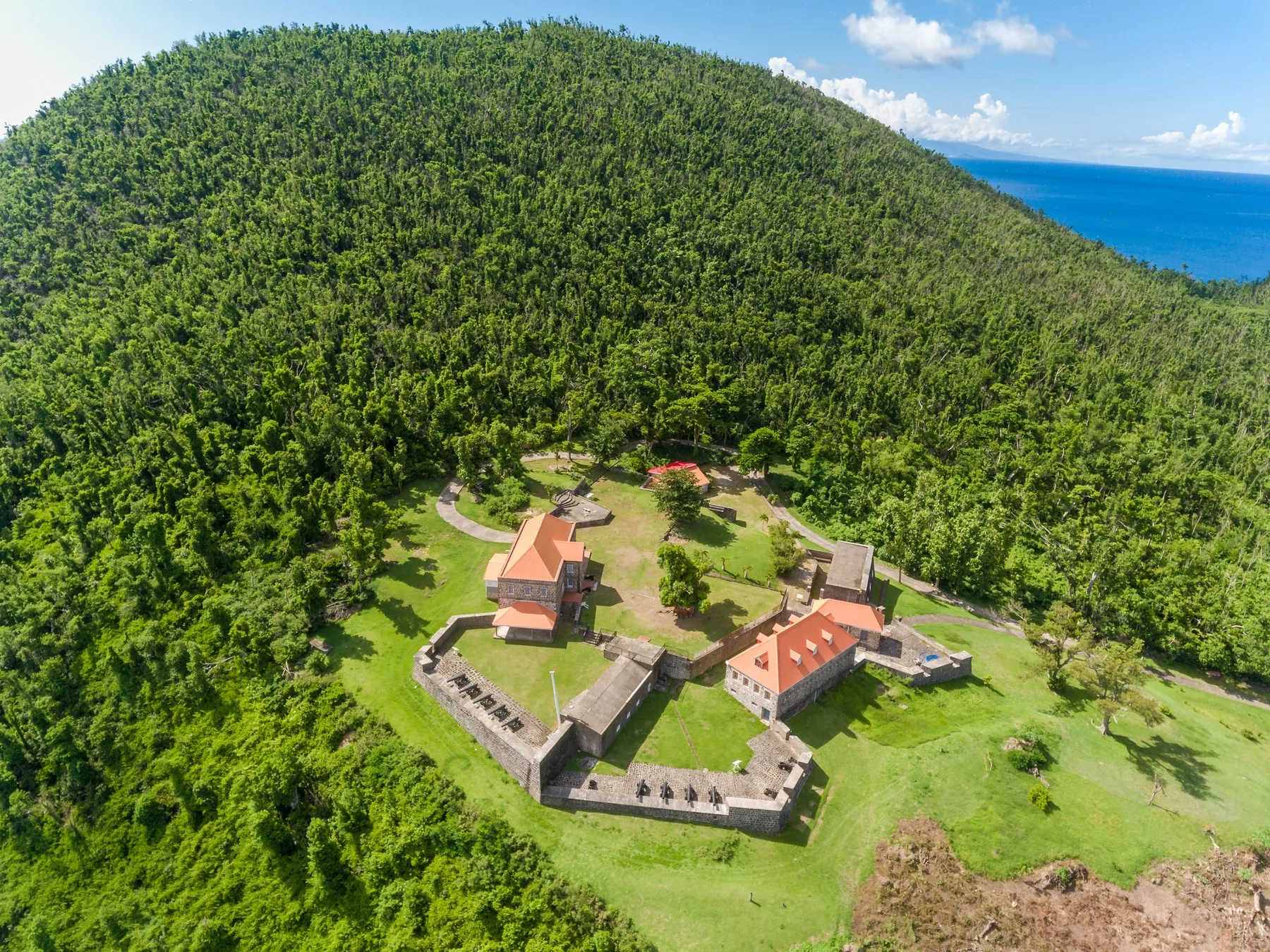
So, four instructions. Settle the home-country question first, because the exemption is worth exactly what you can stop someone else charging. If you can't break home tax residency, price this as property and optionality, not tax — the citizenship is insurance, mobility and a family Plan B, but no version of this budget makes it a tax purchase for someone their home country still taxes. Get the source question in writing: if any part of your income will come from work you perform on the island, have Dominican counsel confirm the treatment, and wait for the enacted legislation before you model the 10%. And go in the wet season — a fortnight in September, not a long weekend in February. People who love Dominica love it specifically; people who wanted somewhere else at a discount are always disappointed, and that has never been a tax problem.
If you want an independent read on whether this fits your household — the residency test as honestly as the rate card — book a private call.
Key takeaways
- The structural change is the end of tax on worldwide income. Until now Dominica's Income Tax Act charged residents on income arising anywhere; the relief package moves it to a territorial basis — "only income earned in Dominica is taxed." That is bigger than the rate, and it is genuinely new. Dominica already levied no capital gains, inheritance or wealth tax; this adds the foreign-income piece on top.
- A flat 10% replaces the 15%, 25% and 35% bands from 1 January 2027, with the first EC$30,000 still free of tax — announced in the budget address of 4 August 2026 and corroborated in the Dominican press.
- The EC$30,000 allowance is about US$11,100, not US$30,000. Every budget figure is in Eastern Caribbean dollars, pegged at 2.70 since 1976.
- The rate only reaches income sourced in Dominica. Local salary, rent, interest and dividends are inside the charge; a foreign portfolio, a foreign pension and a business genuinely operated abroad are not. Remote work performed on the island is the grey area.
- The exemption is only worth what your home country stops charging, and breaking home tax residency is the hard half of the plan.
- It is an address, not a statute. Both the 10% rate and the territorial exemption are announced, not yet law — watch the enacted legislation, its conditions, and the corporate rate.
Frequently asked questions
Does Dominica tax foreign income? After the 2026/27 budget, no — but this is a change, not a standing fact. The budget moves Dominica to a territorial system, stated in the relief package as "no tax on worldwide income; only income earned in Dominica is taxed." Until now the Income Tax Act charged residents on their worldwide income, so the exemption is genuinely new for anyone who becomes tax resident. It is announced rather than enacted, so confirm it against the legislation before relying on it. Dominica separately levies no capital gains, inheritance or wealth tax, and has not for years.
Didn't Dominica already exempt foreign income? That is the common belief, and it was marketing shorthand rather than law. Dominica's statute taxed residents on their worldwide income; the exemption seemed to exist only because most citizenship-by-investment holders never became tax resident, so they were taxed as non-residents on Dominica-source income alone. The 2026/27 budget is what actually moves the law to a territorial basis — which is exactly why it matters most to people who intend to live on the island, not to passport-only holders.
When does Dominica's 10% flat tax start, and what does it replace? 1 January 2027. A flat 10% replaces the 15%, 25% and 35% bands on income sourced in Dominica, with the first EC$30,000 remaining free of tax. It was announced in the budget address delivered on 4 August 2026 by Finance Minister Hon. Dr Irving McIntyre, and the enabling legislation follows — so treat the rate as announced rather than enacted.
Is the tax-free amount US$30,000? No — EC$30,000, roughly US$11,100 at the Eastern Caribbean dollar's long-standing peg of 2.70. This is the commonest misreading of the announcement, and it makes the allowance look nearly three times larger than it is.
How do I become tax resident in Dominica? Broadly, by physical presence of more than 183 days in the tax year, with returns due by 31 March. Citizenship is separate and carries no presence requirement today, so a passport holder who never moves is not a Dominica tax resident and gains nothing from the foreign-income exemption.
If I work remotely from Dominica for a foreign employer, is that foreign income? Get this answered in writing rather than assumed. Source rules generally follow where the work is performed, not where the client or payer sits, so work done from the island is a strong candidate for Dominica-source income — in which case it falls under the ordinary rates, a flat 10% above the allowance from January 2027.
What taxes still apply if I live in Dominica? Income tax on Dominica-source income — bands to 35% today, a flat 10% from January 2027, above the EC$30,000 allowance. Social security contributions on local employment and self-employment, separately from income tax. VAT at a 15% standard rate. Companies pay 25% on net profit, and I have seen nothing confirming that rate moves. Property purchases carry transfer taxes and duties, for which I budget roughly 16.5% in buyer-side closing costs.


